5 Common Drawing Mistakes Beginners Make - And How to Fix Them
Most beginners struggle with the same problems - not because they lack ability, but because they’re practicing without clear visual guidance. The good news? Every one of these mistakes is fixable. Let’s break them down!
When I first started drawing seriously, I kept blaming my lack of progress on talent. In reality, I was repeating the same mistakes over and over - because no one had pointed them out clearly.
Once I learned what to look for, my progress sped up dramatically, and that’s exactly what I want to give you here.
1. Mistake: Stiff, lifeless poses
The problem: Your characters look frozen. No weight. No flow. No energy.
This usually happens when you draw from imagination instead of observation, or when you don’t fully understand how weight shifts through the body.
How to fix it: Focus on gesture before details. Capture the movement, not the outline.
How PoseMyArt helps: PoseMyArt lets you:
- create dynamic 3D poses in seconds
- choose from thousands of pre-made scenes
- clearly see weight distribution and balance
- rotate the model freely instead of being locked into one angle
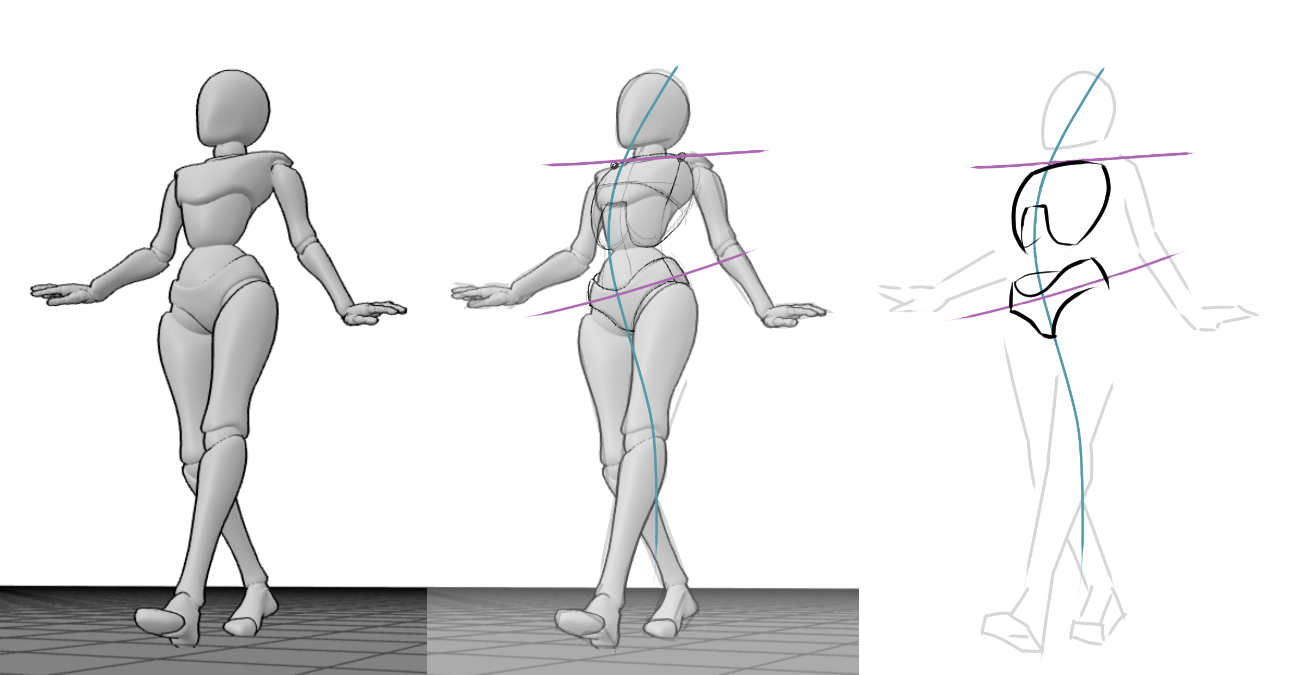 Explore dynamic 3D poses in PoseMyArt.
2. Mistake: Incorrect proportions
The problem:
Arms or legs are too long. Hands are too small. Heads are too big.
This isn’t “style” - it’s uncertainty.
It usually comes from drawing from memory instead of a reliable reference.
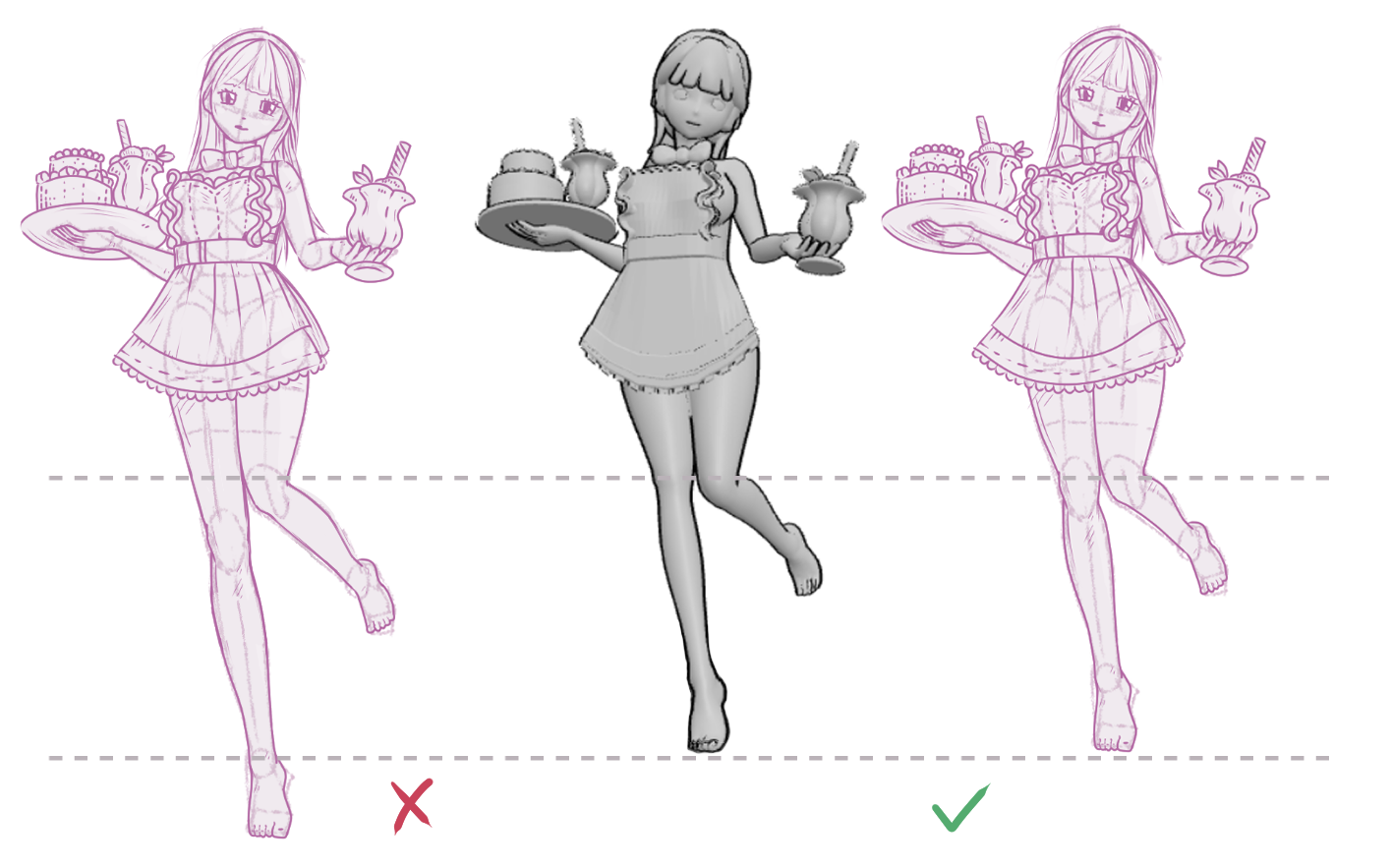
I used to call these proportion issues “my style” too - until I noticed they changed randomly from drawing to drawing.
Style is consistent. Guessing isn’t.
How to fix it: Train your eye with consistent, anatomically correct references.
How PoseMyArt helps:
- Realistic human proportions
- Clean, readable anatomy
- Adjustable camera angles to understand foreshortening
3. Mistake: Ignoring perspective
This was the mistake that held me back the longest. My drawings looked fine…- As long as everything faced the camera. The moment I tried a low angle or a turn, the illusion broke.
The problem:
Your figure feels flat or disconnected from the space.
Feet don’t feel grounded. Limbs look oddly stretched.
How to fix it: Learn how the body changes when viewed from different angles.
How PoseMyArt helps:
- Fully adjustable camera controls
- Extreme angles: low view, top view, dramatic perspectives
- Instant visual feedback - something photo references often can’t provide
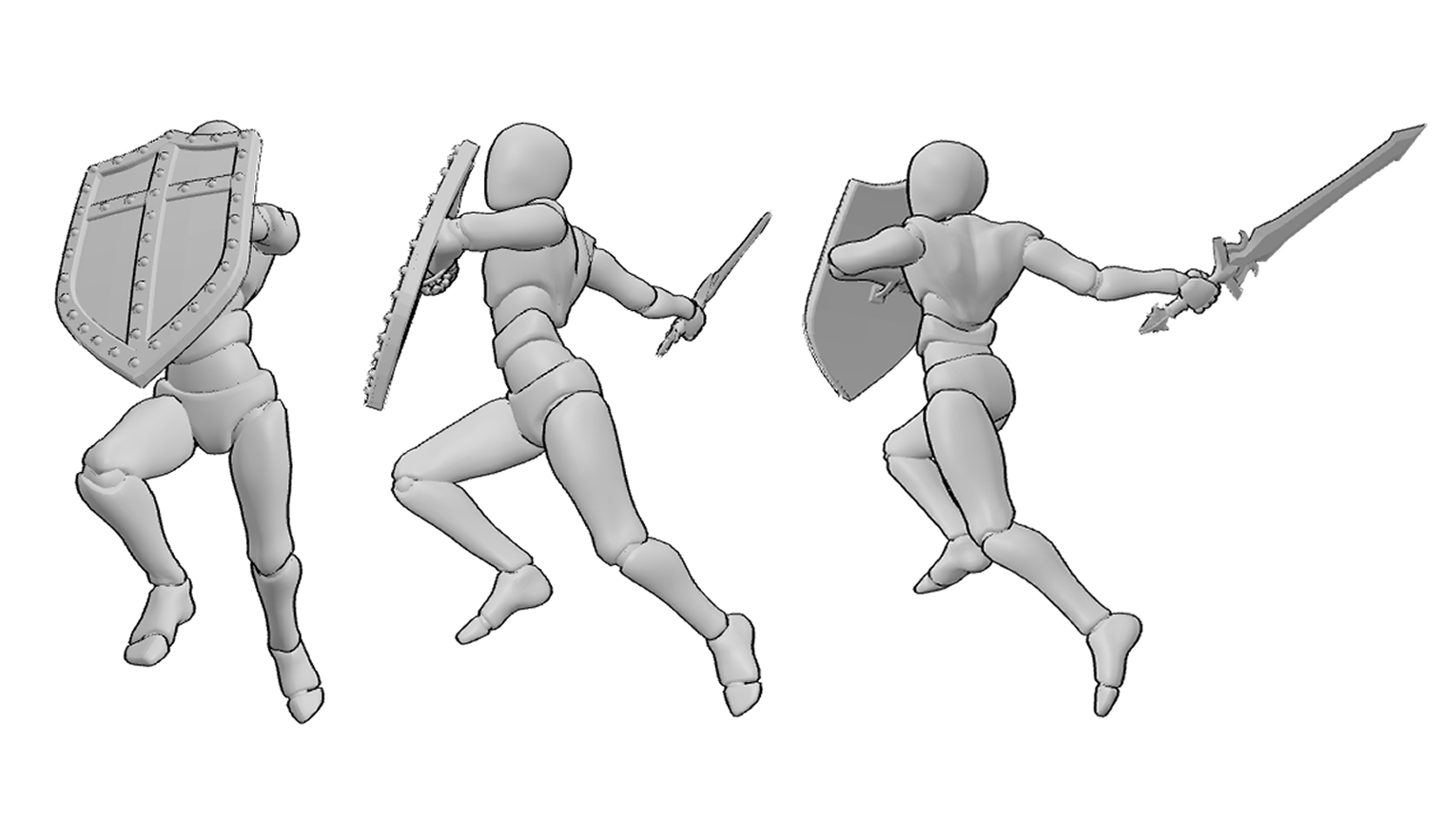
Being able to freely adjust the camera completely changed how I approach perspective.
Instead of avoiding difficult angles, I started experimenting with them - and suddenly my concepts became more dynamic and expressive.
A strong camera angle doesn’t just fix perspective issues; it elevates the entire drawing and gives your idea visual impact.
For a quick, easy guide on setting up your camera angle, take a look at this article.
4. Mistake: Adding details too early
The problem: You spend hours rendering facial features… Only to realize the head tilt or body alignment is wrong.
I’ve been there more times than I’d like to admit. Everything looks fine up close, then you zoom out and suddenly the head feels twisted, the neck doesn’t support it, and the whole pose collapses. It’s frustrating, because the rendering isn’t the issue - the structure was off from the start.
How to fix it: Block in forms first. Details come last.
A rule I live by now: if the pose doesn’t work as a simple sketch, no amount of rendering will save it.
How PoseMyArt helps:
- Simple, clean forms perfect for construction sketches
- Ideal for gesture and structure practice
- Helps you focus on big shapes before polishing
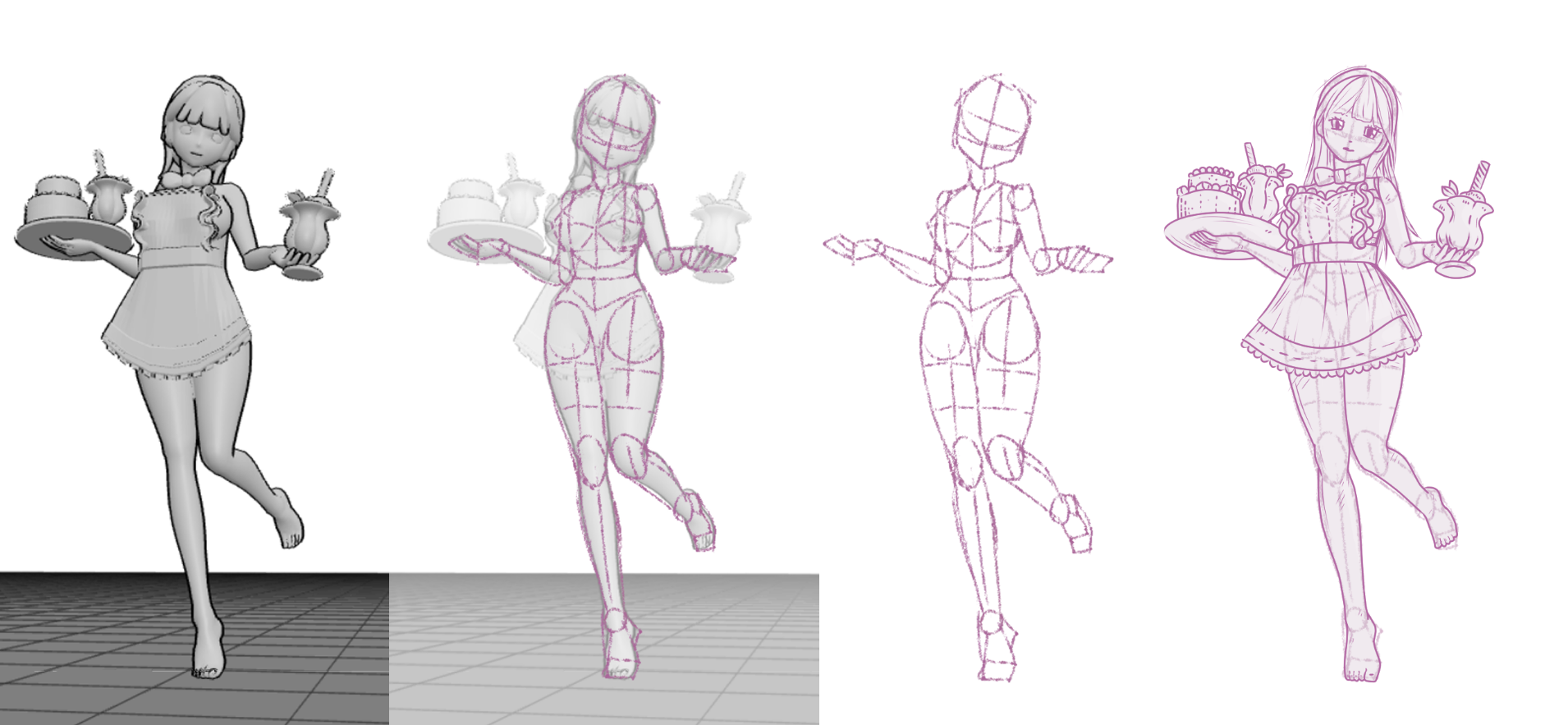
5. Mistake: Using poor or random references
The problem:
Low-quality Google images, awkward angles, bad lighting.
Your drawings feel inconsistent and frustrating.
And let’s not even get into copyright issues that come with using found images online. Also, there’s a good chance other artists have already drawn from the same photo, making your work feel unoriginal - even if you drew it honestly.
At some point, I realized that my photo references were shaping my style more than my own choices. Once I switched to 3D references I could control and modify, my work finally started to feel like mine.
How to fix it: Use references you can control, and put your own twist on them to create unique, confident artwork.
How PoseMyArt helps:
- Thousands of pre-made poses and scenes
- Save and reuse your own setups
- Get exactly the pose you need - create your unique scenes
Final thoughts
Every artist hits these mistakes - I still catch myself slipping into some of them. The difference is noticing them early and knowing how to correct them before they waste hours of work.
Making mistakes is part of learning.
Repeating them without understanding isn’t.
PoseMyArt doesn’t draw for you - it teaches you how to see.
And once you see correctly, your drawing improves faster than you expect!