Why Scene Design Feels So Hard - And How Premade Scenes Fix It
There was a long time when I avoided drawing full scenes. Not because I didn’t want to - but because every time I tried, I froze. One character was fine. Two characters already felt heavy. Add a background, perspective, and a camera angle… and suddenly the drawing never started.
If that sounds familiar, this article is for you.
Scene design doesn’t fail because you lack imagination.
It fails because you’re asked to solve too many problems at once - before your pencil even touches the paper.
The Real Reason Scene Design Feels Hard
When artists struggle with scenes, they usually blame technique. Perspective. Composition. Environment drawing. But in practice, the issue is rarely a missing skill.
It’s mental overload.
Scene design combines space, storytelling, staging, and structure into one task. Without a framework, your brain has to invent everything simultaneously. That’s not creative freedom - that’s chaos.
And chaos quietly kills momentum.
The Blank Canvas Problem
I still remember opening a new file, staring at a white canvas, and thinking:
“Okay… where is this scene even happening?”
Is the camera high or low?
Is the character close or far?
Is this an interior or exterior?
What’s behind them?
Nothing was wrong - but nothing was defined either.
The blank canvas doesn’t inspire. It interrogates.
And unless you already have a strong scene-thinking habit, it pushes you into hesitation instead of action.
What Premade Scenes Actually Give You
Premade scenes don’t give you answers.
They give you context.
When the space is already defined, your mind can finally focus. Depth exists. Scale makes sense. The camera is placed. You’re no longer inventing reality - you’re responding to it.
This is the difference between “What should I draw?” and “What happens if I change this?”
That shift matters.
Why This Isn’t Cheating
Artists have always learned from existing structures - from live models, movie frames, master paintings. Premade scenes follow the same logic, just in a form that’s adjustable and repeatable.
You’re not copying a finished image.
You’re studying how scenes are built - and then testing your own decisions inside that structure.
That’s learning with intent.
Using PoseMyArt for scene design
PoseMyArt was built with this exact problem in mind.
Alongside pose references, it offers premade scenes, arranged environments, and posed characters placed directly into space. This removes the technical setup barrier and lets you work where learning actually happens - inside the drawing process.
Instead of wrestling with layout and perspective from scratch, you can focus on clarity, depth, and storytelling.
You draw more. You think better. You stall less.
Different types of scenes train different skills. Some help you understand space and scale, others strengthen storytelling, and some allow you to explore imagination without losing structure:
Everyday & Believable Spaces
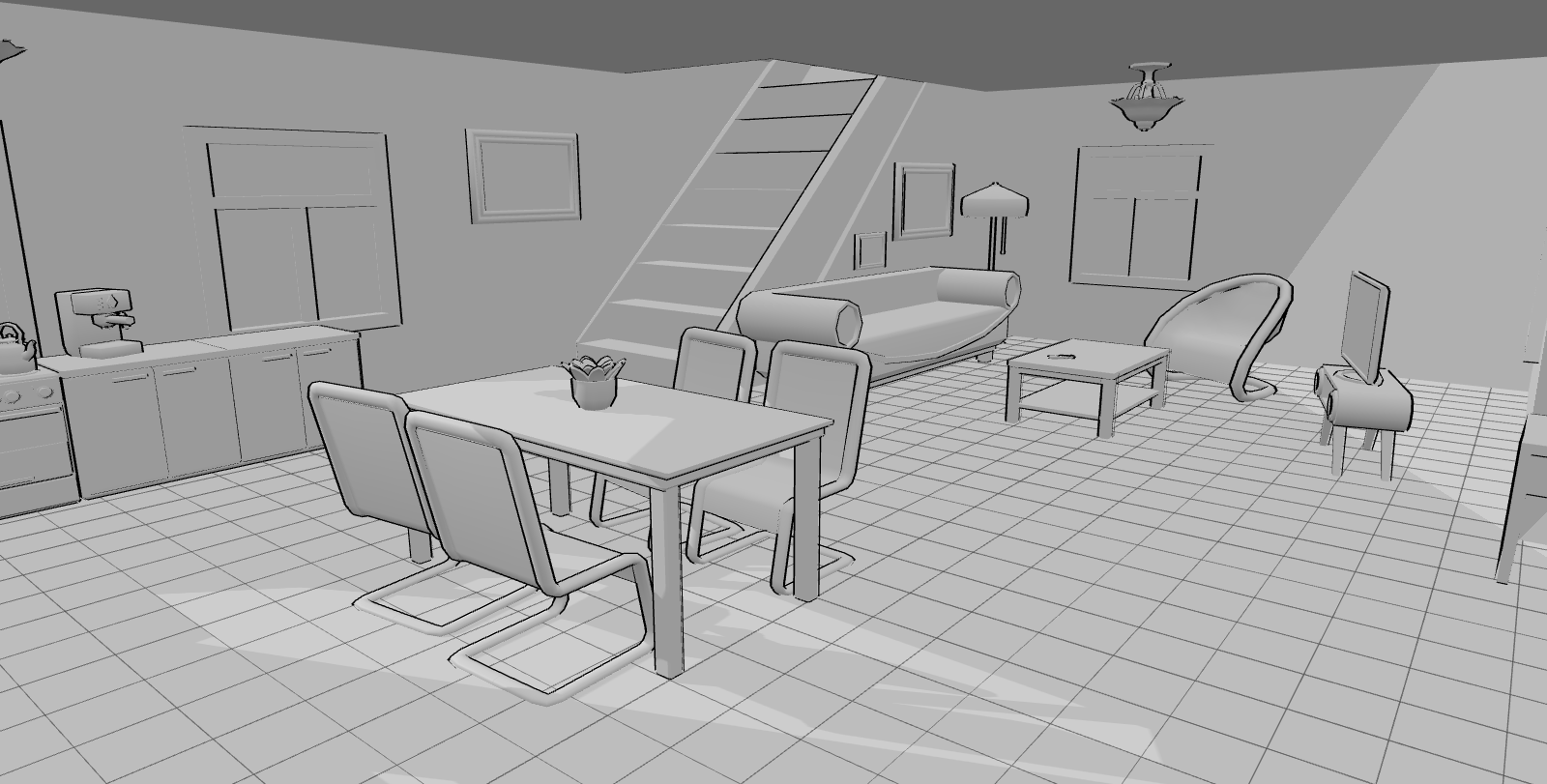
Familiar environments help you practice depth, perspective, and character placement without having to invent visual logic from scratch.
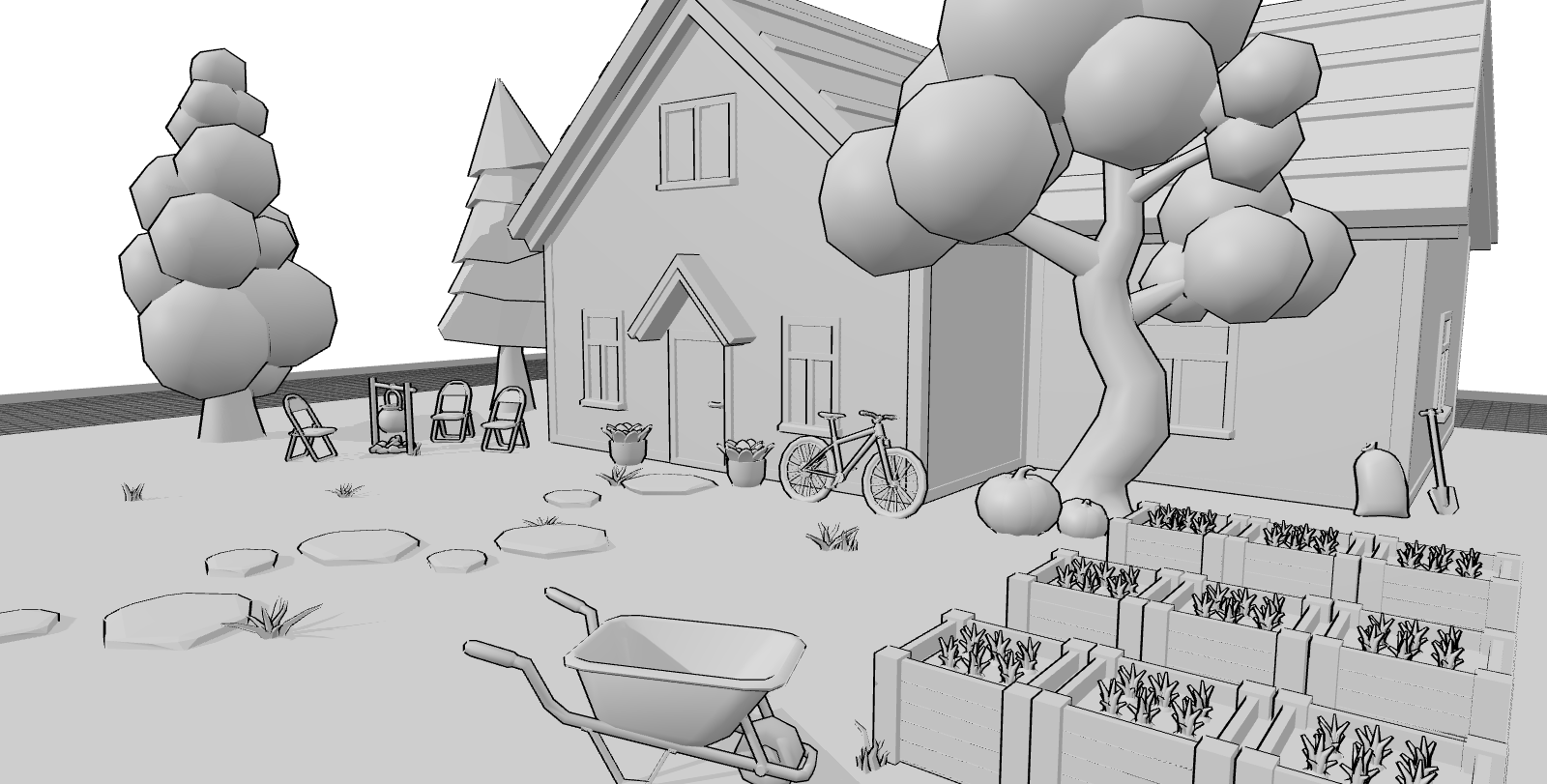
If you’re new to scene design, everyday environments are the easiest entry point. Familiar spaces like suburban houses or simple interiors already carry believable scale and logic. You don’t need to invent how the space works - you can focus on placing characters, adjusting camera angles, and understanding depth without friction.
Stylized & Narrative Environments
Stylized scenes naturally communicate story and mood, making them ideal for studying composition that supports narrative instead of decoration.
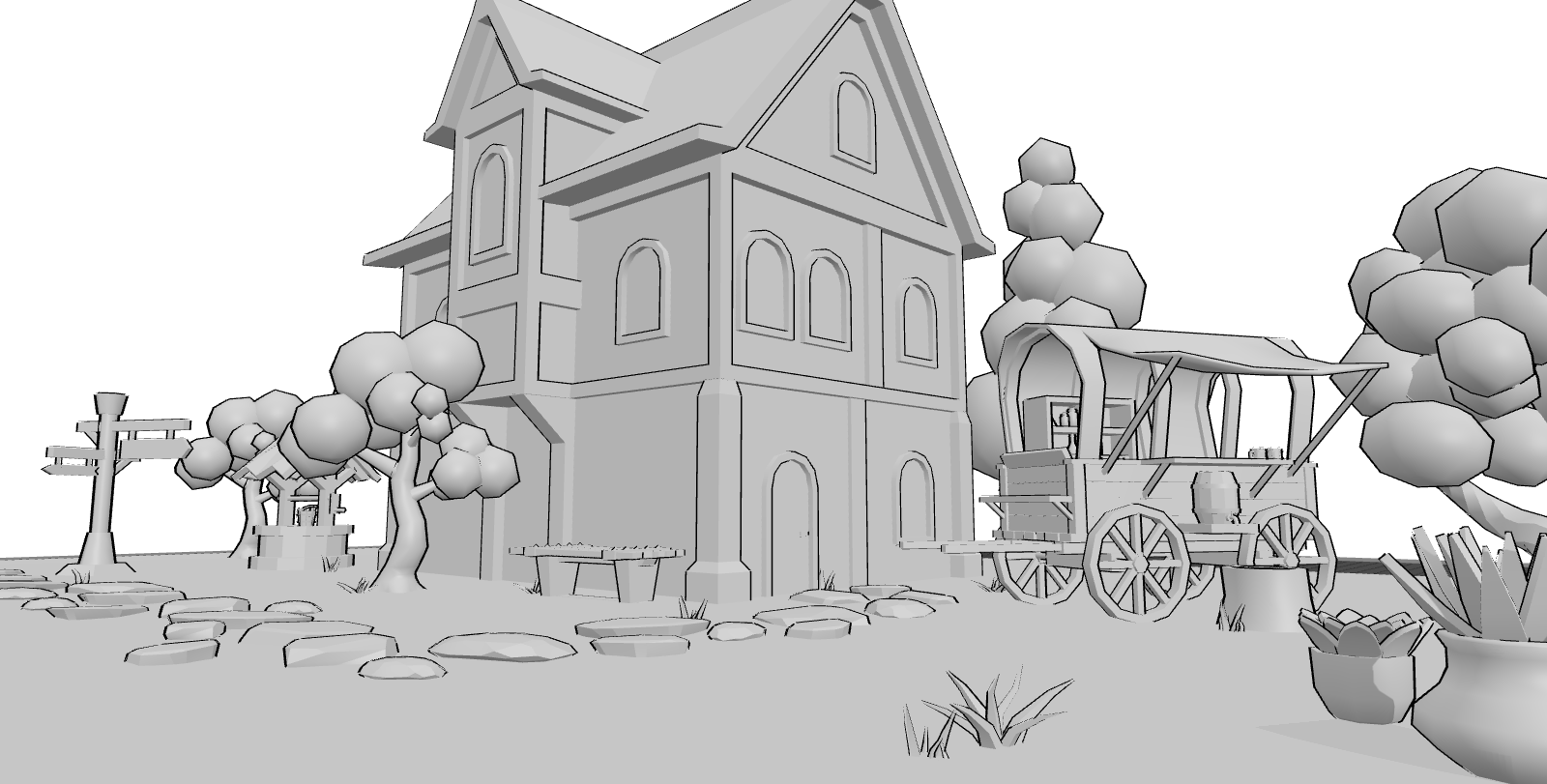
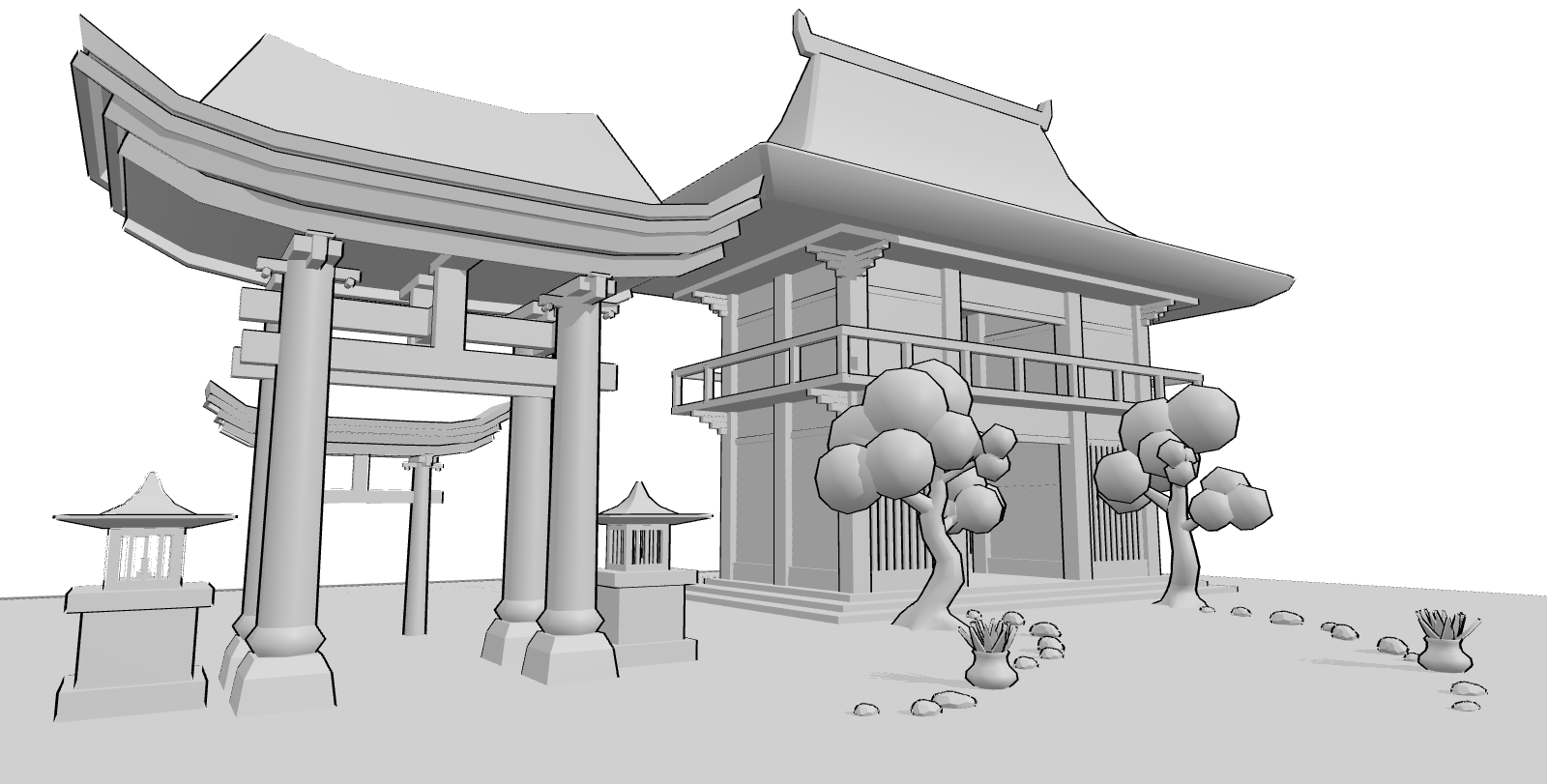
Stylized environments introduce storytelling automatically. A medieval or Japanese-inspired house already suggests culture, time, and mood. When you draw scenes like these, you’re not just practicing perspective – you’re learning how environment supports narrative.
Fantasy & World-Building Scenes
Fantasy environments give you creative freedom while keeping the spatial structure intact, so world-building stays focused instead of overwhelming.
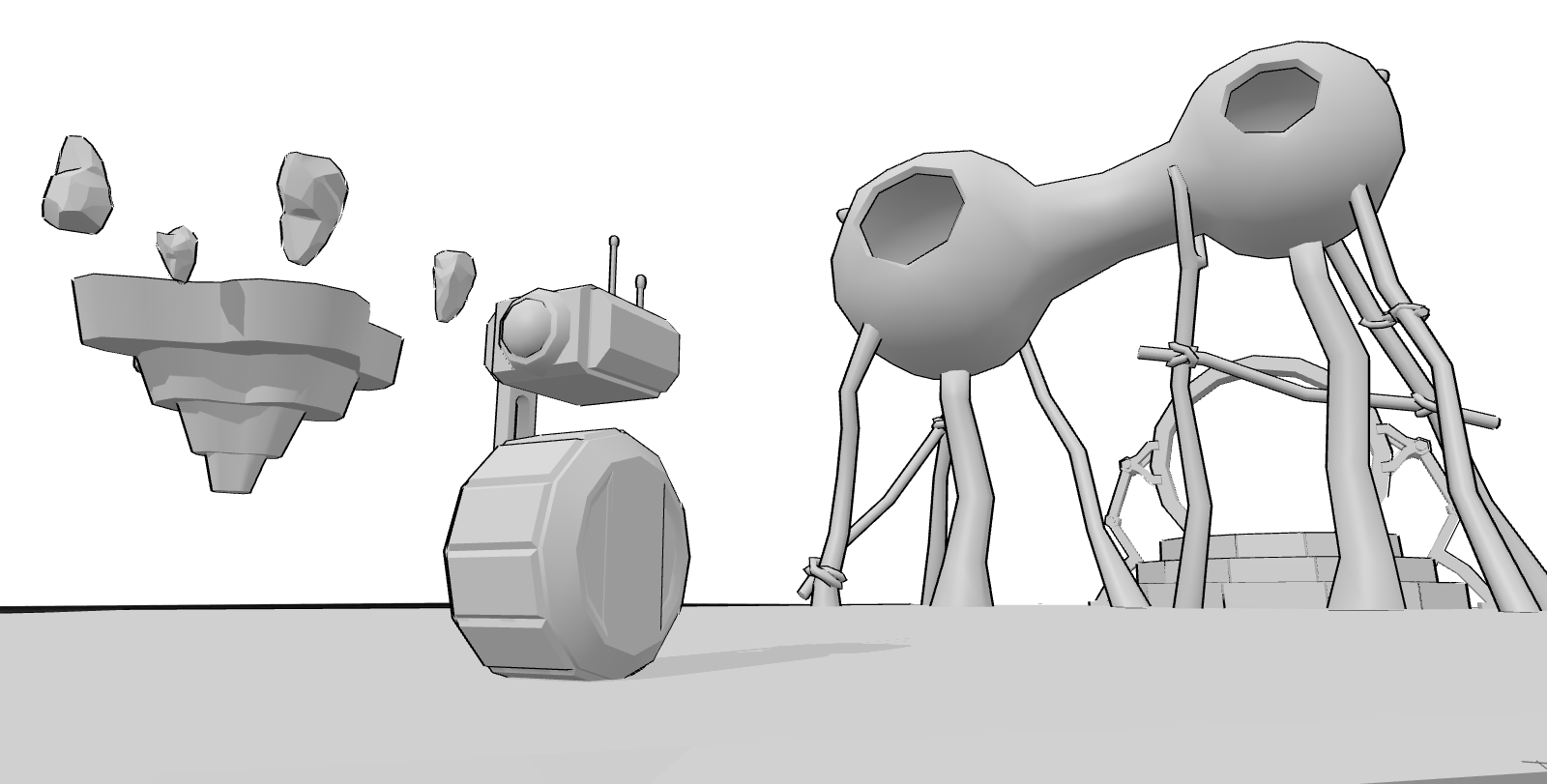 Fantasy environments invite experimentation, and premade scenes keep that exploration grounded. Defined space and structure let you play with atmosphere and composition without overthinking.
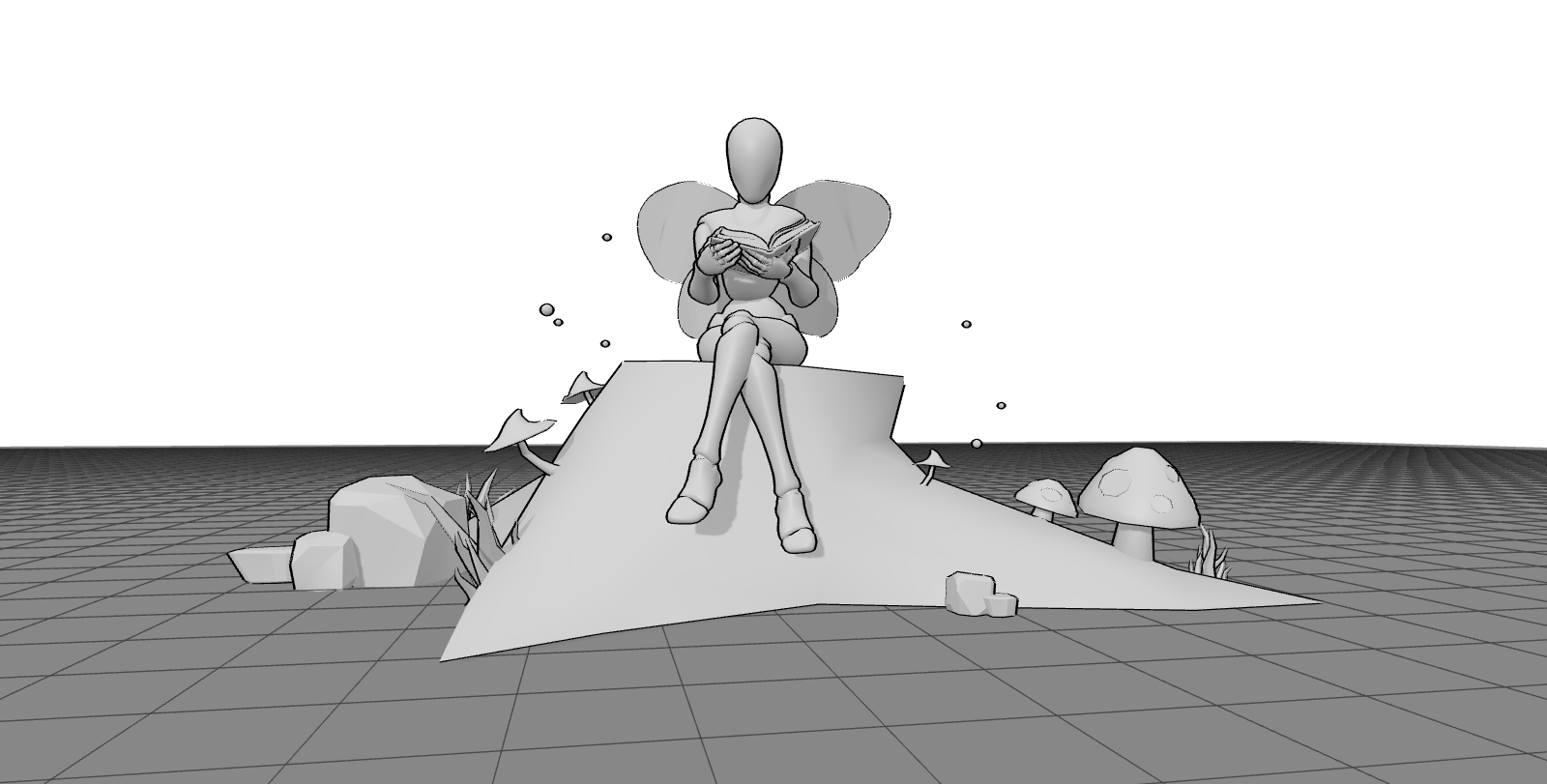
A Practical Way to Work With Premade Scenes
The key is not treating a premade scene as a final image, but as a starting condition. The point of these references is not to lock you into a fixed setup, but to give you scenes you can shape before you draw.
You choose the viewpoint. You control the light. You decide what stays and what disappears. A small camera shift changes the entire read of the scene. A single light adjustment sets the mood. Removing clutter sharpens focus.
Characters aren’t added last - they’re placed early, in relation to the space around them. The environment stops being a backdrop and starts participating in the image.
By the time your pencil touches the page, the decisions are already made. You’re drawing with intent, not searching for it.
That’s how premade scenes turn into personal scenes - and why working this way feels clear instead of exhausting.
When Premade Scenes Help the Most
Premade scenes are especially powerful during those moments when your motivation is there, but your clarity isn’t.
They help when you want to practice scenes without spending half your session planning, when you’re learning how characters interact with space, and when you want to improve environment drawing without burning out on technical setup.
Most importantly, they help you stay in motion - which is where real progress lives.
Final Thoughts
Scene design doesn’t improve through pressure. It improves through repetition, understanding, and momentum. Premade scenes don’t replace your creativity - they protect it. They give you a stable ground to stand on so you can make better decisions, faster, with less friction.
If scenes have felt like a wall, stop trying to break through it headfirst.
Step through a door instead.
Draw inside structure.
Learn through action.
And let the scene work with you, not against you.