How to Draw Sitting Poses From Any Angle With 3D Pose References
Sitting poses often look simple.
After all, the character isn’t running, jumping, or performing an action scene. But once you start sketching, you quickly realize they’re surprisingly difficult. A seated character has to support their own weight, interact naturally with the chair or object beneath them, and still communicate personality through body language.
Over time, I realized that drawing convincing sitting poses isn’t about memorizing dozens of poses. It’s about understanding how the body reacts to support, gravity and perspective.
The body has to interact naturally with whatever it’s sitting on. A slight change in seat height affects the knees. A soft couch changes the spine. Resting an arm on an armrest shifts the shoulders. Even moving the camera a little can completely change how the pose reads.
This is one of the reasons I enjoy working with 3D references. Instead of relying on a single photo or imagining how the pose would look from another viewpoint, I can explore it freely, compare different camera angles, and study how the body adapts to various types of furniture before I start drawing.
- Every Sitting Pose Tells a Different Story
- The Pelvis: The Foundation of Every Sitting Pose
- Don’t Draw the Chair Last
- Explore Different Types of Sitting References
- Contact Points: Where the Body Meets the Object
- Male and Female Sitting Poses
- Draw Sitting Poses From Any Angle
- Common Mistakes When Drawing Sitting Poses
- Sitting Poses Are Great for Storytelling
- Why 3D References Make Sitting Poses Easier
Every Sitting Pose Tells a Different Story
One of the biggest mistakes beginners make is thinking of sitting as a single pose.
In reality, there are hundreds of ways someone can sit, and each one communicates something different about the character.
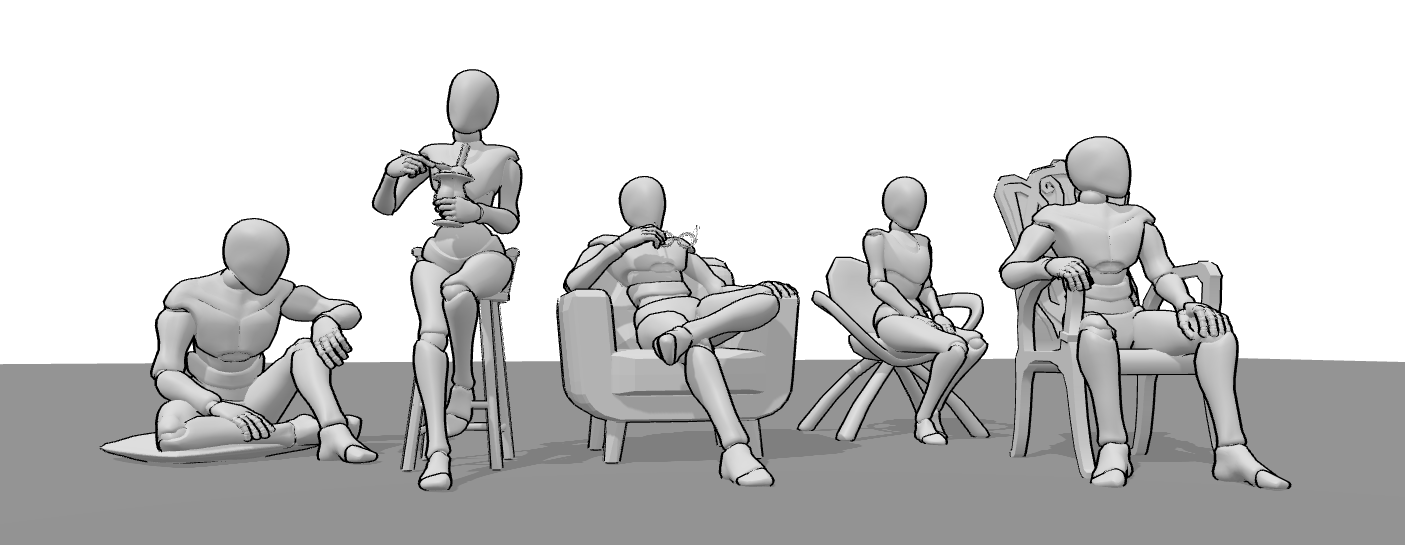
A confident character might lean back with one arm resting on the chair. Someone who’s nervous often sits closer to the edge of the seat, keeping their shoulders raised and their feet tucked underneath them. An exhausted character may collapse into a couch with rounded shoulders, while a king on a throne naturally occupies more space with an open, upright posture.
The pose itself becomes part of the storytelling.
The Pelvis: The Foundation of Every Sitting Pose
When drawing sitting poses, many artists focus on the visible parts first - the hands, the face, the legs, or the overall shape of the character. However, the real foundation of the pose is hidden: the pelvis.
The pelvis determines how the entire body sits and balances. A small change in its angle affects the spine, the position of the shoulders, the placement of the legs, and even the way the head naturally rests. A character leaning forward while sitting has a completely different pelvic position than someone sitting back in a relaxed posture, even if the difference seems subtle at first glance.
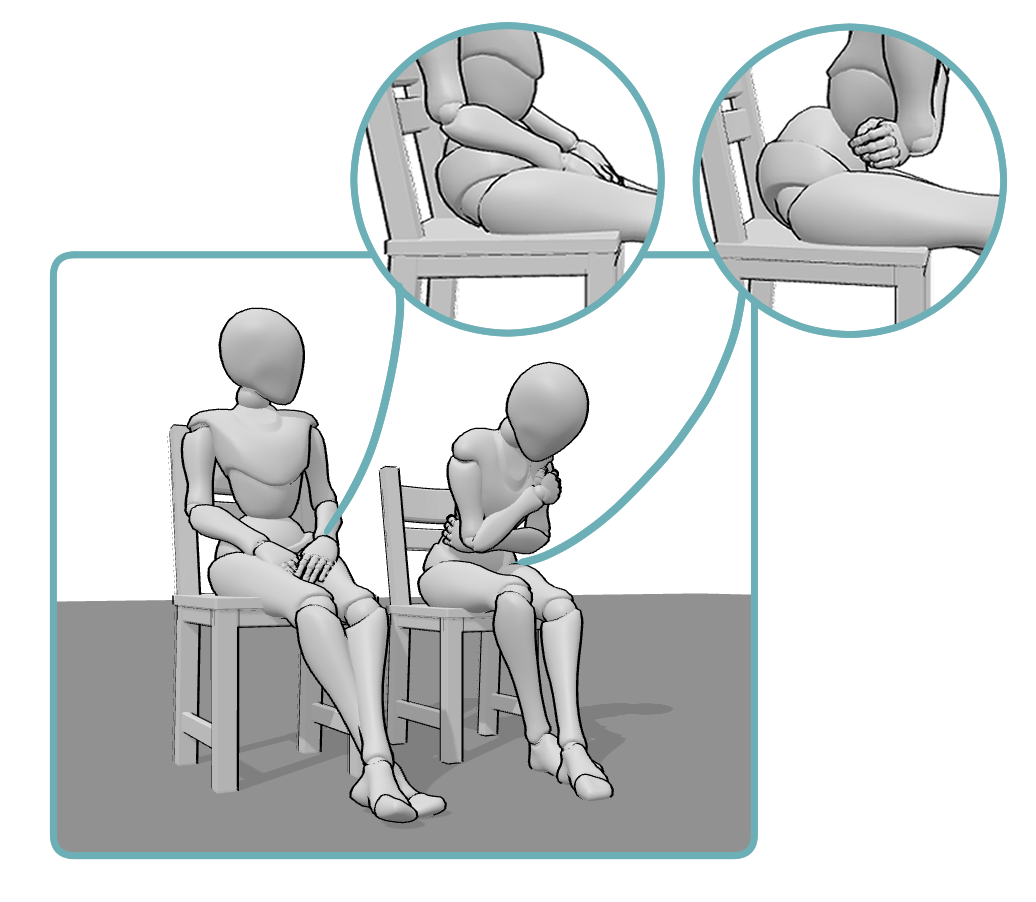
Understanding the pelvis helps you avoid one of the most common problems in sitting poses: characters that look like they are simply placed on top of a chair instead of actually sitting on it. Before adding details, try to imagine the pelvis as the point where the character’s weight connects with the surface underneath.
A useful exercise is to take the same character and draw three versions of the same sitting pose: one leaning forward, one sitting upright, and one relaxed with a curved spine. Notice how the entire body changes even though the character is still sitting in the same place.
Don’t Draw the Chair Last
One habit I had for years was drawing the character first and adding the chair afterward.
That rarely works.
The chair, sofa, bench, or bed directly affects the entire pose. The pelvis tilts differently, the knees rise or fall, the spine changes shape, and the arms naturally look for somewhere to rest. Instead of treating furniture as a background object, think of it as part of the pose itself.
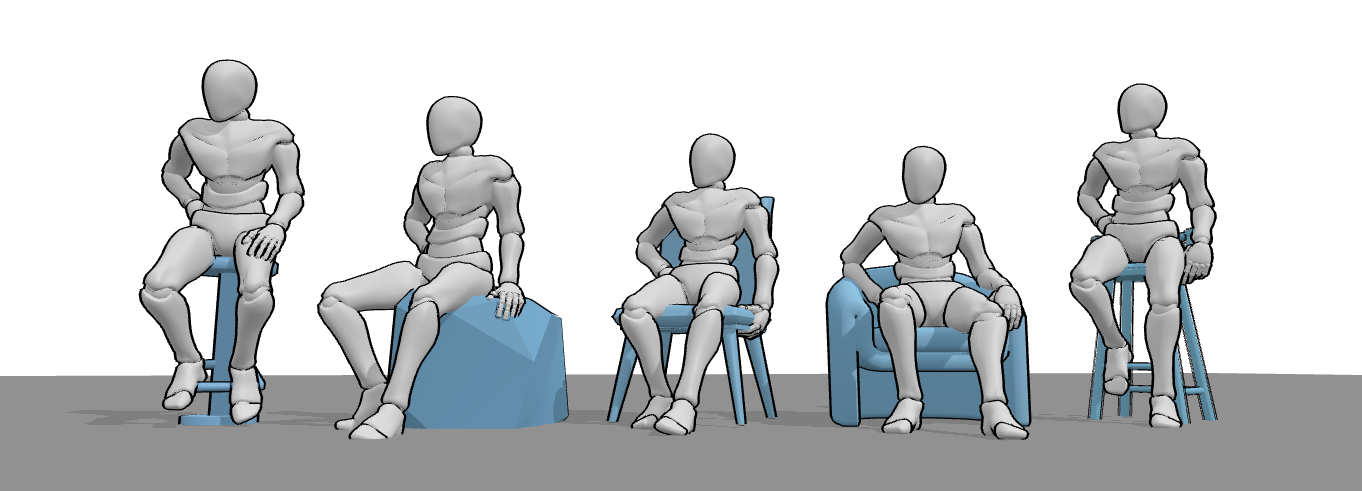
This becomes much easier with 3D references because you can see exactly how the body interacts with different objects instead of inventing everything from imagination.
Explore Different Types of Sitting References
One thing I appreciate when studying poses is variety. Real people don’t spend all day sitting on identical wooden chairs.
Depending on the scene, your character could be sitting on:
- a sofa
- an armchair
- an office chair
- a bench
- a stool
- a bed
- the floor
- stairs
- a car seat
- a throne
- a rock outdoors
- any other object a character can sit on
Each surface creates different angles in the hips, legs, back, and shoulders. Having access to a wide variety of props makes it much easier to build scenes that feel natural and believable.
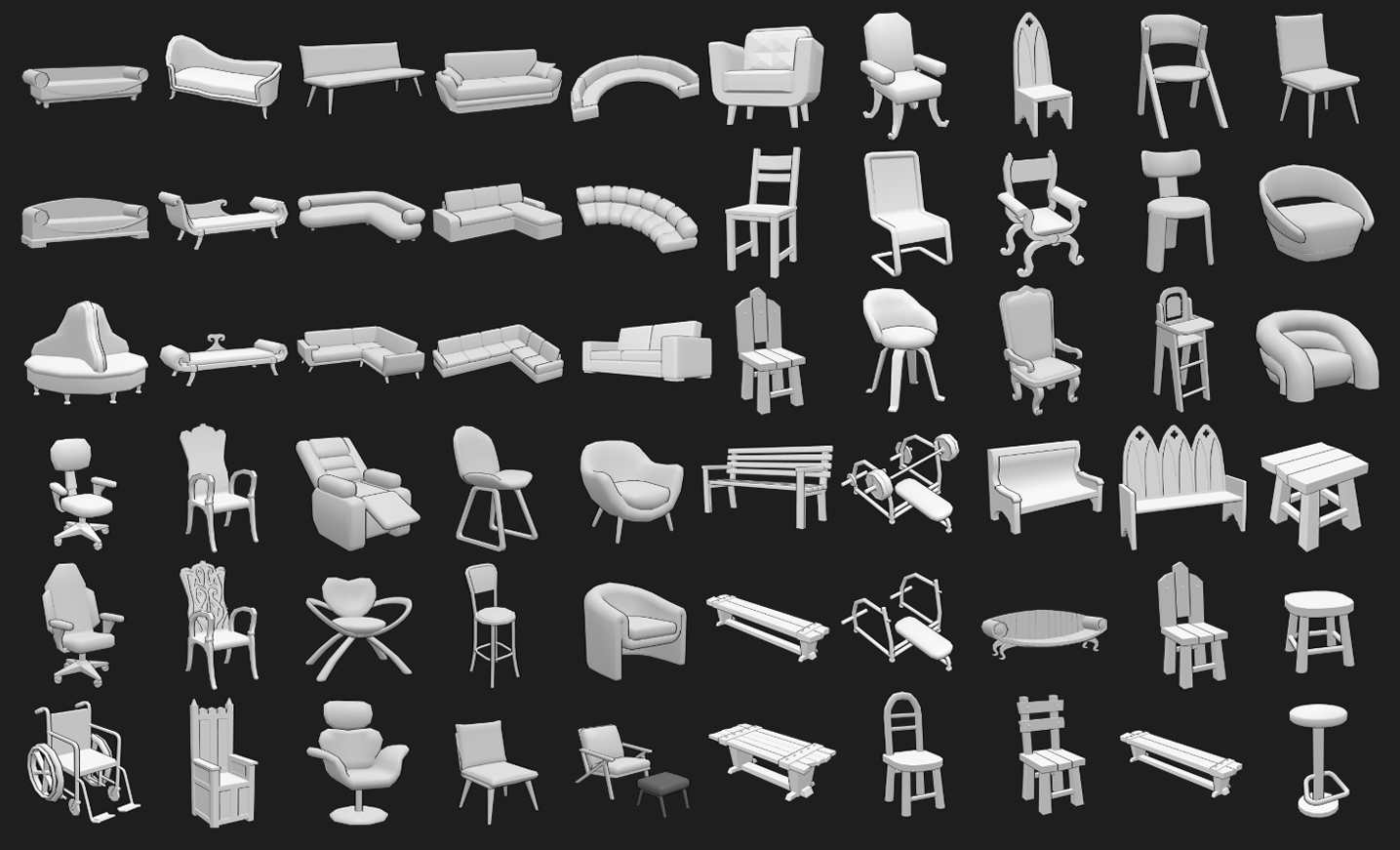
If you’re looking for inspiration, PoseMyArt includes collections for female sitting poses, male sitting poses, cute sitting poses, anime sitting poses, and many other variations, making it easier to find references that match different characters and art styles.
Contact Points: Where the Body Meets the Object
One of the details that can instantly make a sitting pose feel more realistic is something many artists overlook: contact points.
A character is not just sitting near an object - the body is constantly interacting with it. The hips press into the seat, the feet connect with the floor, the back may rest against a sofa, and the hands often search for support on armrests, tables, or nearby objects.
When these connections are missing or unclear, the pose can feel weightless. The viewer might not immediately know why something looks wrong, but the character will appear as if they are floating or balancing unnaturally.
This is especially important when drawing different types of furniture. A soft couch changes the way the body sinks and relaxes compared to a hard chair. A high bar stool creates a different leg position than a low bench. The object supporting the character becomes part of the anatomy of the pose.
Studying these relationships with 3D references makes the process much easier because you can observe exactly where the body touches the environment and how those points influence the overall posture.
Male and Female Sitting Poses
There isn’t a single “male pose” or “female pose.”
Personality always matters more than gender. However, anatomy does influence how the body naturally rests.
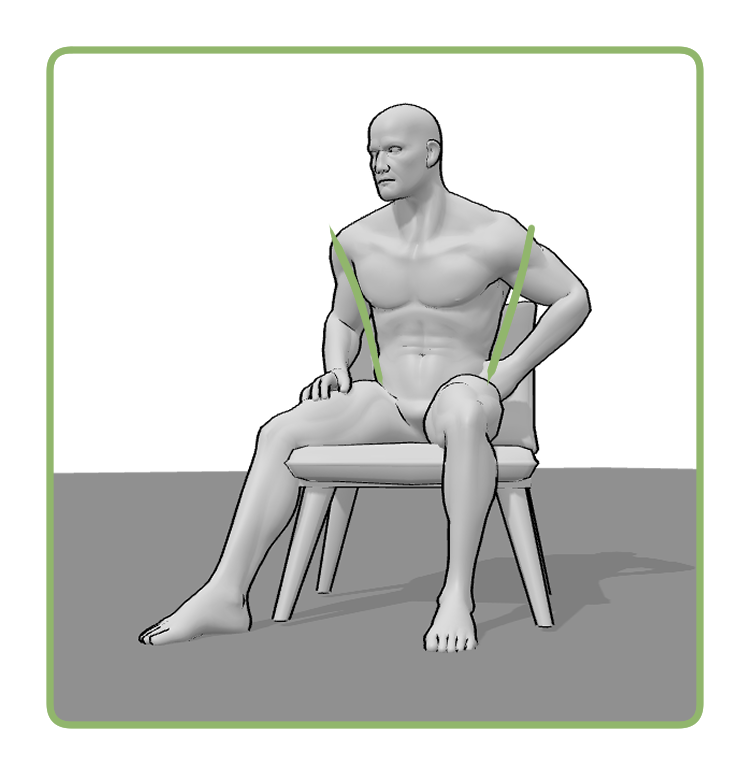
Male characters often appear broader through the shoulders and rib cage, which can create wider, more open silhouettes.
Female characters frequently show more visible curves through the hips and waist, causing the weight distribution to look different in seated poses.
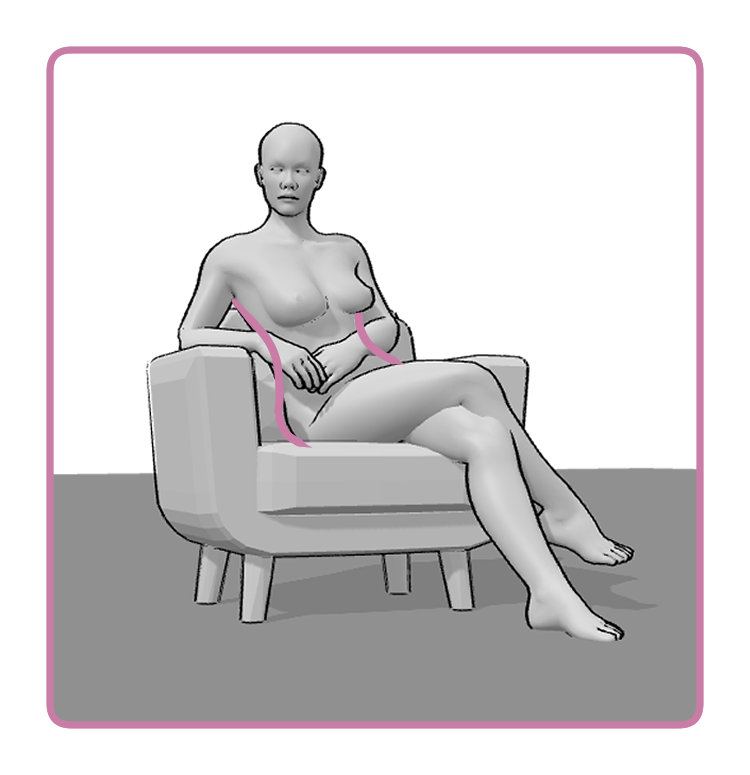
These are subtle differences - not rules.
A confident female warrior may occupy as much space as any male character, while a shy male student might curl into himself.
The important part is matching the pose to the personality rather than forcing stereotypes.
Draw Sitting Poses From Any Angle
This is where many artists run into trouble.
A front view feels manageable. A side view is usually fine. But rotate the camera 45 degrees - or place it above or below the character - and suddenly the pose falls apart.
The problem usually isn’t anatomy. It’s perspective. Our brains automatically replace what we actually see with what we think the body should look like.
Being able to rotate a 3D reference freely makes this much easier because every limb stays correctly aligned regardless of the viewing angle.
Instead of redrawing the pose from scratch, you simply explore it until you find the most interesting composition.
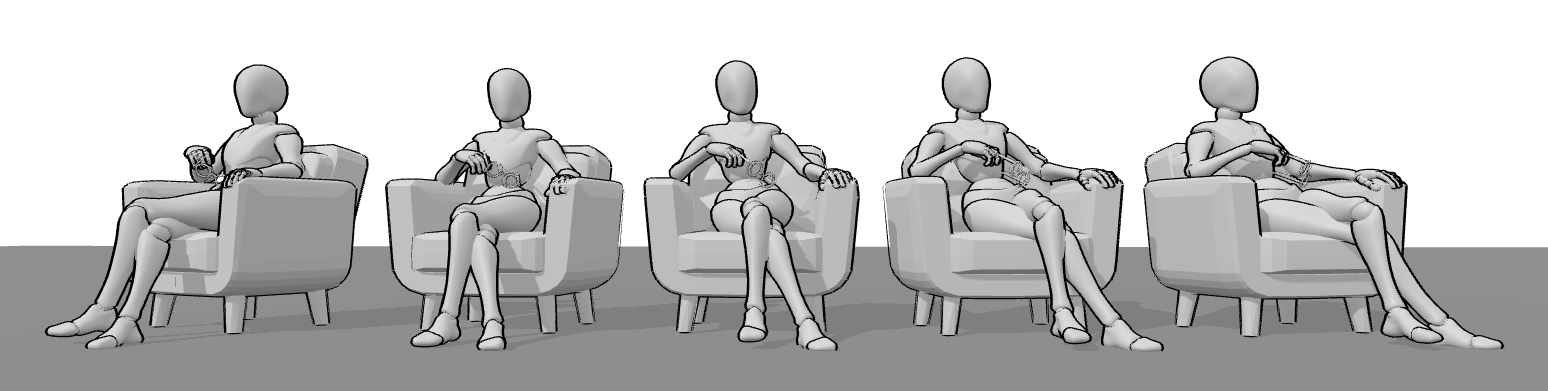
You’ll quickly discover which viewpoints feel comfortable - and which ones need more practice.
Silhouette: Can You Understand the Pose Without Details?
Before adding facial features, clothing details, or small anatomy corrections, a strong character pose should already communicate something through its silhouette.
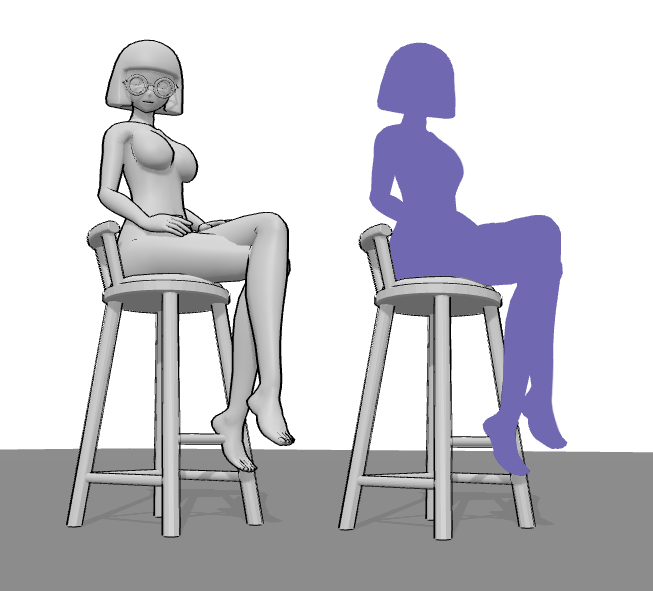
A silhouette removes everything unnecessary and leaves only the most important information: the shape, balance, and body language of the pose. If a character looks confident, tired, nervous, or relaxed only through their outer shape, the pose is already doing its job.
This is particularly useful when designing sitting poses because small changes can completely transform the feeling of a character. A closed posture with knees pulled closer to the body creates a very different impression from an open pose with relaxed shoulders and extended limbs.
Many beginners try to add emotion through facial expressions, but the body often tells the story first. A character with the right posture can communicate their mood even without a face.
A great exercise is to fill your character with a solid black (or any other) color and remove all internal details. If the pose still reads clearly, you have created a strong foundation.
Common Mistakes When Drawing Sitting Poses
Most sitting pose problems come from just a few recurring mistakes.
- The character appears to float above the chair.
- The pelvis doesn’t actually support the body’s weight.
- Both legs are perfectly symmetrical, making the pose look stiff.
- The spine stays completely straight in relaxed poses.
- Feet don’t touch the floor naturally.
- The furniture is added after the body instead of influencing it.
Whenever something feels “off,” check where the character’s weight is actually resting.
Gravity usually reveals the mistake.
Sitting Poses Are Great for Storytelling
Action scenes get attention, but quiet scenes often create stronger emotional connections.
Two friends talking on a park bench.
Someone reading on a sofa.
A tired traveler resting in a car.
A detective waiting in an office chair.
A couple sitting together while watching the sunset.
These moments rely almost entirely on posture. Even the distance between two seated characters changes the story. Are they leaning toward each other? Sitting back-to-back? Keeping an awkward gap?
Tiny adjustments communicate relationships without a single line of dialogue.
The Same Seat Can Tell Completely Different Stories
A sitting pose is never just about where a character places their body.
The same bench, chair, or sofa can create completely different emotions depending on posture, distance, and body language.
A character sitting alone on a bench could be:
- Waiting - sitting upright, checking the surroundings, leaning slightly forward
- Grieving - shoulders dropped, head lowered, body closed off
- Flirting - leaning closer, relaxed posture, open body language
- Reading - comfortable position, focused gaze, relaxed shoulders
- Sleeping - collapsed posture, loose limbs, no muscle tension
- Hiding - pulled-in pose, knees closer to the body, protective posture
- Talking - active gestures, turning the torso toward another person
The furniture stays the same. The character stays seated. But the story completely changes.
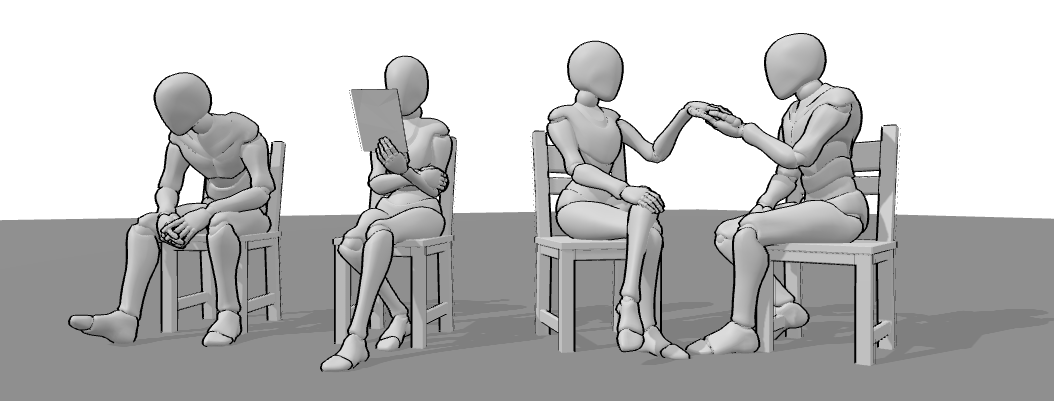
This is why learning different sitting poses is not only an anatomy exercise - it is a storytelling skill.
Why 3D References Make Sitting Poses Easier
After years of drawing from photos, one thing I appreciate about 3D references is flexibility. Instead of searching through hundreds of images hoping to find the right pose, I can adjust the camera, rotate the model, change the furniture, and immediately explore new compositions.
That’s especially useful for sitting poses because perspective changes everything.
With PoseMyArt, I often experiment with multiple viewpoints before I even start sketching. Sometimes simply lowering the camera or rotating it slightly transforms an ordinary pose into a much stronger illustration.
The goal isn’t to copy the reference.
It’s to remove unnecessary guesswork so you can spend more time designing expressive characters and less time fixing anatomy.
Final Thoughts
Great sitting poses aren’t defined by complicated anatomy.
They’re defined by believable weight, natural interaction with the environment, and body language that supports the story you’re trying to tell.
Whether your character is relaxing on a couch, sitting in a car, waiting on a bench, or sharing a quiet moment with another character, observing how the body responds to different surfaces will immediately improve your drawings.
And when you can explore those poses from any angle with interactive 3D references, practicing becomes faster, more enjoyable, and much more creative.