Drawing Couple Poses: A Guide to Body Language and Composition
Drawing a couple sounds easy enough: put two people next to each other, give them a romantic pose, and you’re done. Then one person’s arm disappears into the other’s ribcage, their legs merge into an anatomical puzzle, and a simple hug somehow requires the engineering skills of a bridge designer.
Drawing two figures together comes with a challenge that single-figure studies rarely prepare you for: both bodies need to work anatomically, but they also have to work together. Their proportions, balance, overlapping shapes and points of contact all influence one another. A pose that looks perfectly natural in real life can become surprisingly difficult to draw once you have to figure out exactly where every limb goes.
The good news is that you don’t need to memorize hundreds of romantic poses to get better at drawing couples. Understanding how the figures relate to each other gives you a much stronger starting point, whether you’re sketching a quiet embrace, a playful interaction, or a dramatic scene with two characters tangled up in each other’s space. 3D references can make this process considerably easier by letting you examine both figures from different angles and see how their bodies overlap and connect.
Find the Right Couple Pose Reference
You don’t have to build every couple pose from scratch. Starting with an existing pose reference can save time and give you a clearer idea of how two figures interact, especially when you’re still figuring out their body positions and points of contact. Look for a pose that captures the relationship or movement you want to draw, then use it as a foundation for your own composition. You can keep the original arrangement or adapt it to suit your idea.
When I’m looking for couple poses to draw, I like to explore different types of interactions and scenes. PoseMyArt offers a range of references to work from, including couple drawing references for general inspiration and anime couple poses for more stylized artwork.
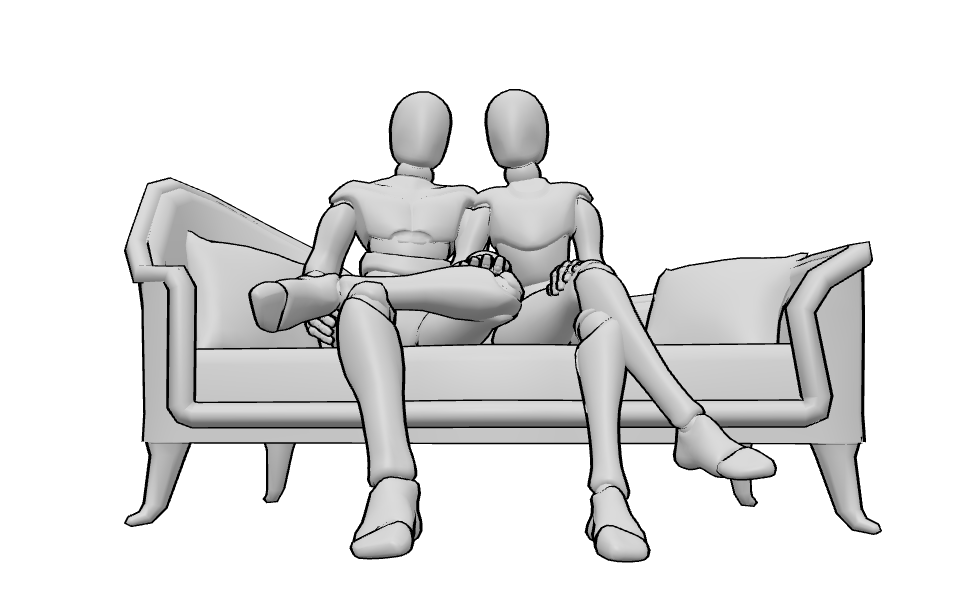
If you’re looking for something more specific, you can also browse couple walking poses, carrying poses or romantic poses.
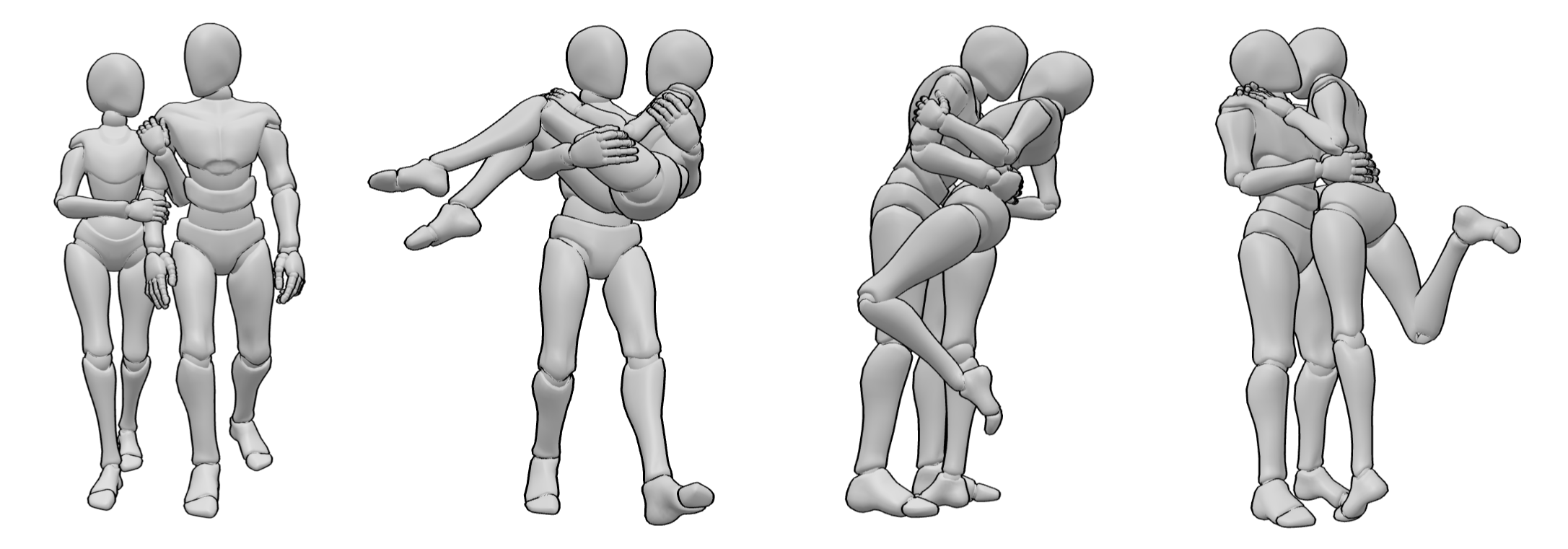
For closer physical contact, start with the kissing poses or hugging poses collections. These interactions involve more than positioning two figures side by side: the angle of their heads, the placement of their arms, and the way their torsos meet all affect how convincing the pose looks.
Small adjustments can make a big difference. Change an arm position, turn a head, or rotate the torso to bring the pose closer to your intended scene. With 3D references, you can also adjust the camera angle to find a more interesting composition without having to search for an entirely new reference.
If none of the existing poses quite works for your idea, you can always combine two individual poses and build your own setup.
How to Build a Couple Pose Using 3D References
Let’s say you want to draw a couple hugging, but every reference you find has the wrong arm position, the wrong camera angle, or a completely different body type. Rather than searching endlessly for the perfect image, create your own 3D reference and adjust it to match the scene you have in mind.
1. Start with two separate poses.
Open PoseMyArt and add two 3D models. Look through the premade poses or animation library to find a useful starting point for each figure. One model might be standing with a relaxed posture, while the other leans forward or raises their arms. They don’t need to fit together perfectly yet; you’re looking for poses that require the fewest adjustments.
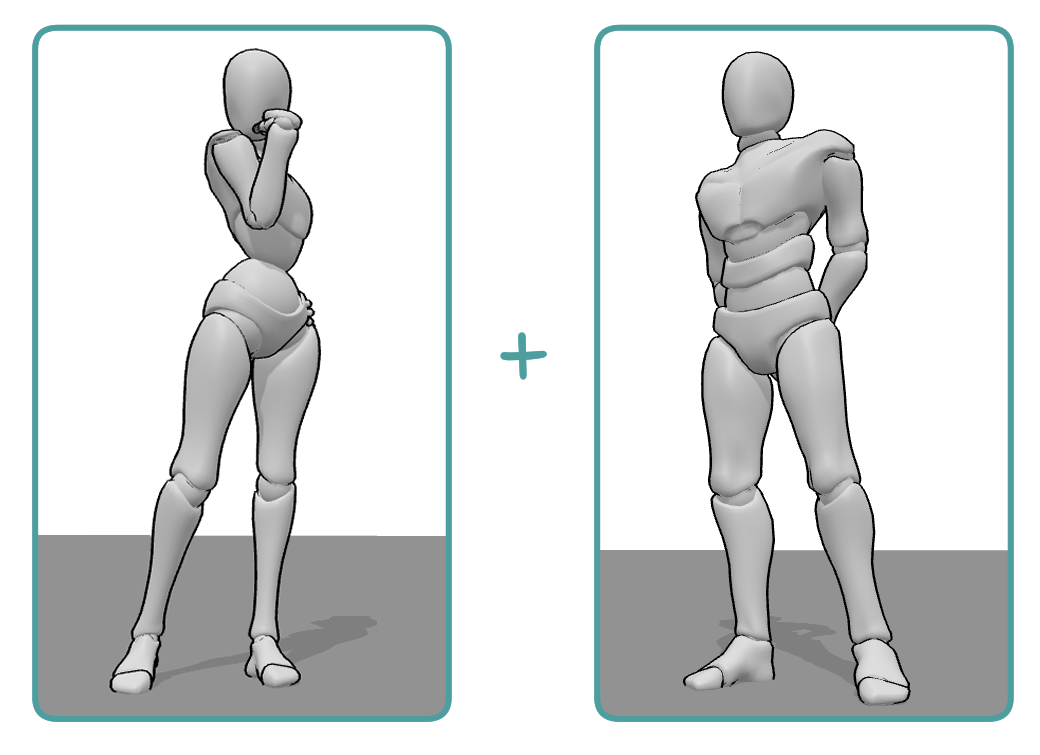
2. Adjust the poses to fit together.
Move the models closer together and establish their overall arrangement. Decide who stands taller, who leans in, and how their heads and shoulders relate to each other. Then adjust the relevant joints to create the interaction you want. For an embrace, for example, rotate one figure’s torso toward the other and position the arms around the partner’s body.
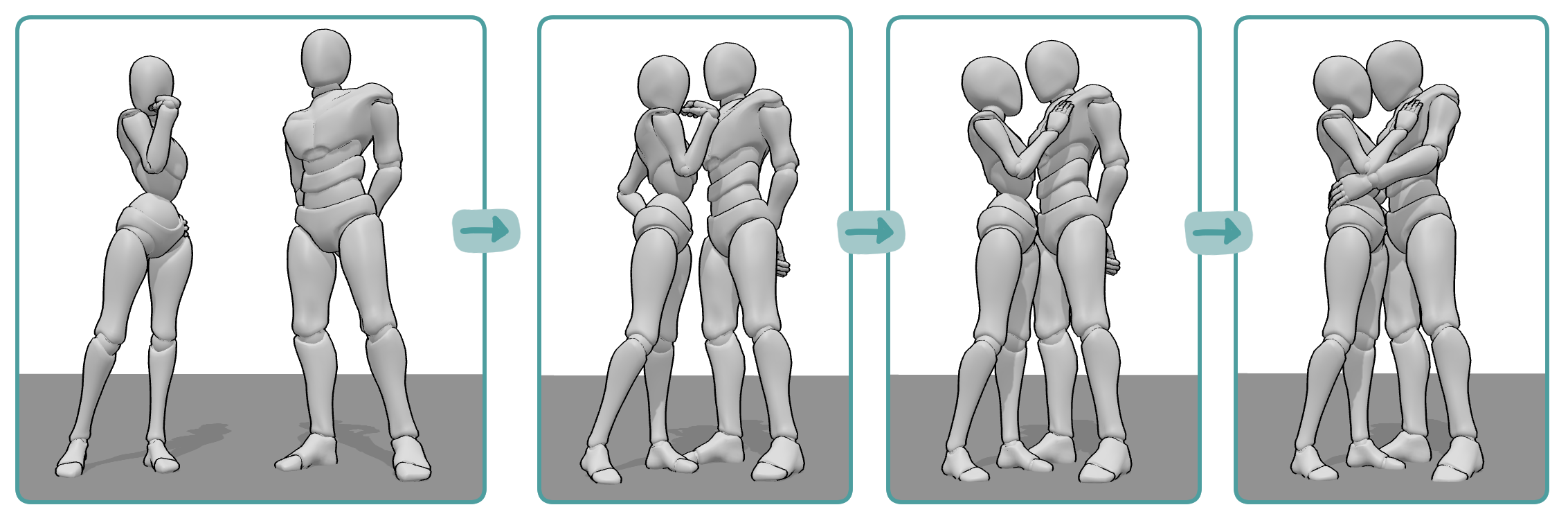
Tip: Give each model a different color. This makes it easier to tell the two figures apart when their bodies overlap, especially around the arms, legs, and torso. It’s a simple adjustment, but it can make a complicated interaction much easier to read.
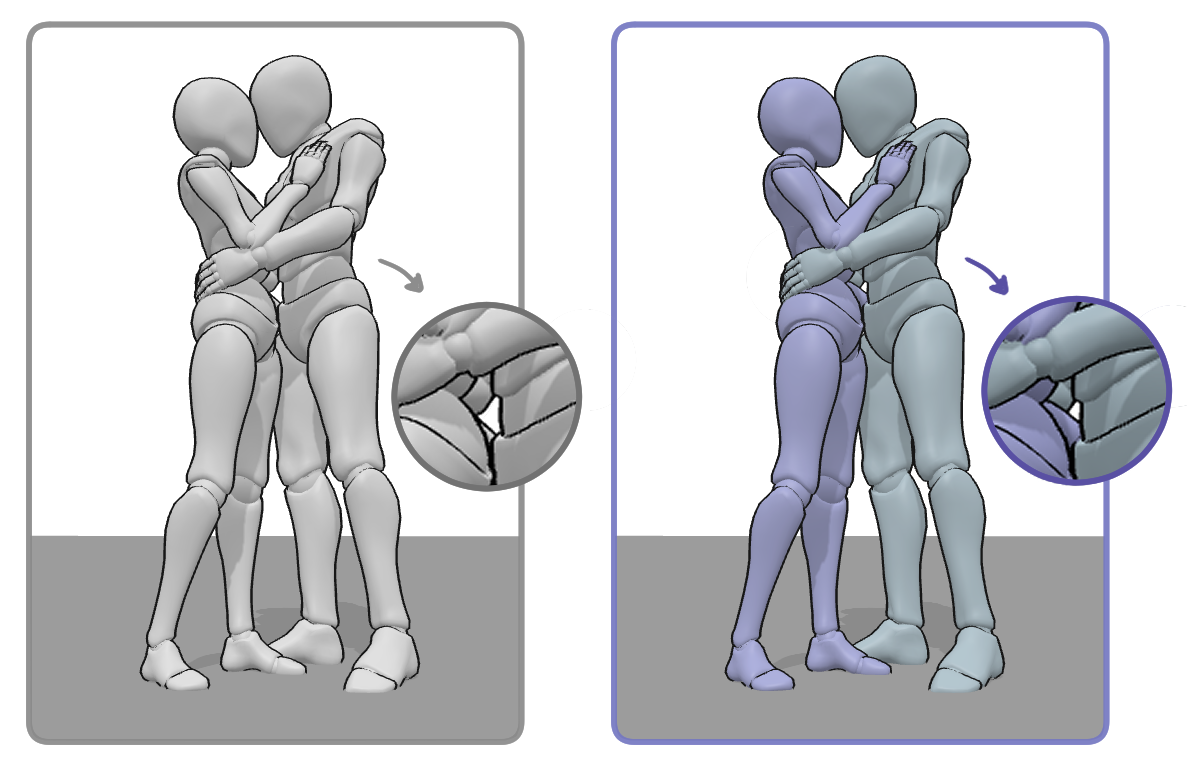
3. Test the camera angle instead of settling for the first view.
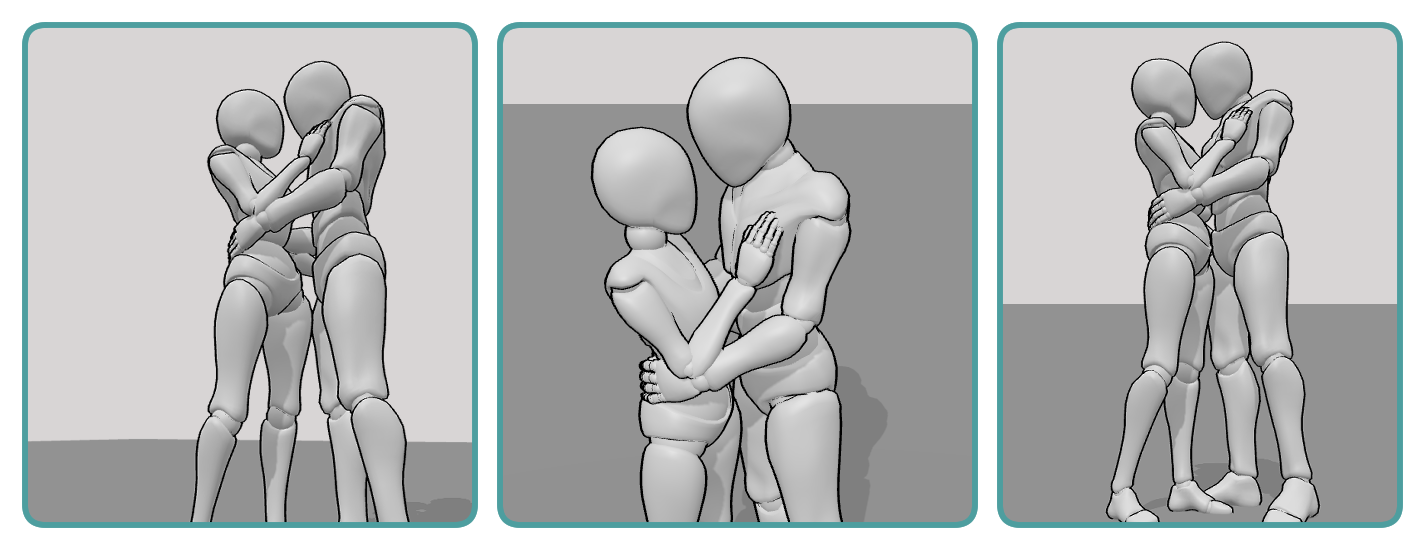
Once the pose starts working, orbit the camera around the scene. A front view might hide the arm wrapping around the back, while a three-quarter view reveals it clearly. Try a few angles before committing to one, especially if the hands or faces are important to the drawing.
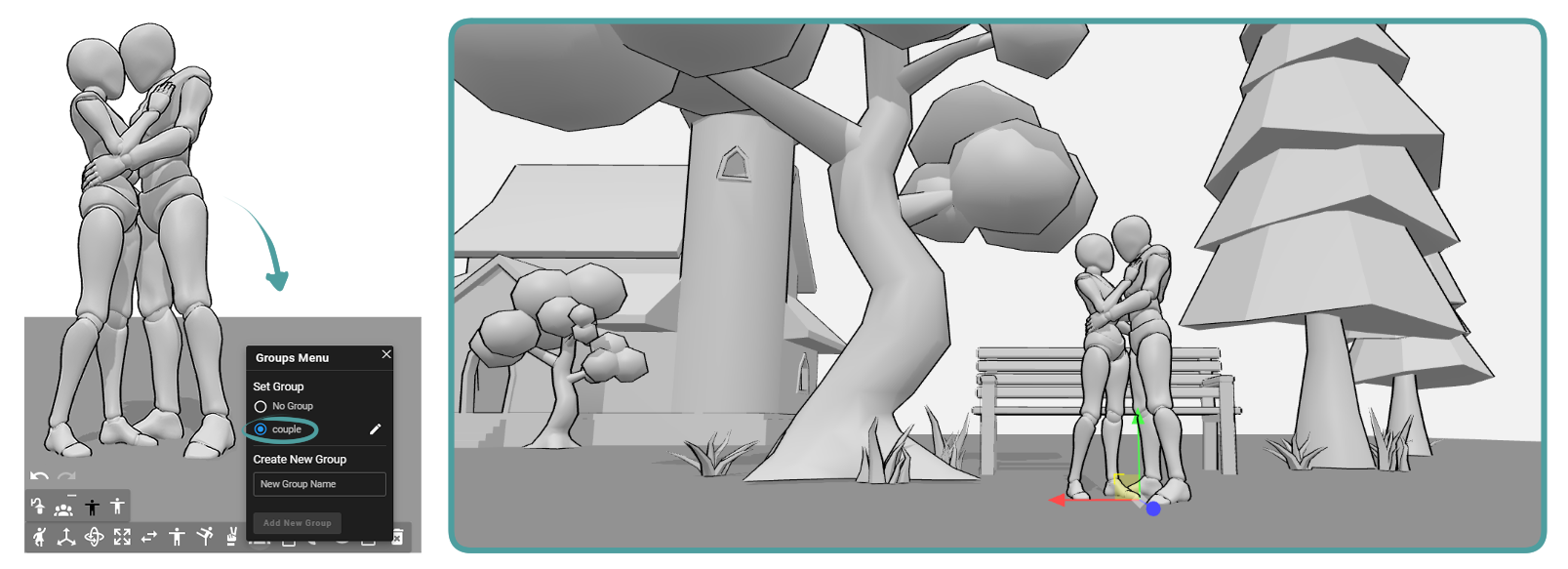
Tip: Use the Group function to move both models together. Once you’ve arranged the figures, you can group them and reposition the couple as a single unit. This is particularly useful when working on more complex compositions, as you can adjust the overall placement without having to move each model separately.
4. Export the reference and sketch the composition.
Save an image of your chosen view, then sketch the two figures using simple shapes and gesture lines. Focus on the overall silhouette, the direction of each torso, and the space the couple occupies. If the interaction reads clearly at this stage, you’re ready to develop the anatomy and details.

If something looks wrong in your sketch, return to the 3D scene and rotate the camera until the confusing area becomes easier to understand. You can also adjust the pose itself to test different positions and find the version that works best for your drawing.
You don’t have to reproduce every detail of the 3D models in your final drawing. Use the reference to work out the spatial relationships between the figures, then make your own decisions about gesture, expression, anatomy, and visual storytelling.
How to Draw Overlapping Figures
When two people interact, parts of their bodies inevitably overlap. An arm crosses a torso, one figure’s shoulder hides part of the other’s chest, or a leg disappears behind a hip. These overlaps help establish depth, but they can also make a drawing confusing if it’s unclear which body part belongs to whom.
Establish who’s in front.
Before adding details, decide which figure is closer to the viewer and where their bodies cross. Follow each arm and leg back to its source rather than drawing the visible shapes in isolation. If you lose track of a limb, simplify the figures into basic forms and trace the connection from shoulder to elbow to wrist, or from hip to knee to ankle.
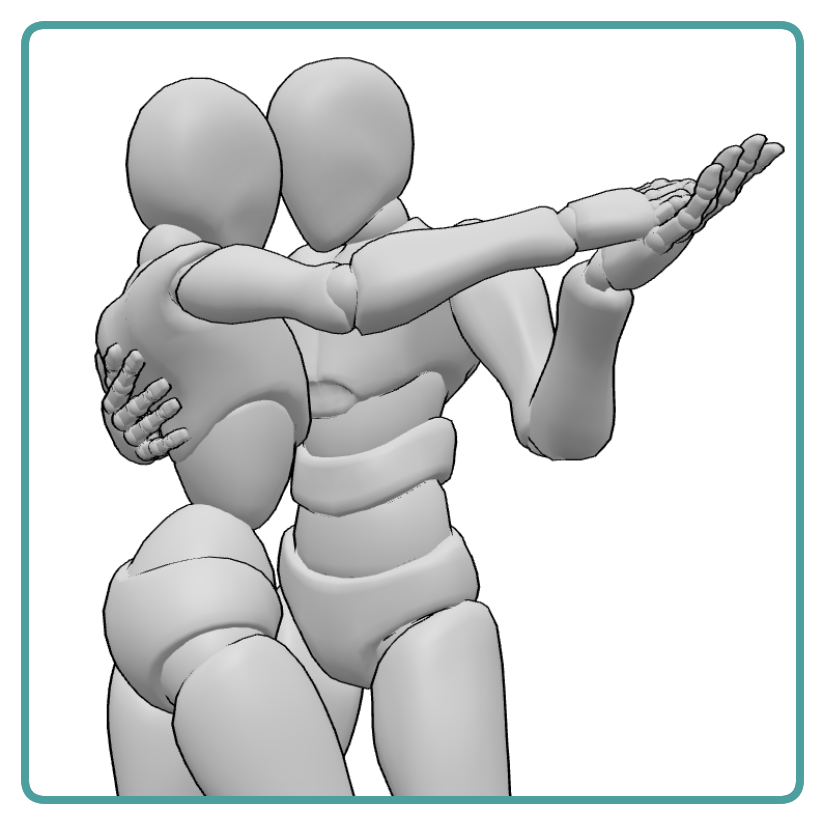
Keep the silhouettes readable.
Two arms pressed together can easily look like one oddly shaped limb. The same problem occurs when the contours of two torsos merge without a clear indication of where one body ends and the other begins. Small changes in the position of an elbow, shoulder, or hip can separate those shapes and make the interaction easier to understand. You don’t need a gap between every body part, but the overall silhouette should remain recognizable.
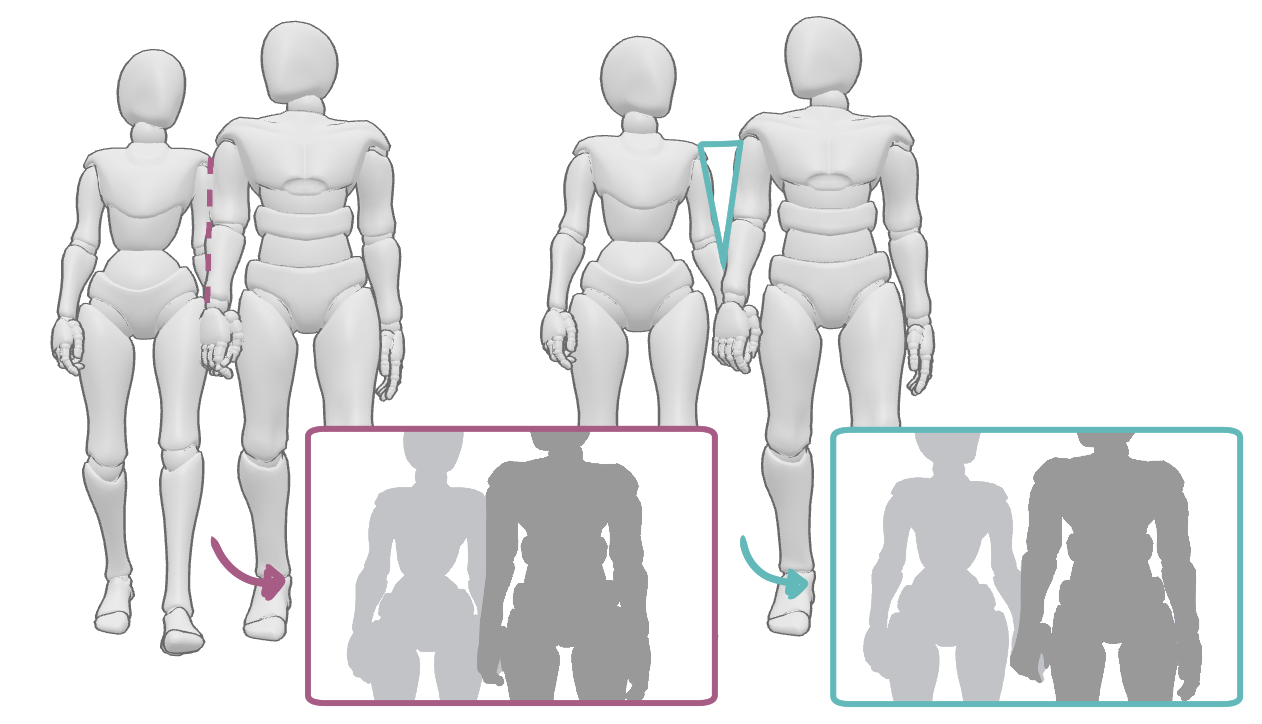
Use negative space to check the pose.
Look at the empty shapes between the figures and their limbs. A triangular gap beneath an arm, for example, can help define the angle of the elbow and distinguish the arm from the torso. These spaces can be just as useful as the visible contours when checking whether the overall arrangement makes sense. If a gap looks awkward or disappears entirely, try adjusting the pose before spending time on anatomy and details.
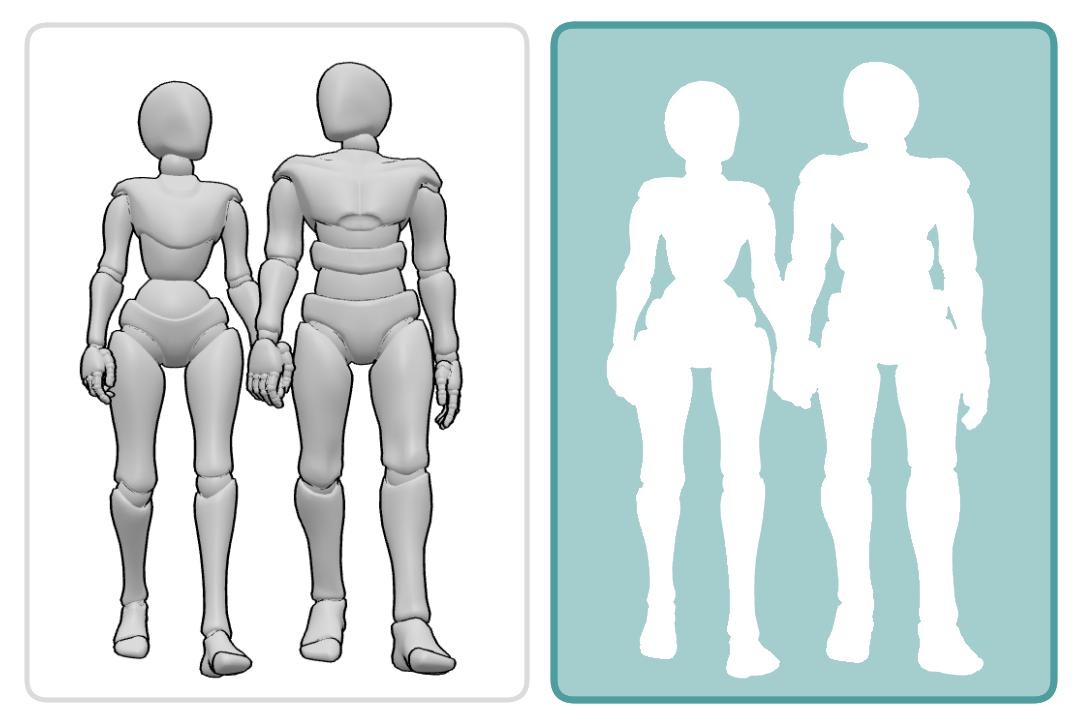
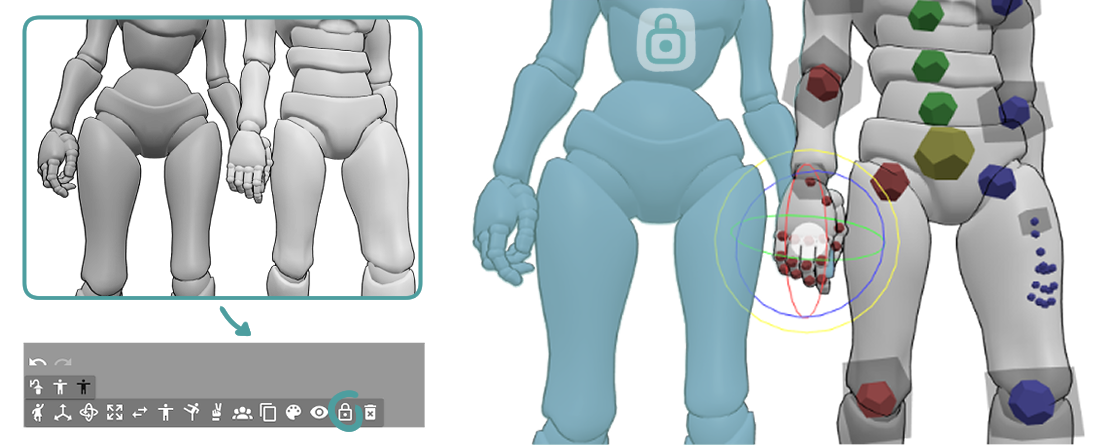
Use the Lock and Show functions when working with overlapping models.
PoseMyArt’s Lock and Show functions can make complicated couple poses easier to set up. If two models have their hands close together, for example, lock one figure while adjusting the other’s arm and hand positions. This prevents the first model from moving accidentally while you’re working on the second.
The Show function is particularly useful when one figure hides parts of the other. In an embrace, you might temporarily hide the front model to get a better view of the arm wrapping around the partner’s back. Once you’ve positioned it correctly, show the other figure again to check how the two models fit together.
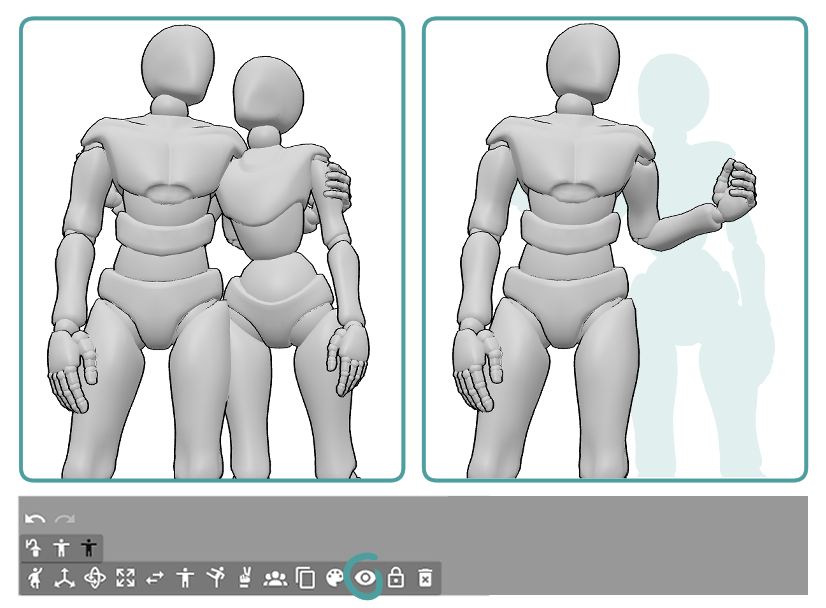
When an overlap becomes difficult to decipher, don’t keep adding lines in the hope that they’ll fix it. Step back, simplify the forms, and check their arrangement again. A clear understanding of which figure is in front and how their bodies intersect will make the drawing much easier to develop.
How to Make Couple Poses Feel Natural
Two figures can be anatomically correct and still look awkward together. The problem often isn’t either figure on its own, but how their bodies respond to each other. A convincing couple pose shows a physical connection: one person shifts their weight to support the other, their gestures complement each other, or their posture changes in response to a touch.
Make Their Body Language Respond to Each Other
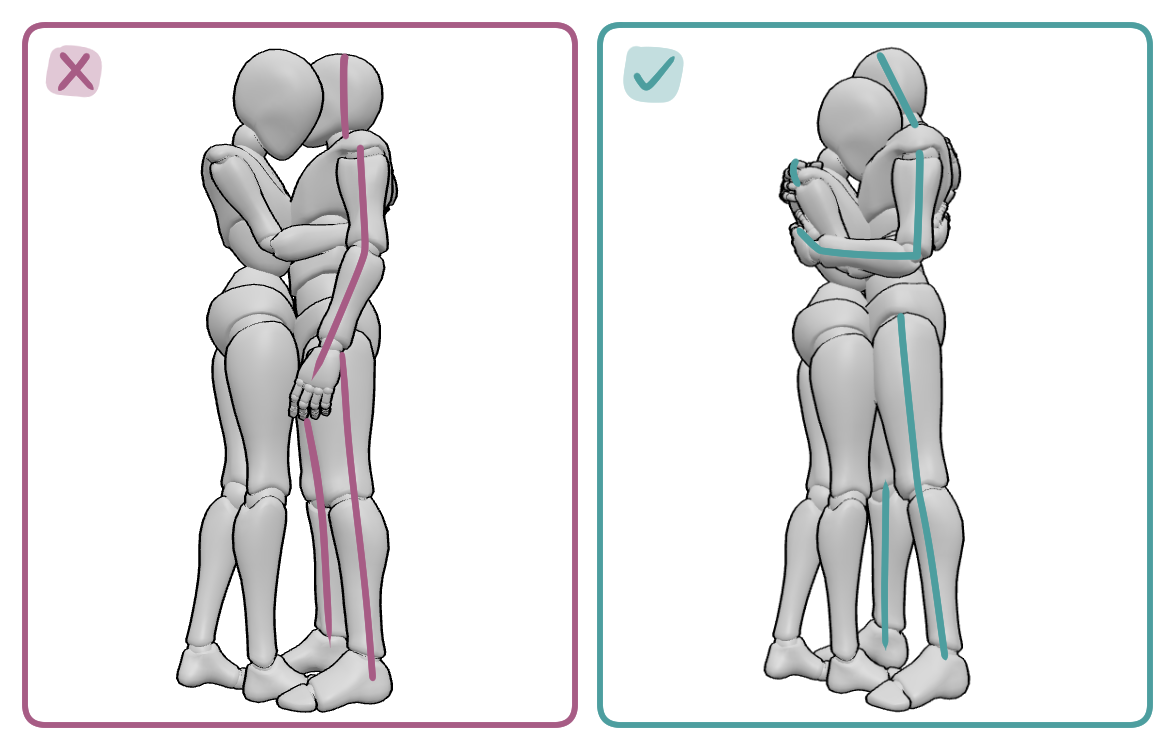
Imagine one person leaning in for a hug while the other stands perfectly upright, shoulders squared and arms hanging at their sides. Even if both figures are drawn accurately, the interaction feels one-sided. Have the second person lean in slightly, turn their torso toward their partner, or raise an arm to return the embrace. Small adjustments can make the hug feel mutual rather than staged.
Check the Balance and Weight Distribution
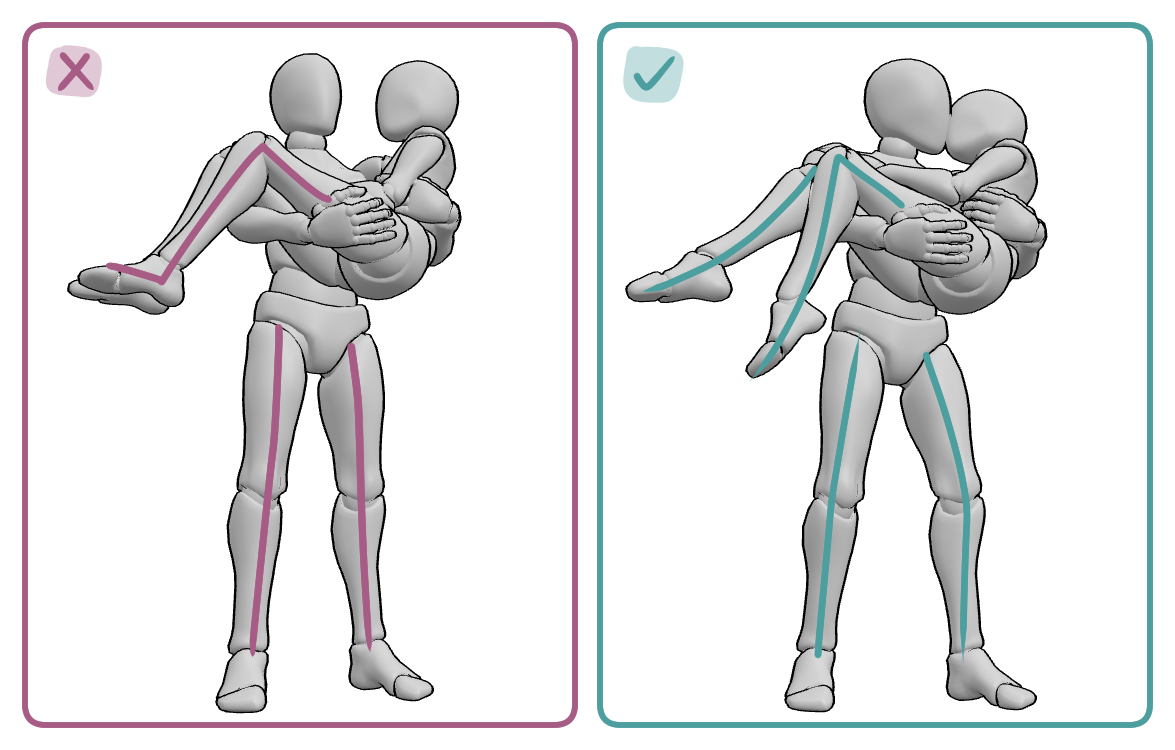
Consider a scene where one person lifts or carries their partner. If the lifted figure’s body remains completely upright and their limbs hang without reacting to the movement, the pose can look stiff. Bend the knees slightly, let the torso tilt, or adjust the arms to reflect the movement. The supporting figure should also show the effort through their stance: a wider base, bent knees, or a slight shift in the torso can make the action more believable.
Avoid Making Both Figures Too Symmetrical
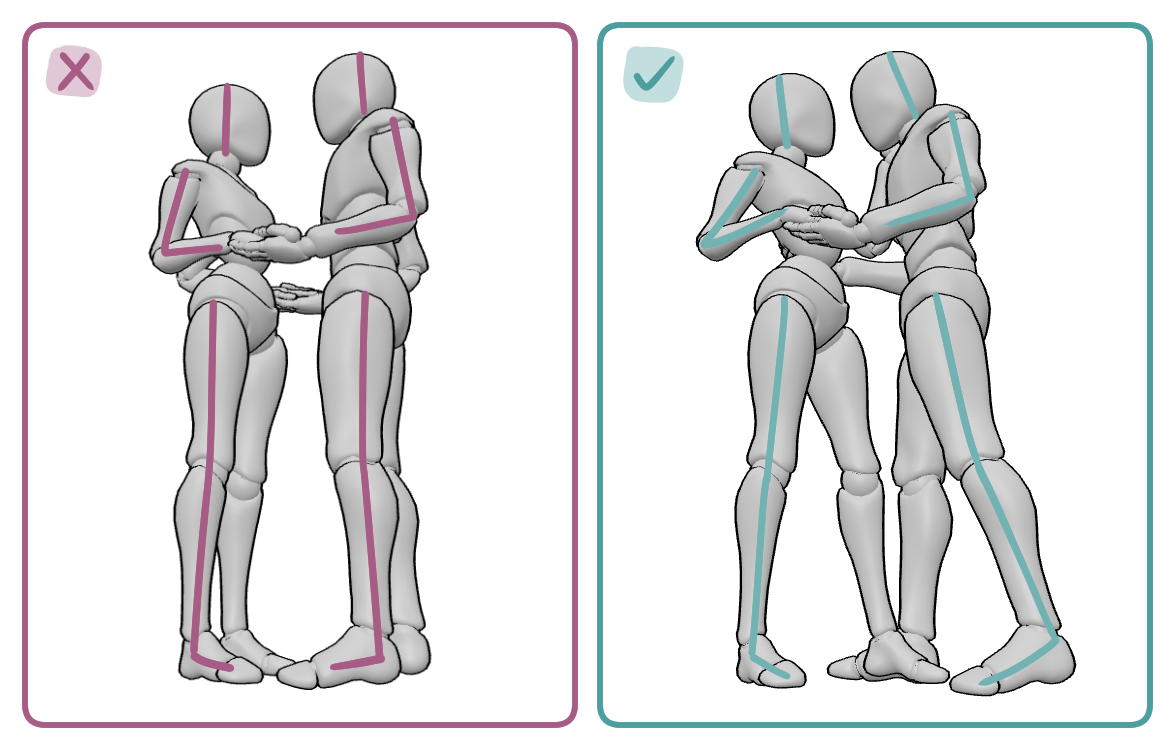
When two people face each other, it’s tempting to mirror their poses: matching arm positions, straight torsos, and heads held at the same angle. This can work for deliberate, stylized compositions, but it may make an intimate or casual interaction feel staged. Try tilting one head, shifting one person’s weight onto a different leg, or having one figure lean closer while the other turns slightly away. The contrast creates a more interesting rhythm without weakening their connection.
Let the Gesture Lead the Details
Before refining fingers, facial expressions, or clothing folds, look at the overall gesture of the two figures together. Do their torso angles and the direction of their limbs guide the viewer’s eye through the interaction? For example, in a forehead-to-forehead pose, slightly inclined heads and curved upper backs can create a sense of closeness. If both figures remain rigid and vertical, the same contact may feel more like two people waiting in line.
Natural couple poses don’t require exaggerated gestures or dramatic movement. Often, the difference comes down to a slight shift in weight, a change in the angle of a shoulder, or one figure responding more clearly to the other. When in doubt, look at the two figures as parts of a shared gesture rather than as separate drawings placed side by side.
Final Thoughts
The interaction between two figures is what makes a couple drawing convincing. Their posture, balance, and points of contact should work together to make the scene feel believable.
Don’t worry about getting every detail right in the first sketch. Focus on the overall gesture and how the two figures fit together, then refine the anatomy once the pose works. Even a few small adjustments can turn an awkward arrangement into a convincing interaction.
After all, romance may be complicated, but drawing couples can be easy with the right 3D references.