Improve Your Drawing Faster With Quick Sketches
I used to think quick sketches were only for warming up. I’d spend five or ten minutes scribbling a few loose figures before getting to the “real” drawing, without paying much attention to what I was actually practicing.
Looking back, I realized those quick sketches were doing far more to improve my drawing than I had given them credit for.
When you only have 30 or 60 seconds, there’s no time to chase perfect anatomy or clean linework. You have to make decisions quickly. Where is the weight? Which direction is the torso twisting? What is the simplest way to communicate the action? That kind of thinking trains a completely different skill than rendering muscles or refining details.
That’s why I like practicing with the Quick Poses tool in PoseMyArt. Instead of manually searching for references every few minutes, I can simply choose an interval, hit start, and keep drawing as new poses appear automatically. It keeps the momentum going, removes distractions, and creates a smooth drawing session where the next challenge is always ready.
Why Quick Sketches Make You a Better Artist
One thing I love about quick sketches is that they don’t give you enough time to overthink. When the timer is running, perfection simply isn’t an option. You have to look at the pose, identify what matters most, and get it onto the page before the next reference appears.
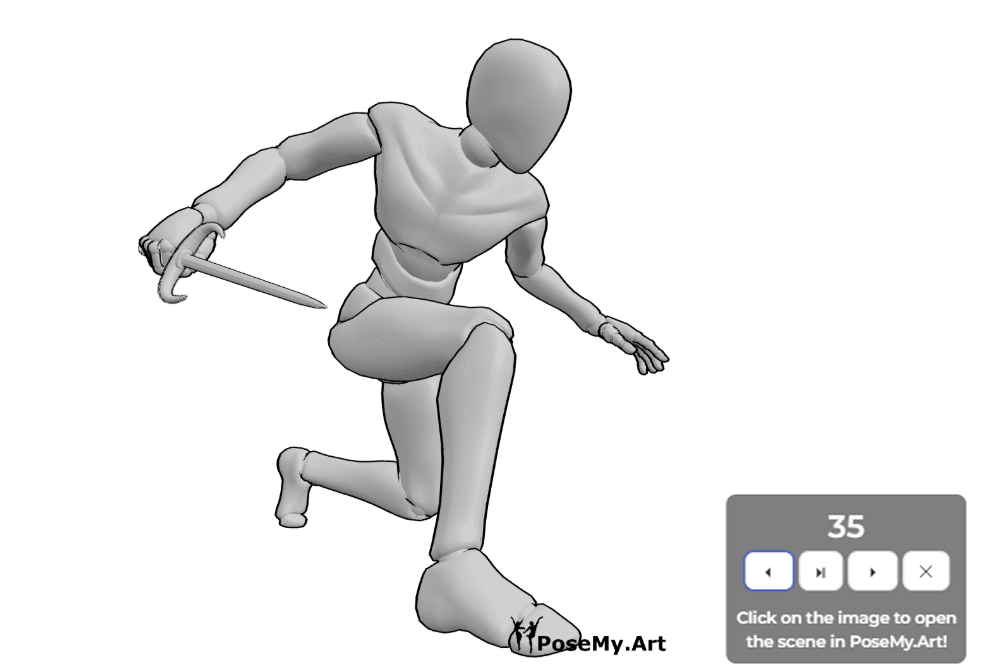
Over time, this changes the way you observe the human body. Instead of seeing individual muscles or body parts, you begin recognizing the overall flow of the figure, how the weight is distributed, where the movement starts, and which lines communicate the pose most effectively. Those are the same skills that make finished illustrations feel natural and believable.
Quick sketching also helps build confidence. Hesitant lines become more decisive because there’s no opportunity to erase every stroke or redraw the same arm ten times. You learn to trust your first impression, and that confidence carries over into longer drawing sessions as well.
The best part is that every drawing doesn’t have to be successful. In fact, many of them won’t be - and that’s completely normal. If a 30-second sketch doesn’t turn out the way you hoped, another pose is only a few seconds away. That constant cycle of observing, drawing, and moving on encourages experimentation instead of perfectionism, making practice feel far less intimidating.
Getting the Most Out of the Quick Poses Tool
One feature I appreciate is how flexible the practice can be. Some days I set the timer to just 15 or 30 seconds and focus purely on capturing the gesture with as few lines as possible. Other times I choose 90 or 180 seconds so I can spend a little more time on proportions and simple anatomy without turning the sketch into a finished drawing.
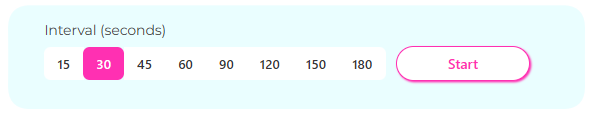
The controls are intentionally simple. You can pause the session whenever you need to, skip to the next pose if one doesn’t fit your goal, or even go back to the previous reference. That makes it easy to adjust the pace instead of feeling locked into a rigid exercise.
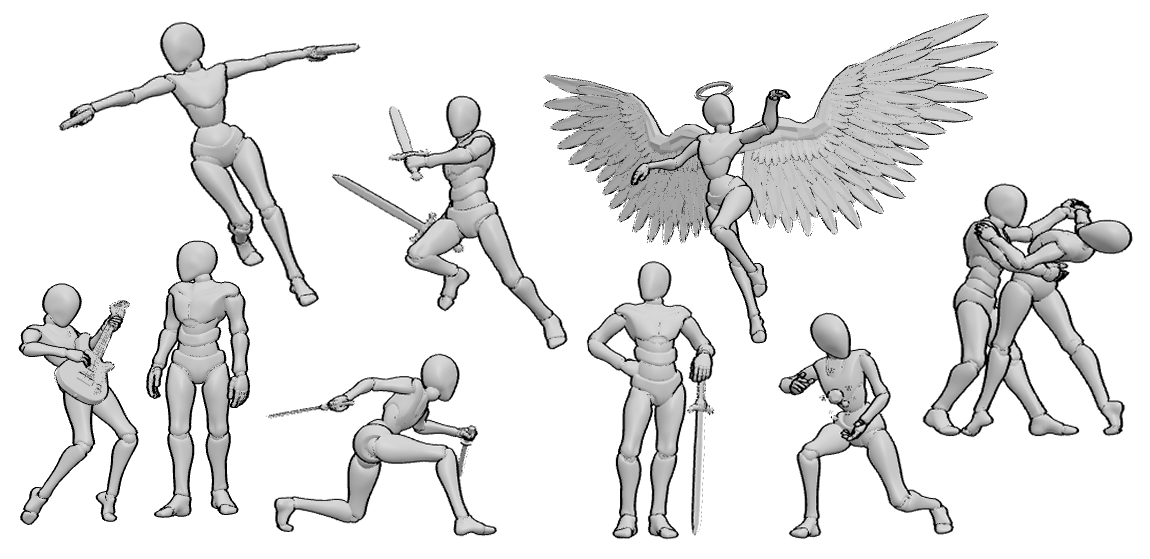
Because the poses are selected randomly from different categories, every session feels a little different. One minute you might be sketching a relaxed standing figure, the next an energetic action pose or a multi-character scene. That variety keeps the exercises engaging while exposing you to body positions you probably wouldn’t have searched for on your own.
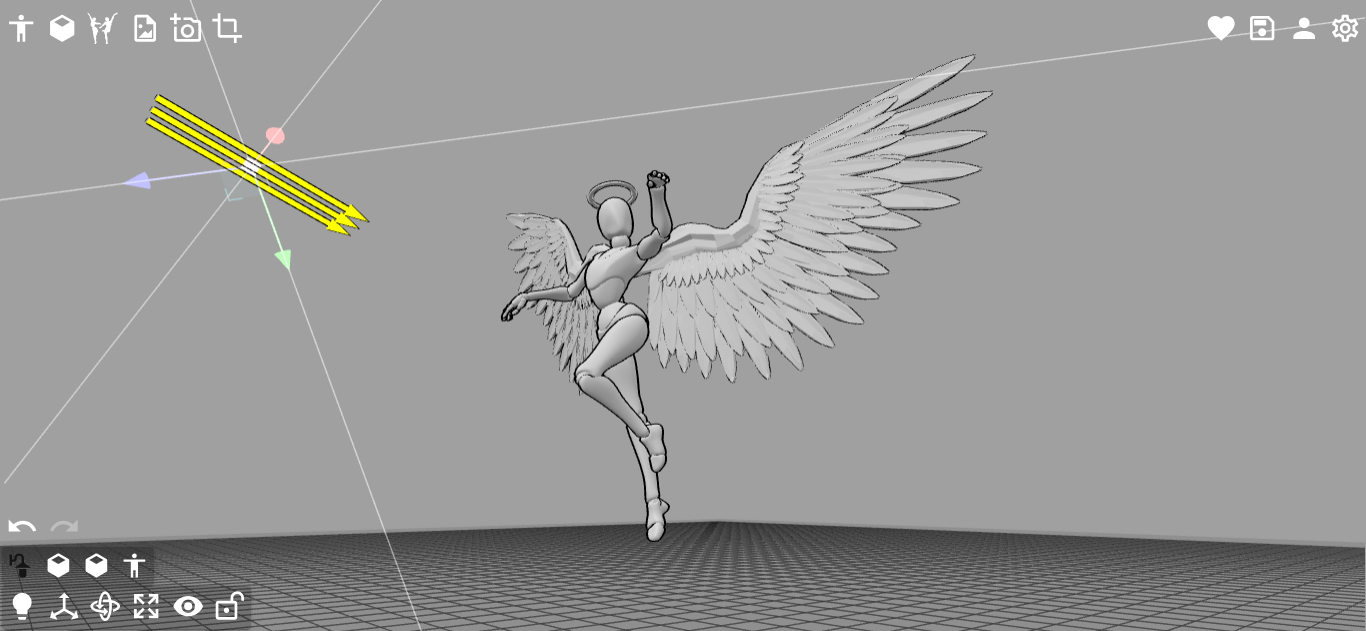
And if a particular pose catches your attention, your practice doesn’t have to end there. You can open it directly in PoseMyArt, rotate the camera to any angle, adjust the pose, lighting, or scene, and use it as a reference for a more detailed study or a finished illustration. It’s a nice bridge between fast gesture practice and longer drawing sessions.
What to Focus on at Different Time Limits
One thing I’ve learned is that the timer should change your goal - not just how fast you draw. Expecting a polished figure in 30 seconds is a recipe for frustration. Instead, decide what you want to practice before you press Start.
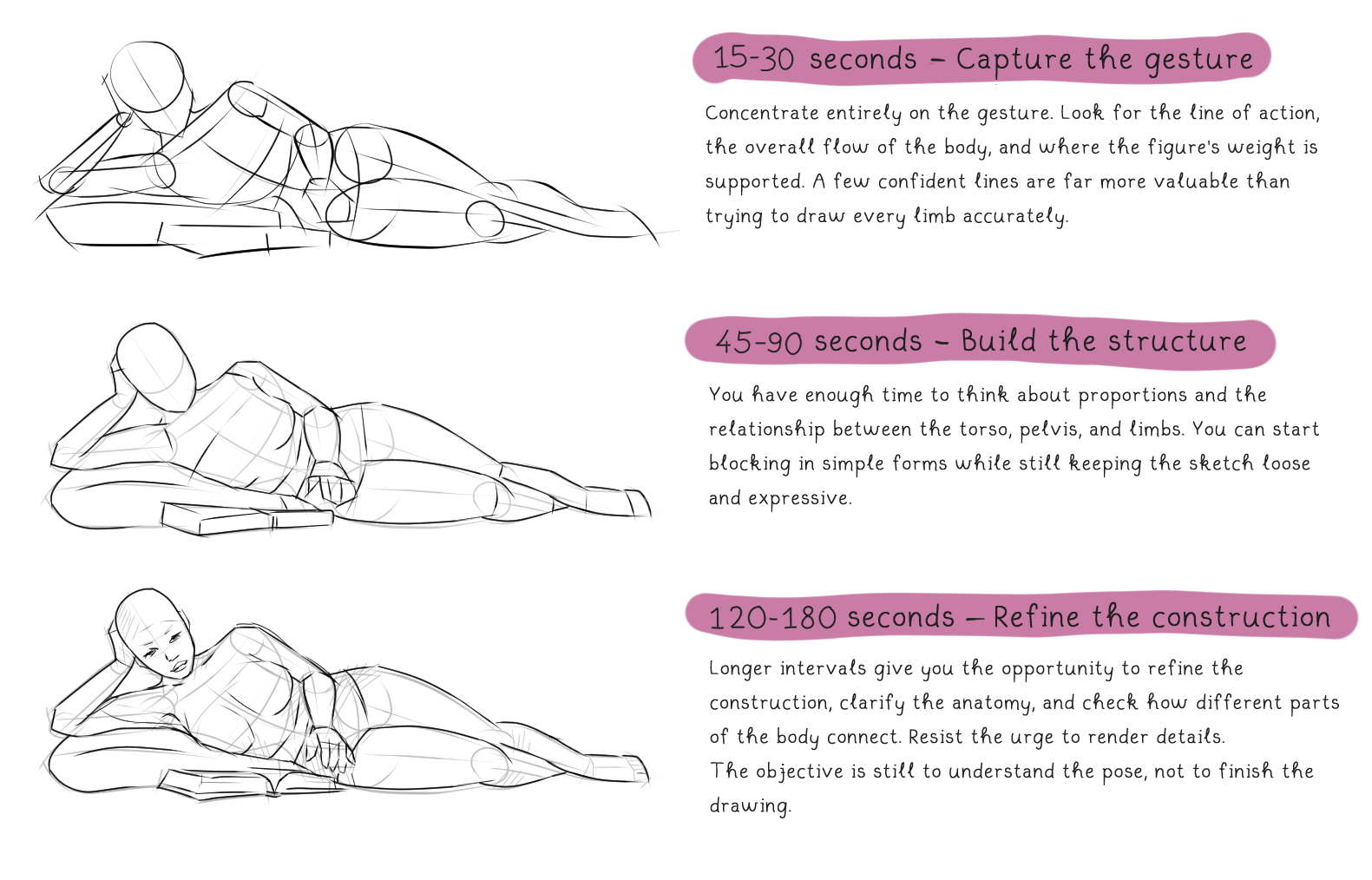
The real value of timed sketches comes from learning to prioritize. You simply don’t have enough time to give equal attention to everything, so each sketch forces you to decide what matters most. That might mean capturing the movement of the pose, finding the main proportions, or understanding how the body is balanced in space.
Don’t judge these sketches by how finished they look. A messy drawing that helps you understand a difficult pose can be more useful than a beautiful sketch where you spent most of your time polishing details. The goal is to train your eye to recognize the important information quickly and your hand to translate it without hesitation.
Try approaching each session with one specific thing you want to improve. Over time, you’ll notice that the decisions that once took several minutes start happening almost automatically.
Don’t Judge Your Sketches Too Quickly
One trap that’s easy to fall into is measuring your progress sketch by sketch. After a few rushed drawings, it’s tempting to think, “These look terrible. I’m not improving at all.” I’ve had that thought plenty of times myself.
The thing is, quick sketches aren’t meant to be impressive on their own. Their job is to train your eyes to recognize movement faster and your hand to respond with simpler, more confident lines. You usually notice the results somewhere else - when a longer drawing comes together more easily, or when a difficult pose suddenly feels much less intimidating.
That’s why I wouldn’t worry about filling pages with messy drawings. In fact, a successful quick sketch session often looks exactly like that: dozens of loose, unfinished figures, each teaching you something in just a few seconds. The goal isn’t to create a collection of beautiful sketches. It’s to build the observation and decision-making skills that make every future drawing stronger.
Make Quick Sketches Part of Your Routine
Like any drawing exercise, quick sketches work best when you come back to them regularly. Even a short session before starting a larger illustration can help you loosen up, switch into “drawing mode,” and sharpen your observation skills. Some artists like to use them as a warm-up, while others dedicate an entire practice session to gesture drawing. Both approaches are worthwhile.
The Quick Poses tool in PoseMyArt makes this kind of practice effortless. The more figures you sketch, the faster you’ll start recognizing balance, rhythm and body mechanics. And perhaps the biggest benefit is that drawing begins to feel less like solving a complicated puzzle and more like responding naturally to what you see. That’s a skill that improves every illustration, no matter your style or experience.
Stop Thinking, Start Sketching
The nice thing about quick sketches is that there’s no pressure to create something worth framing. Most of them will never leave your sketchbook, and that’s exactly the point. They’re not meant to be finished drawings - they’re repetitions, just like scales for a musician or drills for an athlete.
It’s easy to spend hours reading about anatomy, gesture or figure drawing techniques. I’ve certainly done it myself. But at some point, the fastest way to improve is simply to draw more people. That’s what makes timed sketching so effective. Every countdown pushes you to observe, simplify, and move on without getting stuck on tiny details. After dozens of poses, you start noticing patterns that are difficult to learn from a single polished drawing.
If you’re looking for a fun way to build that habit, this tool is a great place to start. Whether you have five minutes or an hour, it provides a steady stream of pose references that keep you drawing instead of searching. And when one reference deserves a closer look, you can instantly open it in PoseMyArt and continue exploring it from any angle.
Sometimes the best way to improve your art isn’t slowing down - it’s giving yourself less time to think and more opportunities to draw.