Why Your Drawings Look Right in Detail but Wrong as a Whole?
Have you ever spent ages drawing a character, carefully refining the face, hands, hair, or anatomy, only to zoom out and realize that something still feels wrong?
This is one of the most frustrating problems in drawing because you may not be able to point to a single obvious mistake. The details can look convincing on their own, yet the figure as a whole feels stiff, unbalanced, flat, or simply not quite right. The problem is often not the details themselves. It is what happens between them.
A successful figure drawing depends on how proportions, gesture, perspective, balance, and major forms work together. If the underlying structure is slightly off, adding more detail usually makes the problem harder to notice rather than fixing it. The good news is that you can learn to spot these problems much earlier.
- The Problem Usually Starts Before the Details
- When the Pose Looks Fine Until You Zoom Out
- The Most Common Problems That Make a Drawing Feel Wrong
- Sometimes It’s Not Anatomy at All
- What I Check Before I Start Fixing Things
- Don’t Guess the Form - Use 3D References to See What You’re Missing
- Give Yourself Permission to Simplify
The Problem Usually Starts Before the Details
I’ve noticed that when a drawing feels wrong, my first instinct is often to zoom in. I look at the hand. Maybe the fingers are awkward, so I fix them. Then I notice something strange about the arm and spend another ten minutes adjusting the anatomy. After that, I return to the face, change the eyes slightly, reshape the jaw, and add a few more details.
And somehow… the drawing still looks wrong.
The problem is that I’m trying to fix a big-picture problem with small-picture solutions.
A figure isn’t just a collection of correctly drawn body parts. The parts have to work together. The head needs to belong to the torso, the arms need to make sense with the shoulders and ribcage, and the pelvis affects the direction of the legs. Even the position of the feet can change how balanced the entire pose feels.
You can draw a perfectly convincing hand and still have a terrible arm position. You can draw beautiful anatomy and still have a figure that looks like it’s about to fall over.
This is why I find it useful to stop thinking of the figure as a finished person I need to copy. Instead, I try to see it as a few large masses that define how space is being occupied. The head, ribcage, and pelvis aren’t separate pieces in a checklist sense; they’re the main directional forms of one continuous structure. The limbs are extensions that help describe how those masses are tilted, balanced, and moving through space.
When I shift my attention to these big relationships instead of the details, it becomes much easier to understand why something feels off. The issue is usually in how the whole structure is oriented, not in any single “part” of it.
When the Pose Looks Fine Until You Zoom Out
One of the easiest ways to catch these problems is simply to zoom out.
When you’re working close up, your brain becomes very good at accepting whatever is directly in front of you. You see a nice eye, so you think the face is working. You see a convincing hand, so you move on. You see some nice anatomical lines on the torso, and everything feels productive. Then you zoom out and suddenly the character looks strangely stiff, too heavy on one side, or just… wrong.
That’s because your eye has been evaluating individual areas instead of the relationship between them.
Try looking at the drawing as a thumbnail or even squinting at it. Details start disappearing, leaving only the things that actually control the image: the silhouette, gesture, proportions, balance, and major shapes. If the drawing stops working when the details disappear, that’s a pretty good clue about where the problem is.
The Most Common Problems That Make a Drawing Feel Wrong
So what should you actually look for when a drawing feels wrong but you can’t quite explain why? In my experience, one of these problems is often hiding underneath the details.
1. The Proportions Are Slightly Off
The head might be a little too large, the torso slightly too short, or one limb longer than it should be. None of these mistakes may look dramatic on their own, but together they can change the entire figure.
This is why it’s useful to compare the relationships between the major parts before worrying about smaller anatomical details. Look at the head in relation to the torso, the ribcage in relation to the pelvis, and the upper and lower limbs in relation to each other. Small differences add up quickly.
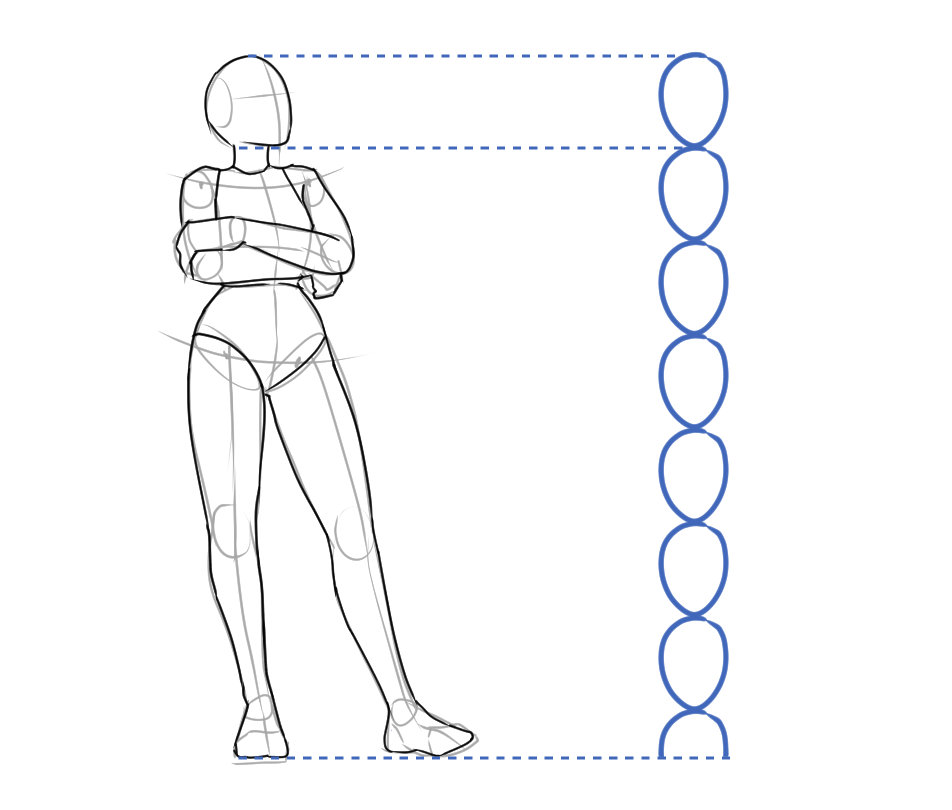
The 7.5-head proportion rule can be a useful guide for checking the basic proportions of a figure, but it doesn’t always work well once the perspective or pose becomes more complicated. For me, using 3D references made it much easier to understand how the proportions change from different viewpoints, especially with complex poses - when the body stops making the 7.5-head rule look so easy to apply.
2. The Gesture Is Too Weak
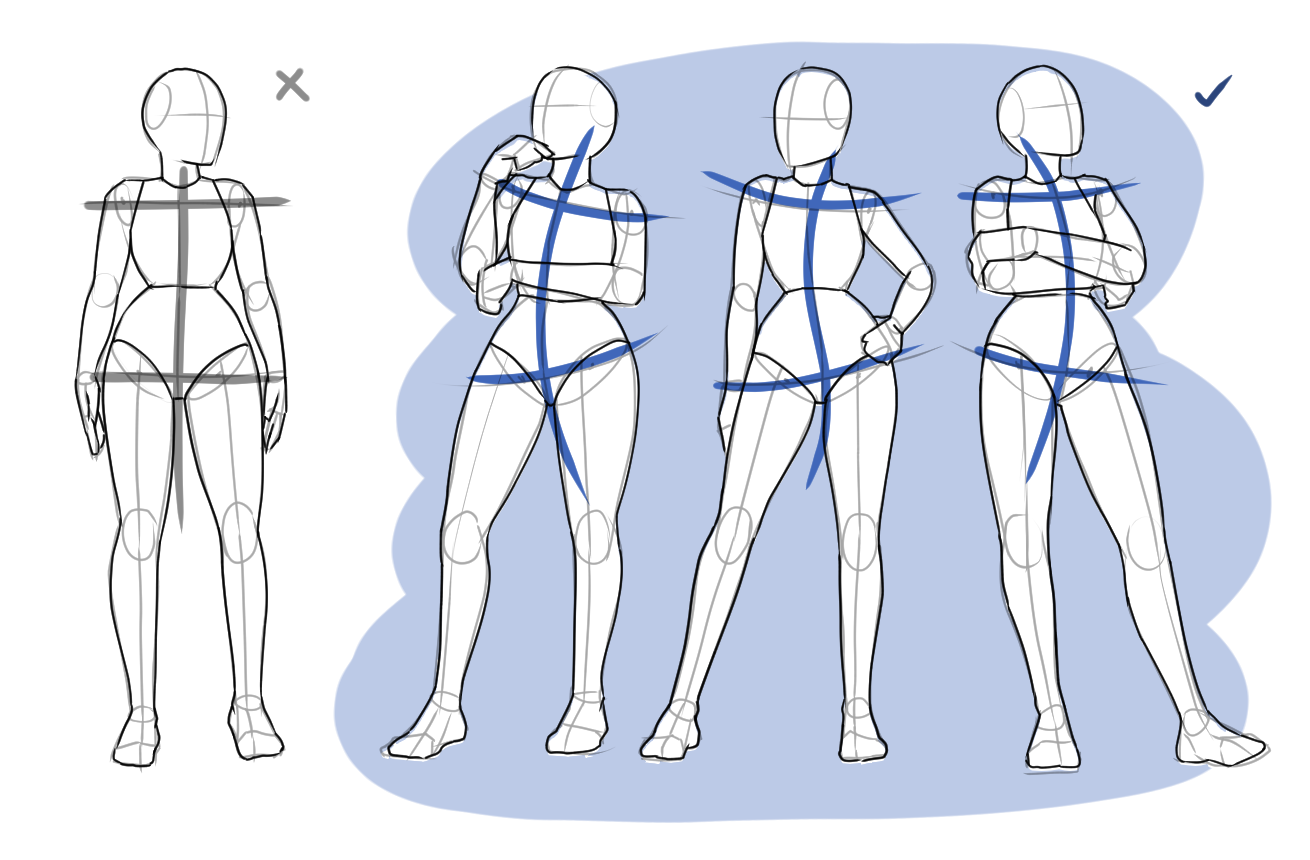
The anatomy can be accurate and the proportions can be reasonable, yet the pose still feels stiff. Without a clear flow through the body, the figure can look like a collection of separate parts rather than one natural movement.
A strong gesture doesn’t mean exaggerating every pose. It means understanding the overall direction and movement of the body. Even a relaxed character benefits from having a clear sense of flow.
3. The Figure Feels Unbalanced
Ask yourself where the character’s weight is actually going. If the supporting leg, pelvis, torso, and head don’t work together, the character may look as though they are about to fall over rather than comfortably holding the pose.
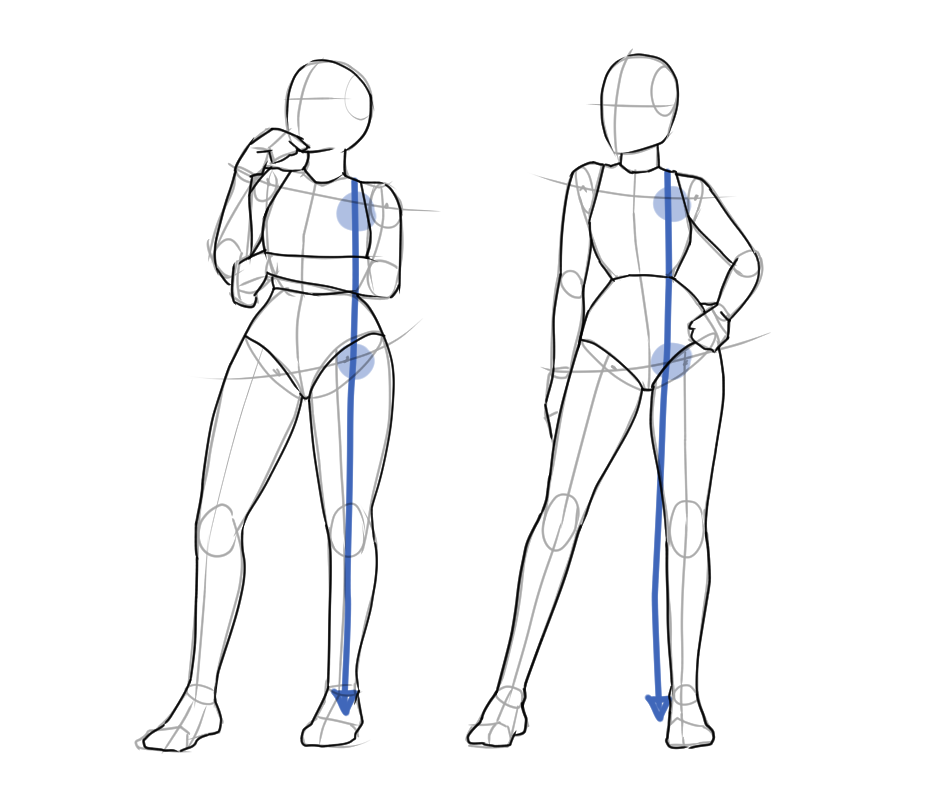
This is particularly noticeable in standing poses, but balance matters in almost every position. Sitting, crouching, leaning, and kneeling all require the body to respond to where its weight is supported.
4. The Perspective Doesn’t Match
This becomes especially noticeable with unusual angles and foreshortened poses. A head, ribcage, pelvis, or limb can look convincing by itself while still being oriented differently from the rest of the body.
You might draw the head from a convincing three-quarter view, for example, but construct the torso as though you’re looking at it from a different angle. The individual forms may look fine, but they won’t feel like they belong to the same body.
5. The Major Forms Don’t Work Together
The head, ribcage, pelvis, and limbs might all be drawn reasonably well, but their relationships can still feel wrong. When these larger forms don’t connect into one coherent structure, no amount of small details will make the figure feel solid.
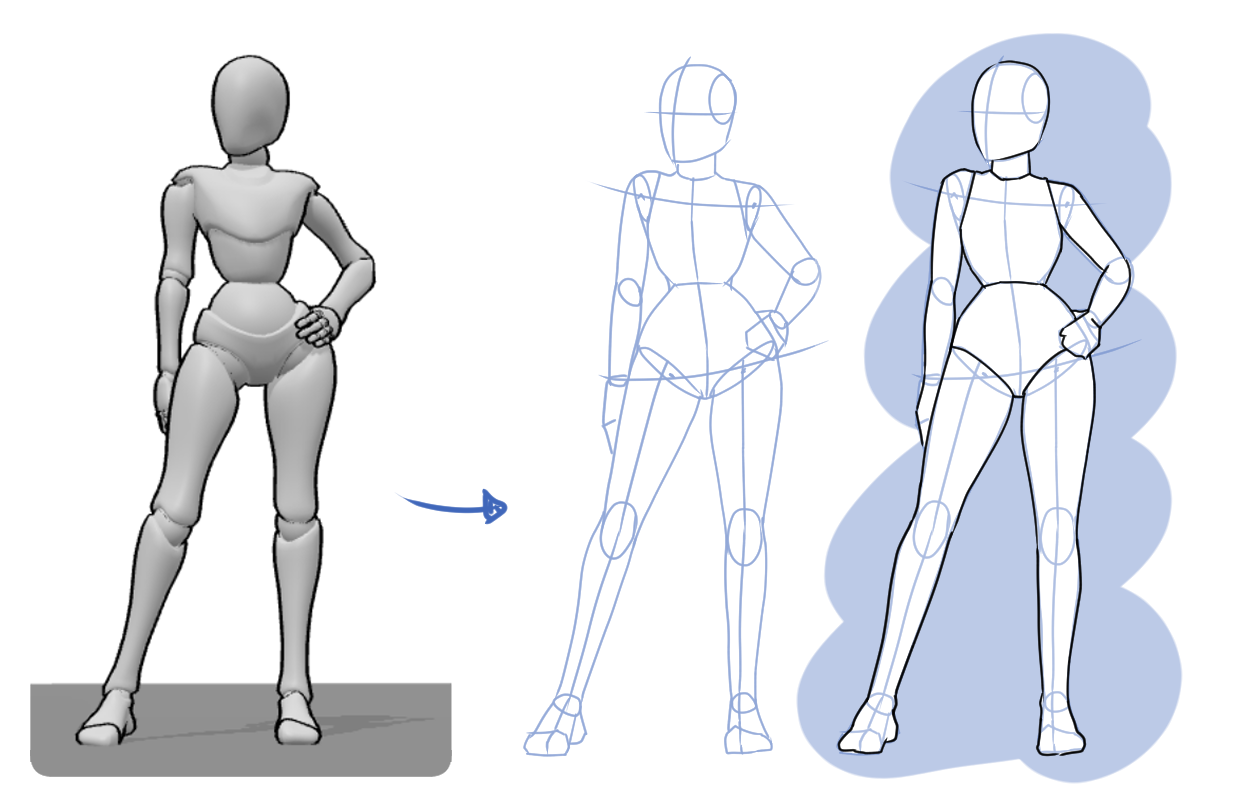
This is one reason construction drawing is so useful. Before worrying about anatomy, try reducing the figure to simple masses and checking whether those masses actually work together.
6. You’re Solving Big Problems With Small Details
This is perhaps the easiest trap to fall into. You notice an awkward hand, fix it, then adjust the fingers, refine the anatomy, and add more details - while the real problem might be the position of the entire arm or torso.
When you recognize this happening, step back and simplify the figure again. If the drawing doesn’t work without the details, the structure needs attention first.
Sometimes It’s Not Anatomy at All
This is another trap I’ve fallen into. When a figure looks strange, it’s tempting to assume that the anatomy must be wrong. But sometimes the anatomy is perfectly reasonable. The real problem is perspective.
A ribcage can be drawn convincingly on its own, and a pelvis can also look convincing on its own, but if they are oriented differently in space, the body between them won’t feel believable. The same thing happens with foreshortened limbs. A leg coming toward the viewer shouldn’t be constructed the same way as a leg extending sideways. Its proportions appear to change because its position in space changes.
When I’m unsure whether I’m looking at an anatomy problem or a perspective problem, this is where a 3D drawing reference becomes particularly useful.
Instead of trying to imagine what the body should look like from an unfamiliar angle, I can rotate the pose and check what is actually happening to the major forms. That gives me something much more useful than a finished picture to copy. It lets me compare the structure of the pose with my own drawing and ask a much more specific question:
Is my anatomy wrong, or am I simply not seeing the form correctly in space?
What I Check Before I Start Fixing Things
When a drawing feels wrong, I try not to immediately redraw the smallest problem I can find. I zoom out, check the silhouette, and look at the gesture. Then I compare the head, ribcage, and pelvis, followed by the balance and perspective.
Only after those larger relationships make sense do I start worrying about smaller anatomical details.
This simple order saves me from spending twenty minutes perfecting something that may need to be moved later.
Don’t Guess the Form - Use 3D References to See What You’re Missing
For a long time, I would stare at a drawing that felt wrong and keep trying to fix it from the same angle. I’d redraw the anatomy, adjust the proportions, move a limb, and somehow end up with a slightly different version of the same problem. What I was missing wasn’t always a drawing skill. Sometimes I simply couldn’t see the form clearly enough in the first place.
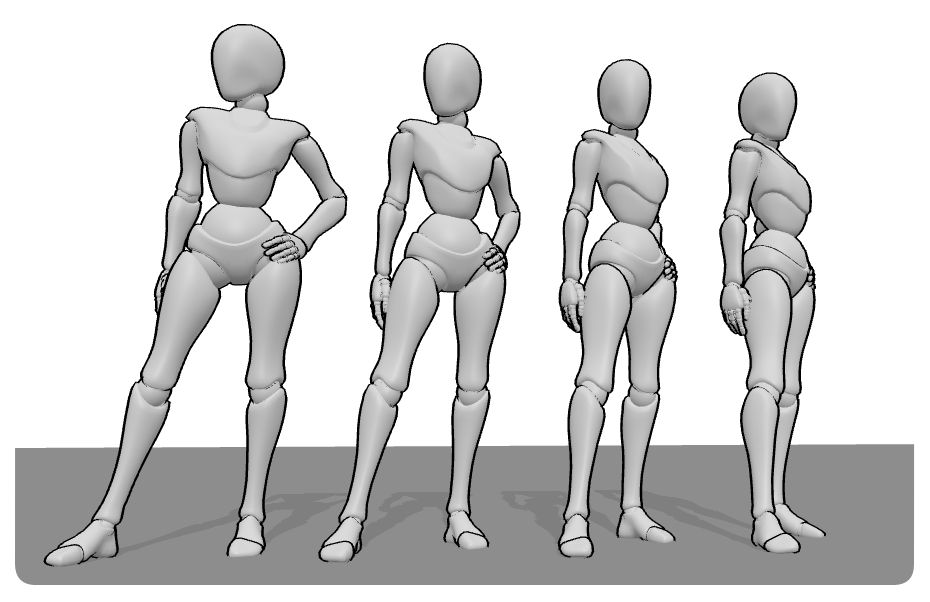
3D drawing references solved that problem for me in a way that ordinary 2D references couldn’t. I can rotate the pose, look underneath or behind it, change the viewpoint, and immediately understand how the major forms are actually positioned in space. A shoulder that seemed impossible to place suddenly makes sense. A limb that looked too short turns out to be heavily foreshortened. A strange-looking pelvis often isn’t an anatomy mistake at all - it’s just a form I was struggling to understand from that particular angle.
That has saved me from a lot of unnecessary correcting. Instead of endlessly changing a drawing because something feels wrong, I can check the reference, find the actual problem, and make a much more informed correction.
For me, that’s the biggest advantage of working with 3D references: they take the guesswork out of the parts of drawing that are hardest to see in your head. And the more I use them to understand poses rather than simply copy them, the better I become at seeing those same relationships without a reference.
Give Yourself Permission to Simplify
One of the best things you can do when a drawing isn’t working is to take something away.
Erase the fingers. Forget the hair. Remove the clothing details. Reduce the anatomy to simple forms.
If the figure still works after all that disappears, you probably have a strong foundation. If it suddenly falls apart, that’s not a failure. You’ve just found the part that needs more attention.
A drawing doesn’t become convincing because you keep adding to it. Sometimes it becomes convincing when you finally remove everything that was distracting you from the real problem.
The next time a drawing looks right in detail but wrong as a whole, don’t zoom in further. Zoom out. The answer is often hiding in the bigger shapes, the relationships between them, and the way they move through space.