Drawing Standing Poses: A Guide to Balance, Weight and Posture
There is something strangely difficult about drawing a person who is simply standing.
You can draw a character running, jumping, fighting, twisting, or dramatically throwing their hair into the wind - and somehow they look perfectly convincing.
Then you draw them standing still.
Suddenly, they look like they are waiting for a bus. Or worse, like someone has told them they are being photographed for an ID card.
Drawing standing poses seems simple because there is no complicated action to figure out. But a believable standing figure depends on several subtle things happening at the same time: where the body weight sits, how the hips tilt, how the spine responds, how the shoulders counterbalance the pelvis, and how the feet support the entire figure.
Get those relationships right, and even a simple pose can feel relaxed and alive. Get them slightly wrong, and the character can look stiff, unstable, or strangely disconnected from the ground.
The good news is that you don’t have to guess all of this from imagination. A 3D reference can make the structure of a standing pose much easier to understand - especially when you can rotate it and examine the body from different angles.
Why Your Standing Poses Feel Stiff
A standing pose has nowhere to hide. In an action pose, movement gives the figure energy almost automatically. A running character has momentum, a fighter has direction, and a jumping figure has an obvious relationship with gravity. A standing character has none of that built in. The pose has to create its own rhythm through weight distribution, asymmetry and posture.
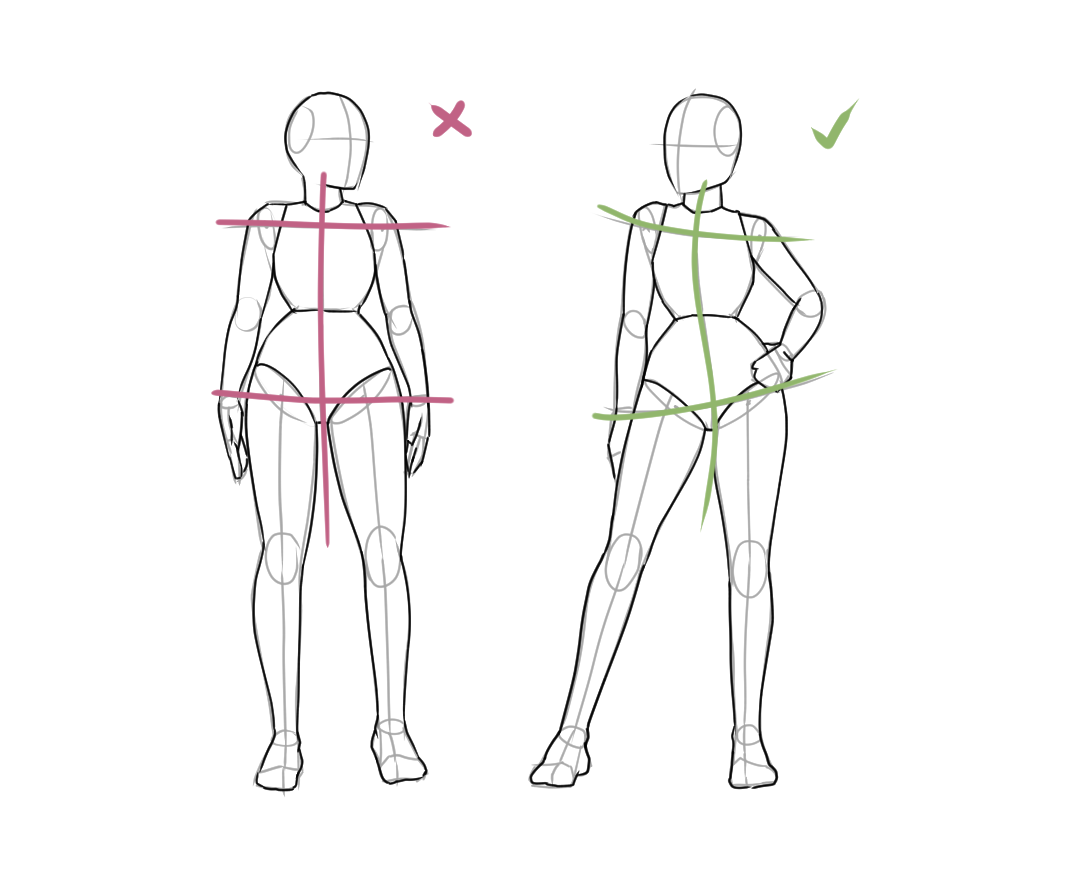
This is why a figure can have perfectly convincing anatomy and still feel strangely lifeless. The individual parts may be correct, but they aren’t necessarily working together. The pelvis might be too centered between the feet, the ribcage might be sitting too neatly on top of it, or the supporting leg might not actually feel like it’s supporting anything.
The difference is subtle, but it’s one of those things you notice immediately once you start looking for it.
And there is another problem with standing poses: inspiration can run out surprisingly quickly. After drawing the tenth, twentieth, or hundredth character just standing around, it can be difficult to come up with another pose that feels different. I definitely need inspiration sometimes, so having a large variety of standing poses to browse through can be incredibly useful. PoseMyArt has a wide range of standing poses, which gives me plenty of ideas when I’m running out of them.
Start With the Supporting Leg
The easiest way to understand a standing pose is to stop looking at the whole figure for a moment and find the leg doing the work.
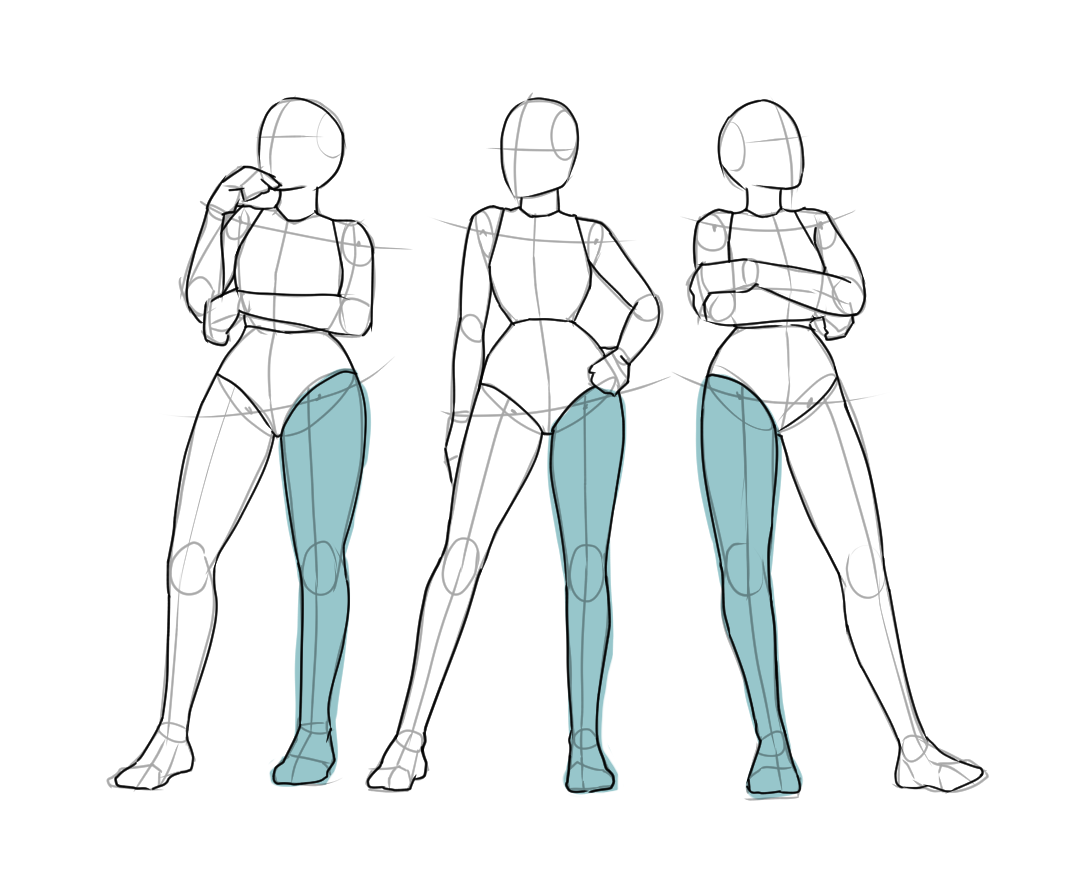
Most relaxed standing poses aren’t evenly distributed between both legs. One leg becomes the primary support while the other relaxes, bends, rotates outward, or simply takes less weight. That decision immediately affects the pelvis, and from there the rest of the body begins to respond.
Think of the supporting leg as the anchor of the pose rather than just another anatomical element.
If the character is leaning into the right leg, for example, the pelvis will usually shift in relation to that support. The ribcage then has to respond, and the shoulders may counter the movement. The head can make another small adjustment on top of all of that.
This chain reaction is what gives a quiet pose its rhythm.
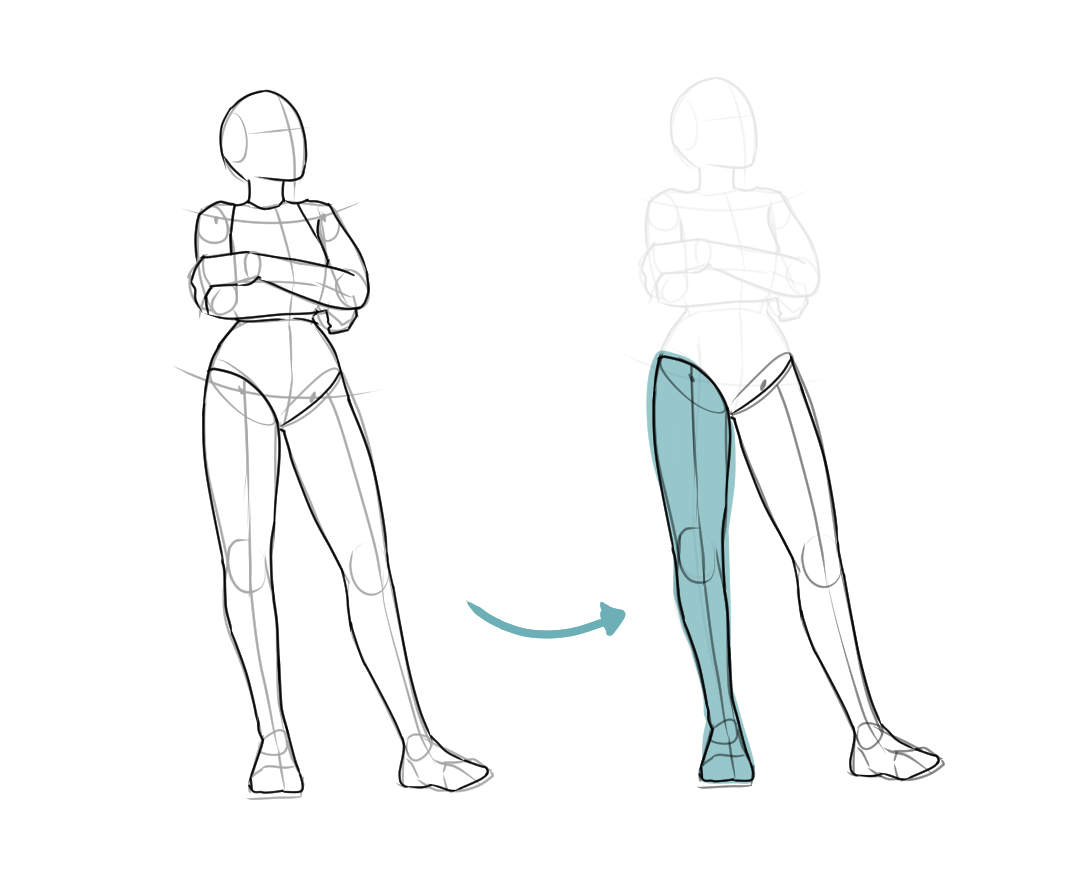
A useful way to test your drawing is to cover everything above the pelvis. Look only at the legs and feet. Can you already tell which leg is supporting the character? If not, the weight distribution probably needs more attention before you move on to the upper body.
The Pelvis Sets the Tone
Once you’ve found the supporting leg, look at the pelvis. This is where a standing pose often stops being a generic “person standing” and starts becoming an actual pose.
When most of the weight moves onto one leg, the pelvis usually responds. It can tilt, shift sideways, or rotate depending on the position of the legs. That movement travels upward through the spine and affects everything from the ribcage to the shoulders.
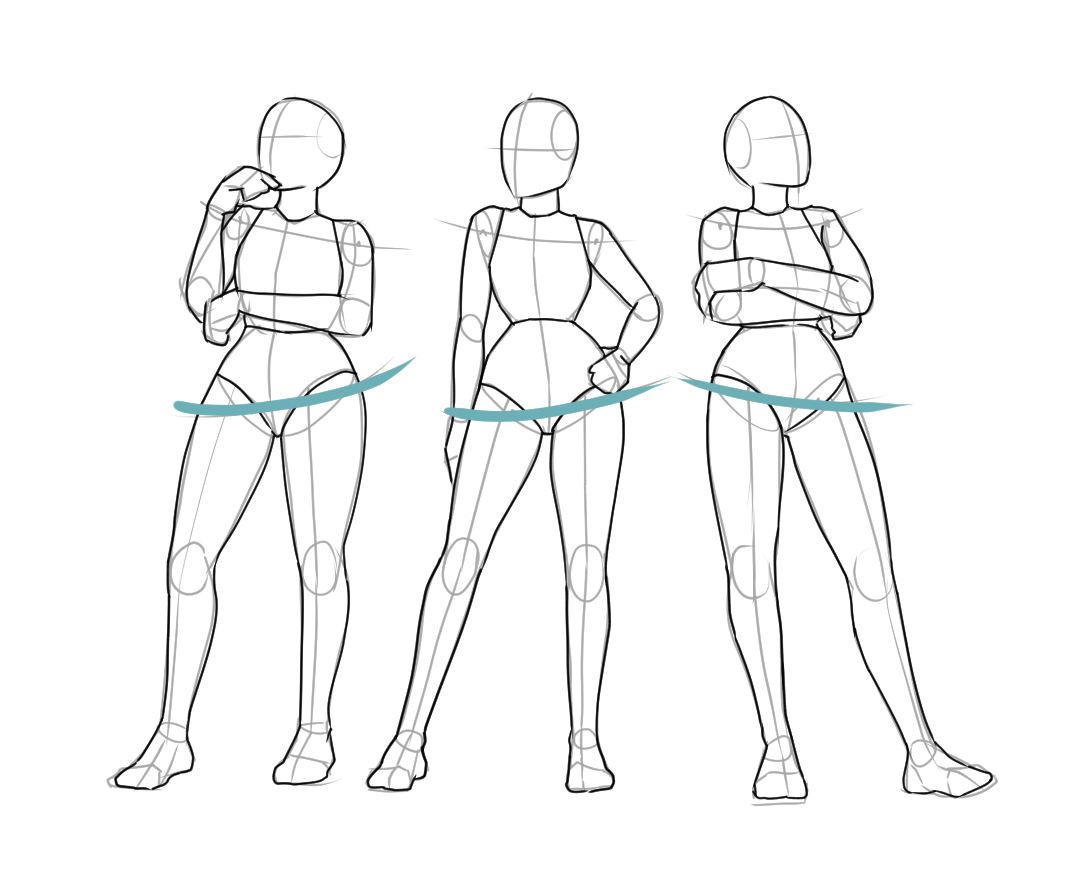
The important part isn’t creating a dramatic contrapposto pose every time. Subtle changes can be enough. A small shift in the pelvis can completely change the silhouette and make the same character feel relaxed rather than rigid.
This is also where a 3D reference earns its place. A pelvis can appear almost level from one angle and clearly tilted from another. Rotate the model and you can see whether you’re dealing with a tilt, a rotation, or both - instead of flattening the whole thing into a 2D guess.
Let the Upper Body Respond
Once the pelvis shifts, the upper body has to respond.
The ribcage doesn’t simply sit on top of the pelvis like a perfectly stacked box. It can lean, rotate, and shift in the opposite direction, creating the subtle counterbalance that makes a standing figure feel relaxed.
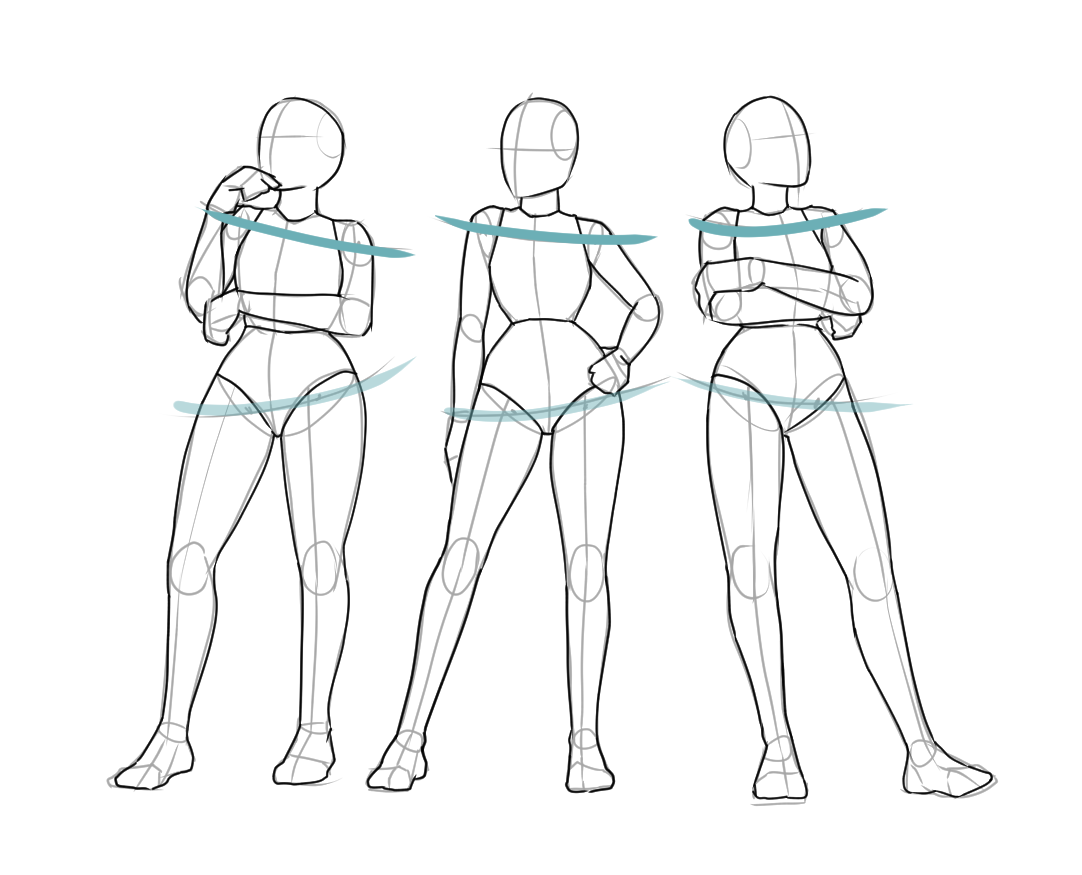
Look at the relationship between the pelvis and shoulders rather than the individual anatomy. Are they parallel? Slightly opposed? Is the torso twisting? Is one side compressed while the other stretches?
You don’t need to exaggerate these differences. In fact, forcing a dramatic S-curve into every standing pose can make the result look just as artificial as a completely symmetrical figure.
The goal isn’t more curve.
It’s cause and effect.
When Perspective Changes Everything
A standing pose can become much harder the moment you move the camera.
A leg pointing toward the viewer suddenly looks shorter. The pelvis seen from above becomes a completely different shape. A low camera can make the torso dominate the figure while pushing the legs into the distance.
The pose hasn’t changed. Your view of it has.
This is where artists often end up fighting perspective without realizing that’s what they’re doing. The anatomy may be correct, but the proportions are being unconsciously flattened toward the version of the body we expect to see.
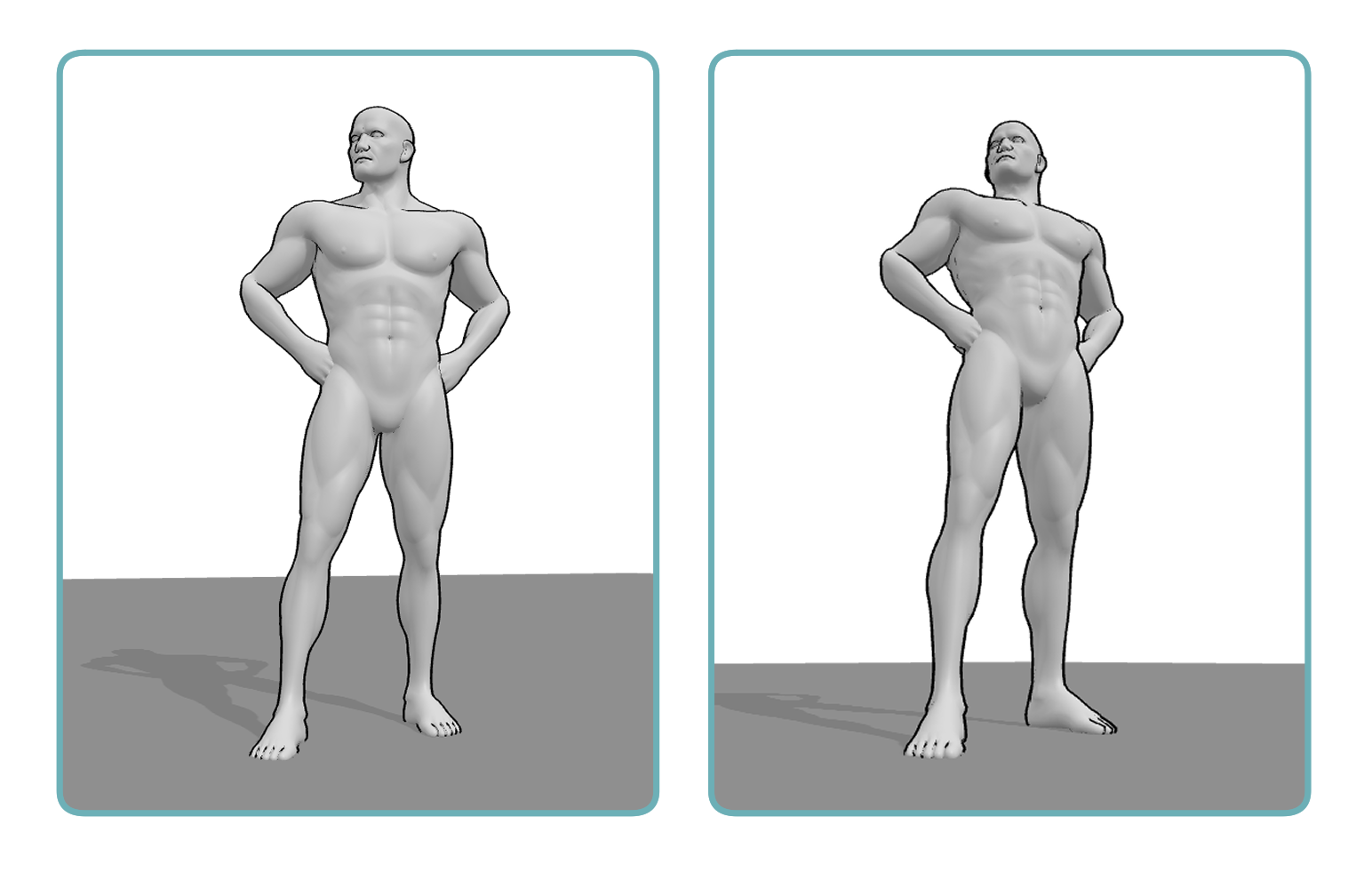
A 3D reference gives you a useful advantage here: you can separate the pose from the viewpoint.
Rotate the camera. Find the angle you’re struggling with. Look at the overlap between the limbs, the orientation of the pelvis, and how much of the feet or legs is actually visible. Once you understand what the viewpoint is doing to the pose, you can draw it with much more confidence.
You’re not copying the model. You’re borrowing the spatial information that would otherwise take much longer to reconstruct mentally.
The Feet Tell You If It Works
You can often tell whether a standing pose works by looking at the feet.
Not because the feet need to be beautifully drawn, but because they reveal whether the rest of the body is actually supported.
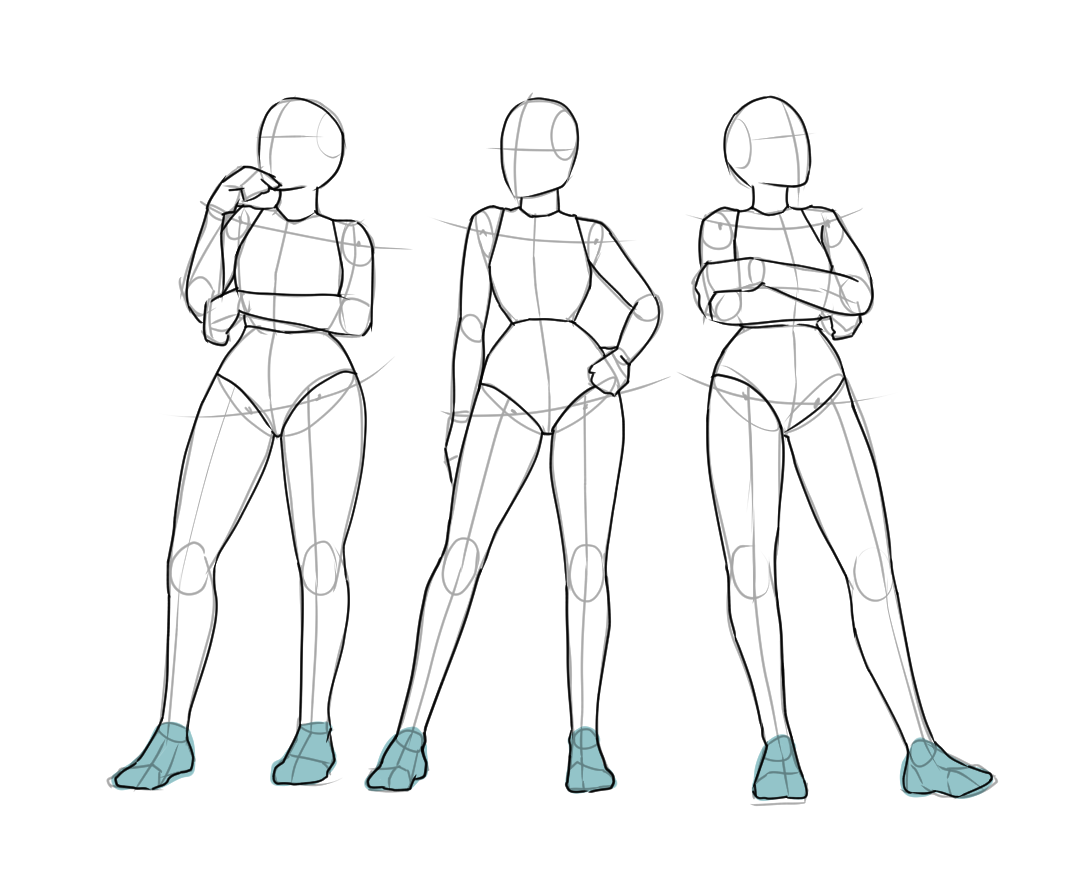
Look at which foot carries the weight, where it is pointing, how far it is from the other foot, and how the ankle connects to the leg. Then trace that information upward.
Does the pelvis agree?
Does the torso agree?
Does the character look like they could actually stay in that position?
The feet are essentially the final conversation between the character and the ground. If that conversation doesn’t make sense, the entire figure can feel slightly disconnected - even if everything above the ankles is beautifully rendered.
Use 3D References to Solve the Difficult Part
The most useful way to work with a 3D reference isn’t to copy everything you see. Use it to answer the question that is currently slowing you down.
Can’t understand the pelvis rotation? Rotate the model.
Not sure why the supporting leg looks too short? Change the camera.
Can’t figure out how the torso is twisting? Check the side view.
Struggling with the feet? Zoom in and inspect their relationship to the ankles and ground.
This makes 3D references particularly useful for experienced artists. You aren’t asking the reference to teach you how to draw a human body. You already know what you’re looking at. You’re using it to resolve a specific spatial problem.
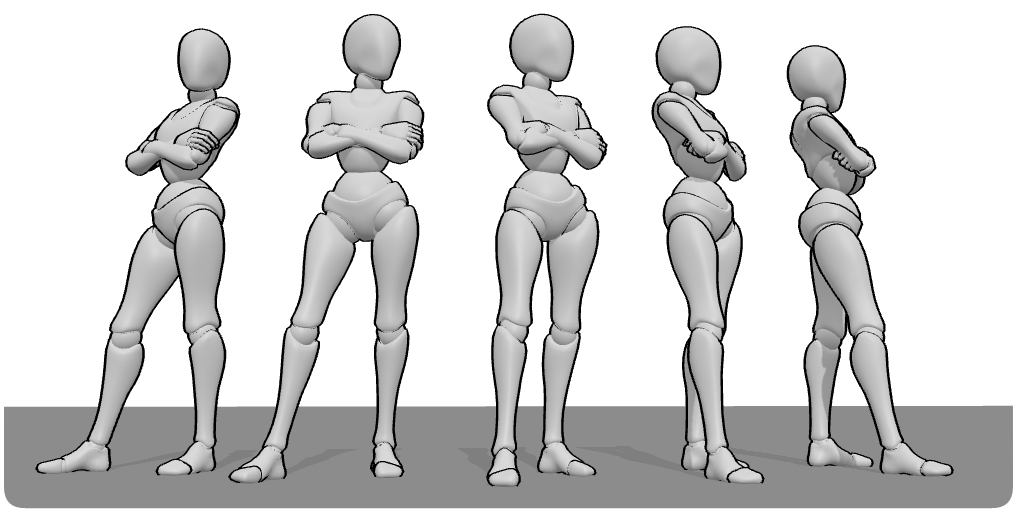
And once you’ve solved that problem, you can take the information and push the drawing wherever you want - stylized proportions, exaggerated anatomy, clothing, character design, or a completely different visual style.
Push the Pose Once the Structure Works
Once the structure works, that’s when you can start having fun.
Shift the hip further. Drop one shoulder. Turn the head. Change the position of the arms. Give the character a reason to stand the way they’re standing. A confident character might open their stance and take up more space. A tired character might collapse slightly into one hip, while a shy character might make themselves smaller and draw their weight inward. Someone impatient might already be shifting their weight toward their next step.
The underlying mechanics don’t disappear when you stylize them.
They give you something to exaggerate.
That’s the difference between a pose that simply looks correct and one that actually communicates something.
Final Thoughts
A standing pose doesn’t need to be dramatic to be interesting. Sometimes the smallest shift - a hip dropping, a shoulder relaxing, a foot turning slightly outward - is enough to make a character suddenly feel like a person rather than a figure assembled from anatomical parts.
Those details are easy to miss when you’re drawing from a single image, and even easier to invent incorrectly when you’re working from imagination. A rotatable 3D reference gives you something much more useful than another pose to copy: a way to interrogate the pose.
Rotate it. Change the camera. Look at the pose from the angle that doesn’t make sense yet. That’s often where the most useful information is hiding.
Once you start seeing standing poses as a balance of shifting masses rather than a collection of body parts, even a quiet pose becomes something you can deliberately design.