How to Draw Spell Casting Poses
There is something special about a character casting a spell. Unlike a simple action pose, magic often has no visible object to interact with - the movement itself has to communicate power, focus, and intention. A raised hand, a twisted torso, or a small shift in balance can completely change whether a spell feels weak, controlled, explosive or mysterious.
The challenge with spell casting poses is that the magic is often invisible, but the body still needs to react as if something real is happening. A powerful spell requires more than adding glowing effects or dramatic hand gestures. The character’s stance, weight distribution, arm movement, and line of action all work together to make the moment believable.
Whether you’re drawing a battle mage preparing an attack, a wizard summoning ancient magic, or a healer using a protective spell, understanding the body behind the movement will help your poses feel more dynamic and expressive. In this guide, we’ll explore how to create convincing spell casting poses, improve magical gestures, and use 3D references to experiment with angles and compositions that are difficult to imagine from scratch.
Start With the Source of the Magic
One of the easiest mistakes to make when drawing spell casting poses is focusing on the hand gesture before deciding where the magic is actually coming from.
A raised hand alone doesn’t create a powerful pose. The energy of the movement should travel through the entire body. A character pulling power from the ground might have a strong, stable stance with weight pushed downward. Someone releasing a fast attack spell may lean forward, using the whole body to direct the force outward. A defensive spell might create a more closed posture, with the arms protecting the character’s center.
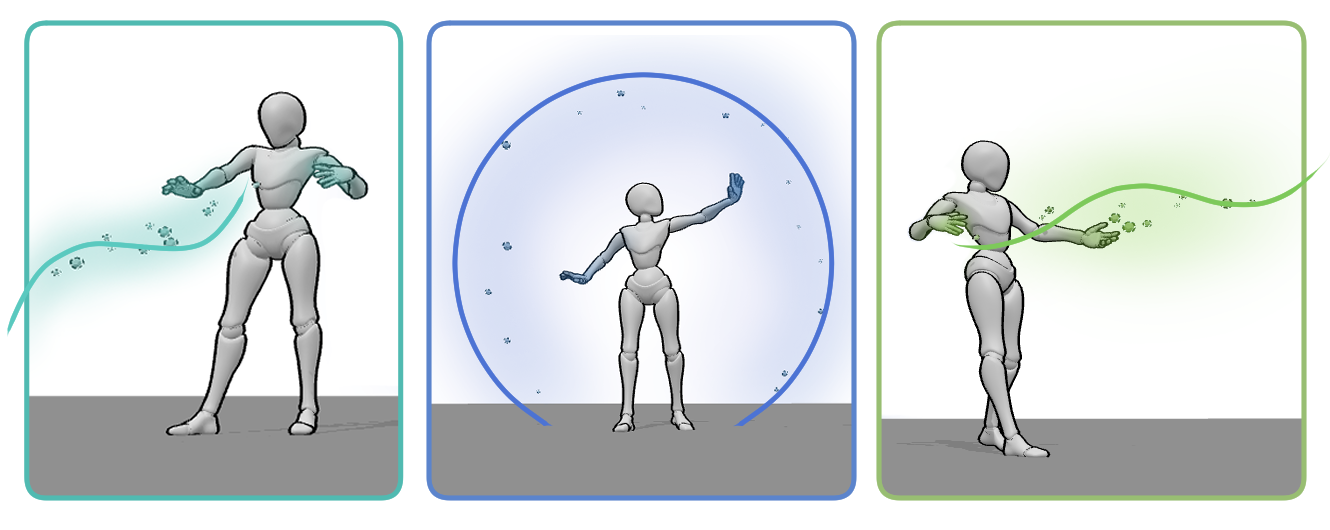
Before drawing the fingers or adding magical effects, decide what kind of action is happening. Is the character gathering energy, controlling it, or releasing it? The answer will affect the posture, the direction of movement, and even the amount of space the character takes up.
Thinking about the source and direction of the spell first makes the pose feel intentional instead of looking like a character simply holding their hand in a fantasy gesture.
Different characters will naturally cast spells in different ways. A battle mage might use larger, more aggressive movements, while a scholar or support mage may have more controlled and precise gestures. Studying different Mage Poses can help you explore these variations.
Let the Magic Flow Through Something
Magic doesn’t always come directly from the caster’s hands. Many fantasy characters channel their spells through a staff, wand, spellbook, crystal, or another magical object, and each one naturally leads to different body mechanics.
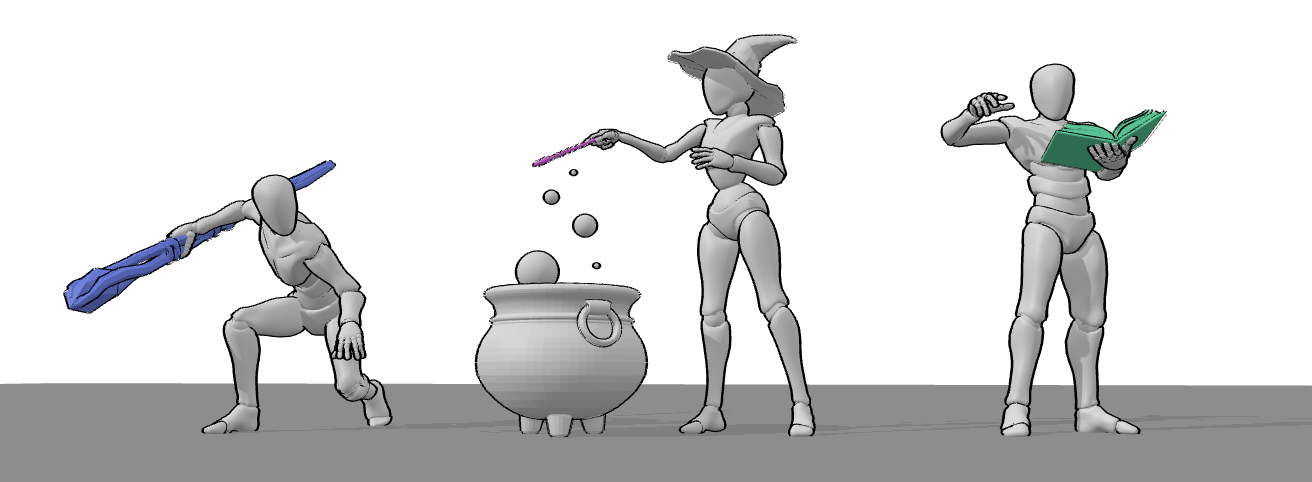
A long staff encourages broader, more grounded movements because the character has to support and control its weight. A wand often creates smaller, more precise gestures, while a spellbook may shift the focus toward one hand as the other casts or turns a page. Even something as simple as holding a glowing crystal can completely change the silhouette and balance of the pose.
Before adding magical effects, think about how the character interacts with their source of magic. The object shouldn’t feel like an accessory added at the end - it should become part of the movement itself.
Hands Should Support the Spell, Not Carry It Alone
It’s surprisingly easy to spend twenty minutes tweaking finger positions while completely forgetting that the shoulders and hips haven’t moved at all. I’ve definitely done that more than once.
Hands are one of the most recognizable parts of a spell casting pose, which is exactly why they are easy to overcomplicate. Many artists start with an interesting-looking finger gesture and build the entire pose around it. The problem is that a hand gesture can look magical on its own but still feel disconnected from the character.
A convincing spell casting pose usually has a clear connection between the hands, arms, shoulders, and torso. A hand reaching forward should have a reason behind that movement. The shoulder supports the arm, the torso provides balance, and the stance keeps the character connected to the ground.
When designing magical gestures, I like to think about the purpose of each finger position. Is the character controlling something precise? Pulling energy toward themselves? Pushing power outward? Small differences in the wrist angle, finger tension, and arm direction can completely change the feeling of the spell.
The same idea applies to the rest of the body. Because spell casting often focuses on the hands, it’s easy to forget what the lower body is doing. A character can have an impressive hand gesture, but if the legs and hips don’t support the movement, the pose may still feel weak.
The feet, hips, and torso determine whether the movement feels powerful, controlled, or effortless. A character releasing a destructive spell might shift their weight forward and use the entire body to direct the force, while a more delicate spell may require a calmer and more balanced stance.
Even small adjustments in the legs or hip rotation can completely change the feeling of the pose. The magic may appear in the hands, but the movement starts from the ground up.
The hand is where the magic becomes visible, but the whole body is what makes it believable.
Follow the Flow of the Spell
A spell casting pose becomes much more interesting when the movement has a clear direction. Even though magic itself is invisible, the viewer should still be able to feel where the energy is coming from and where it is going.
This is where the line of action becomes especially useful. A character gathering energy might have a circular, contained movement, with the arms and body creating a sense of pulling something inward. A character releasing a powerful spell usually benefits from stronger directional lines: a forward lean, an extended arm, or a twist through the torso that pushes the movement toward the target.
When every part of the pose follows the same flow, the spell feels more powerful. The hand gesture, the direction of the gaze, the angle of the shoulders, and even the position of the feet should support the same idea instead of competing with each other.
A good exercise is to simplify the character into a few basic shapes and ignore the details completely. If the pose still communicates “gathering,” “controlling,” or “releasing” magic without the effects, the foundation is probably working. The visual effects should enhance the movement - not create it.
Don’t Make Every Spell Look the Same
A common trap when drawing magic is relying on the same visual language every time: one arm extended forward, fingers spread apart, and a dramatic stance facing the viewer. It works, but after a while every character starts to feel like they’re casting the same spell.
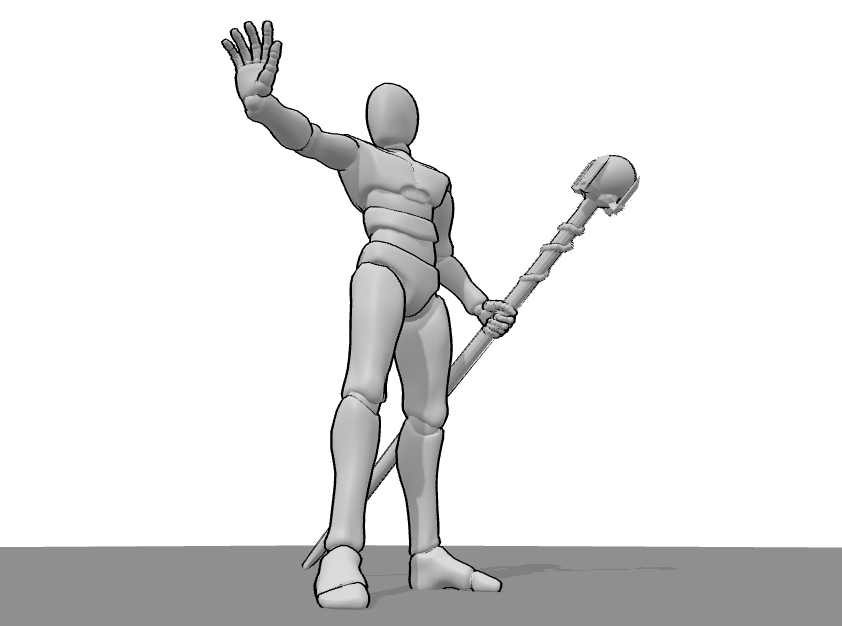
Fantasy characters seem to love pointing dramatically into the distance. Mine certainly do - unless I consciously remind myself to explore other gestures.
Try thinking about how different types of magic would affect the body. A lightning spell might feel sharp and explosive, with sudden angles and a more aggressive posture. A healing spell could use softer movements, open hands, and a more balanced stance. A summoning ritual might feel slower and heavier, with both hands involved and the character creating space around themselves.
The type of magic should influence more than just the effects you add later. It should affect the character’s movement, the amount of tension in the body, and the overall rhythm of the pose.
Before drawing a spell casting pose, decide what the magic feels like. Is it fast or slow? Controlled or chaotic? Powerful or delicate? Once the movement matches the nature of the spell, the pose starts telling a story even before any glowing effects are added.
Let the Character Shape the Spell
Not every spell caster should move the same way. A wizard, a witch and a battle mage might all cast the same spell, but their poses should reveal who they are and how they use magic.
A wizard who studies ancient knowledge might have more controlled and deliberate movements. Their gestures can feel precise, almost like they are following a complex formula. A witch connected to nature or rituals might use more circular movements, grounded stances, and gestures that feel slower and more intentional. A battle mage, on the other hand, needs a more aggressive posture, with stronger lines, wider movements, and a stance ready for action.
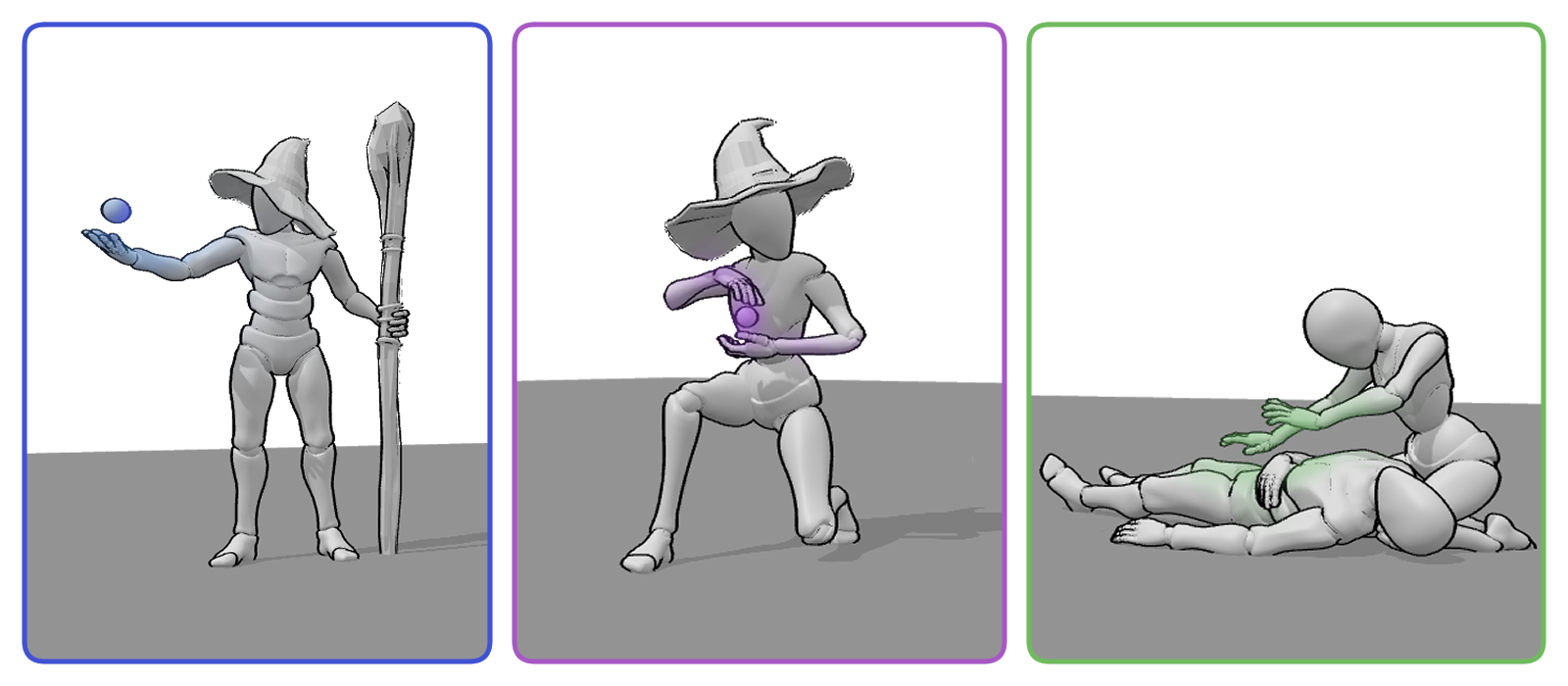
The same idea applies to other fantasy archetypes. A healer may use open hands and a protective posture, while a summoner might create more space around themselves, as if guiding something larger than their own body.
Before designing a spell casting pose, think about what kind of person is using the magic. Their personality, training, and relationship with magic should influence the way they stand, move, and express power.
Make the Camera Part of the Magic
A spell casting pose can feel completely different depending on the angle you choose. The same character, the same gesture, and the same spell can look calm and controlled from one viewpoint, but powerful and overwhelming from another.
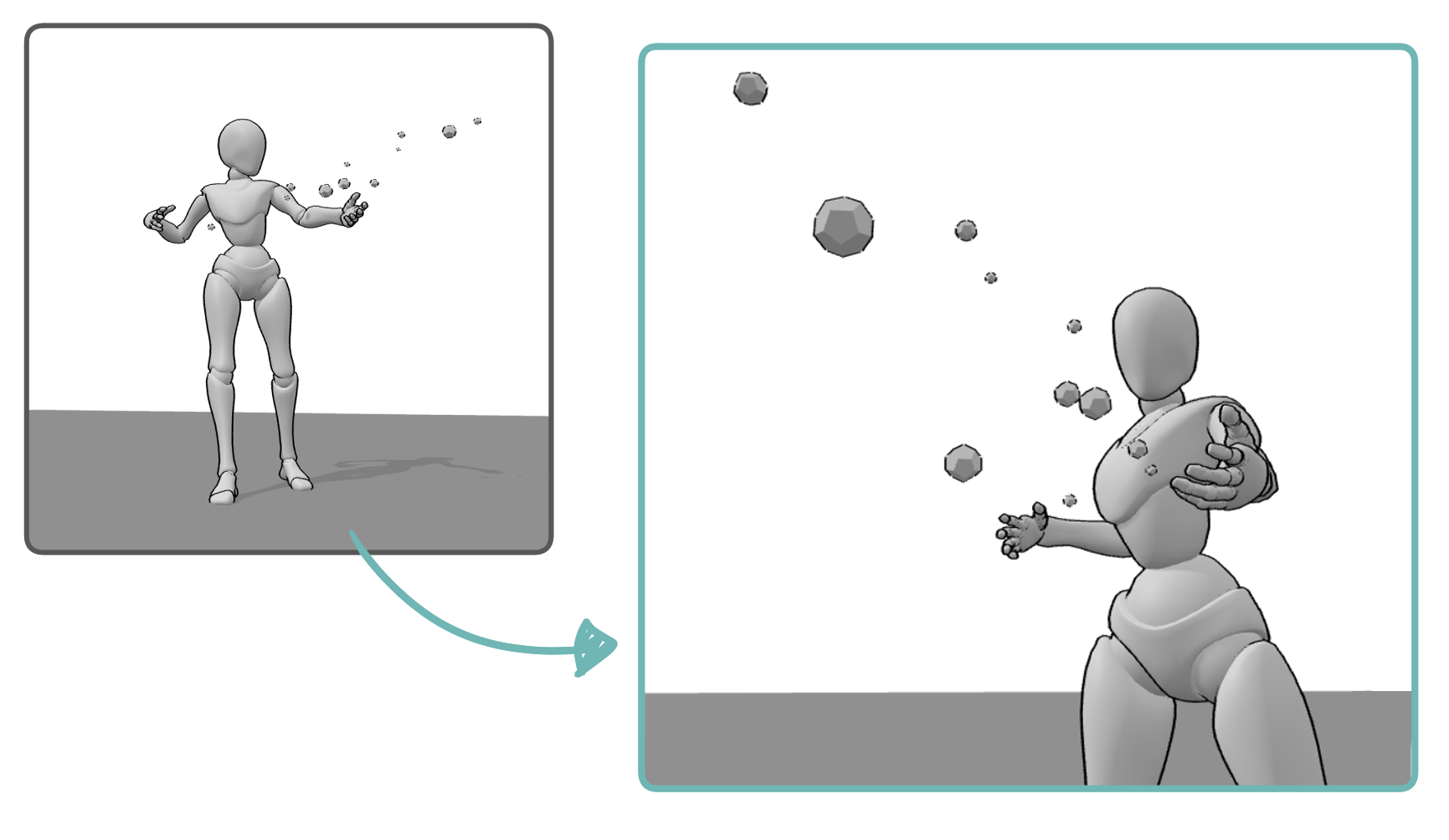
A low camera angle can make a mage feel more dominant, especially when the spell is directed toward the viewer. A close perspective with a hand reaching forward can create a strong sense of depth, while a side view can clearly show the connection between the body, the magical gesture, and the direction of the spell.
One thing I like to experiment with is moving the camera before changing the pose. Sometimes the character doesn’t need a more dramatic movement - the composition just needs a different viewpoint. A small camera rotation can reveal the tension in the shoulders, separate overlapping shapes, and make the spell feel much more three-dimensional.
Let the Magic Affect the Environment
One of the easiest ways to make a spell casting pose feel more powerful is to show that the magic has an effect on the world around the character.
A character standing still can feel much more dynamic when the environment reacts to the spell. A cloak pulled by magical energy, hair moving from an invisible force, floating objects, glowing particles, or disturbed ground can all reinforce the direction and intensity of the movement.
The important thing is that these effects should follow the same logic as the pose itself. If the character is gathering energy inward, the magical elements might spiral toward them. If they are releasing a powerful attack, the movement should flow outward from the body in the same direction as the spell.
Small environmental details can also help explain the scale of the magic. A subtle glow around the hands suggests control and precision, while a large area of movement around the character can make the spell feel overwhelming. The effects don’t replace a strong pose - they amplify what the body is already communicating.
Final Thoughts
A convincing spell casting pose starts long before you add glowing effects, magical particles or dramatic lighting. If the body language already communicates power, focus or control, the magic simply reinforces what the viewer can already feel.
The best way to improve is to experiment with different spell types, character archetypes, and camera angles. Try casting the same spell with a wizard, a witch or a battle mage. Replace a wand with a staff, or remove every magical effect and ask yourself whether the pose still tells the story. If it does, you’re building on a strong foundation.
I rarely get a spell casting pose right on the first try, and honestly, I don’t expect to. Trying different variations is usually where the best ideas appear.
Magic is invisible - but good body language isn’t. The more you understand how movement, balance and intention work together, the easier it becomes to create spell casting poses that feel believable, expressive and full of life.