Drawing Gun Holding Poses: How to Draw Realistic Hand Grip and Full Body Weapon Stances
When I draw a character holding a gun, I already know where the drawing will succeed or fail. It’s not the weapon. It’s not the outfit. It’s the hand. The hand is brutally honest. It immediately exposes hesitation, uncertainty, or lack of physical logic.
When you draw a character holding a gun, the viewer doesn’t look at the weapon first.
They look at the hand.
Every time.
The hand instantly tells us whether the character knows what they’re doing - or whether the gun was just placed there as an afterthought. This article is about drawing convincing gun holding poses, starting from realistic hand grip and extending all the way to full body weapon stances.
- Why most gun holding drawings look wrong
- Understanding grip roles
- Pistol grip - control and compression
- AK / rifle grip - weight changes everything
- Full body posture: the weapon is never neutral
- Holding a weapon is not the same as aiming
- Transitional moments: loading, adjusting, preparing
- Why reference variety matters
- Hands + props = storytelling
- Stop guessing. Start observing.
Why most gun holding drawings look wrong
Over time, I realized that “gun holding pose” is a much broader category than most artists think.
It’s not just pistols. It’s not just standing characters. And it’s definitely not always about aiming.
Sometimes the weapon is idle.
Sometimes it’s carried.
Sometimes it’s heavy, awkward, or unfamiliar.
All of those situations create completely different body logic.
After years of studying pose references and drawing weapon poses myself, the same issues appear again and again:
- Fingers don’t follow the weapon’s shape
- The hand rests on the gun instead of gripping it
- The wrist bends in an unnatural angle
- The weapon has no visible weight
- The body posture is disconnected from the hands
The root problem is almost always the same:
hands, weapon, and body are drawn as separate elements, instead of one physical system.
Understanding grip roles
I don’t believe artists need to memorize weapon manuals - but understanding basic grip logic helps a lot.
For pistols:
- the dominant hand wraps the grip fully
- the thumbs align forward along the frame, stacked rather than floating
- the support hand reinforces pressure, not decoration
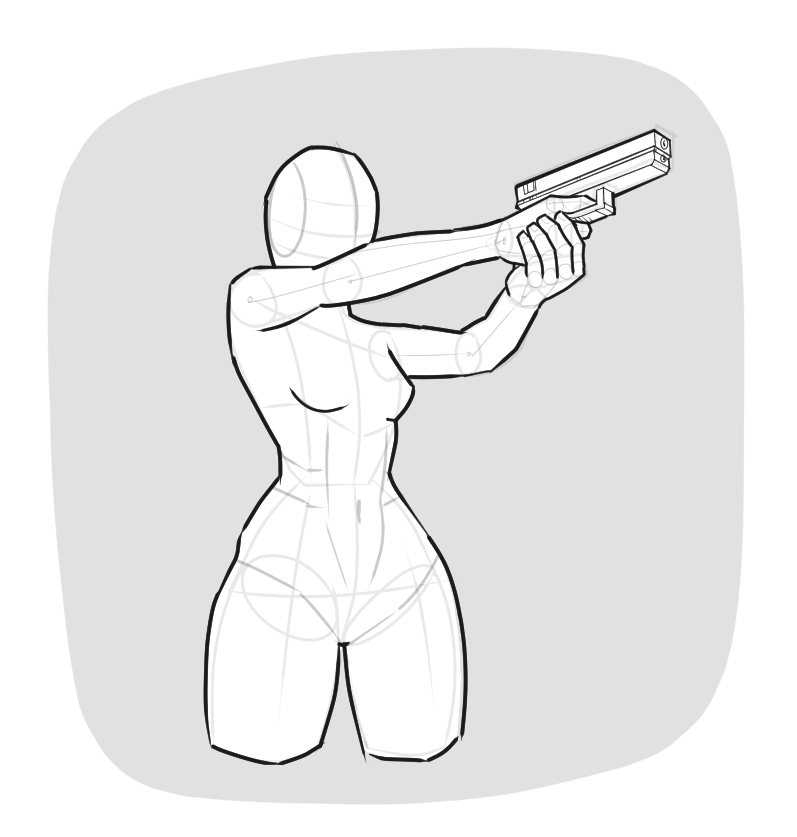
For rifles and AK-style weapons:
- the trigger hand controls direction
- the front hand stabilizes weight
- the front hand is often supported by the knee or nearby objects
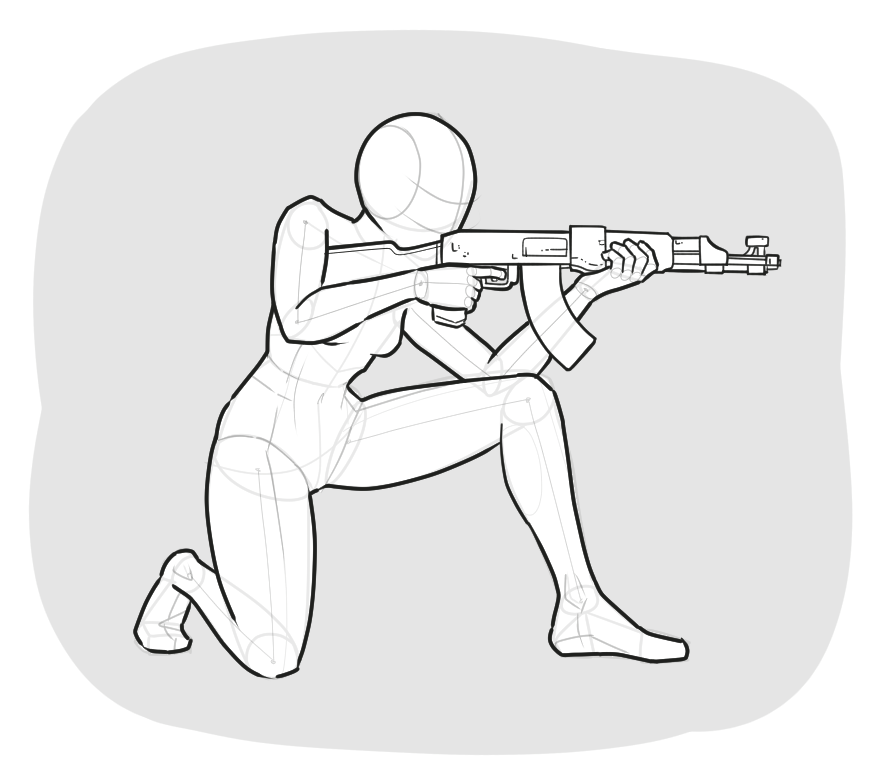
Even if you stylize heavily, these relationships keep the pose believable.
One small detail that makes a huge difference in credibility:
The finger is not on the trigger unless there is a clear intent to shoot.
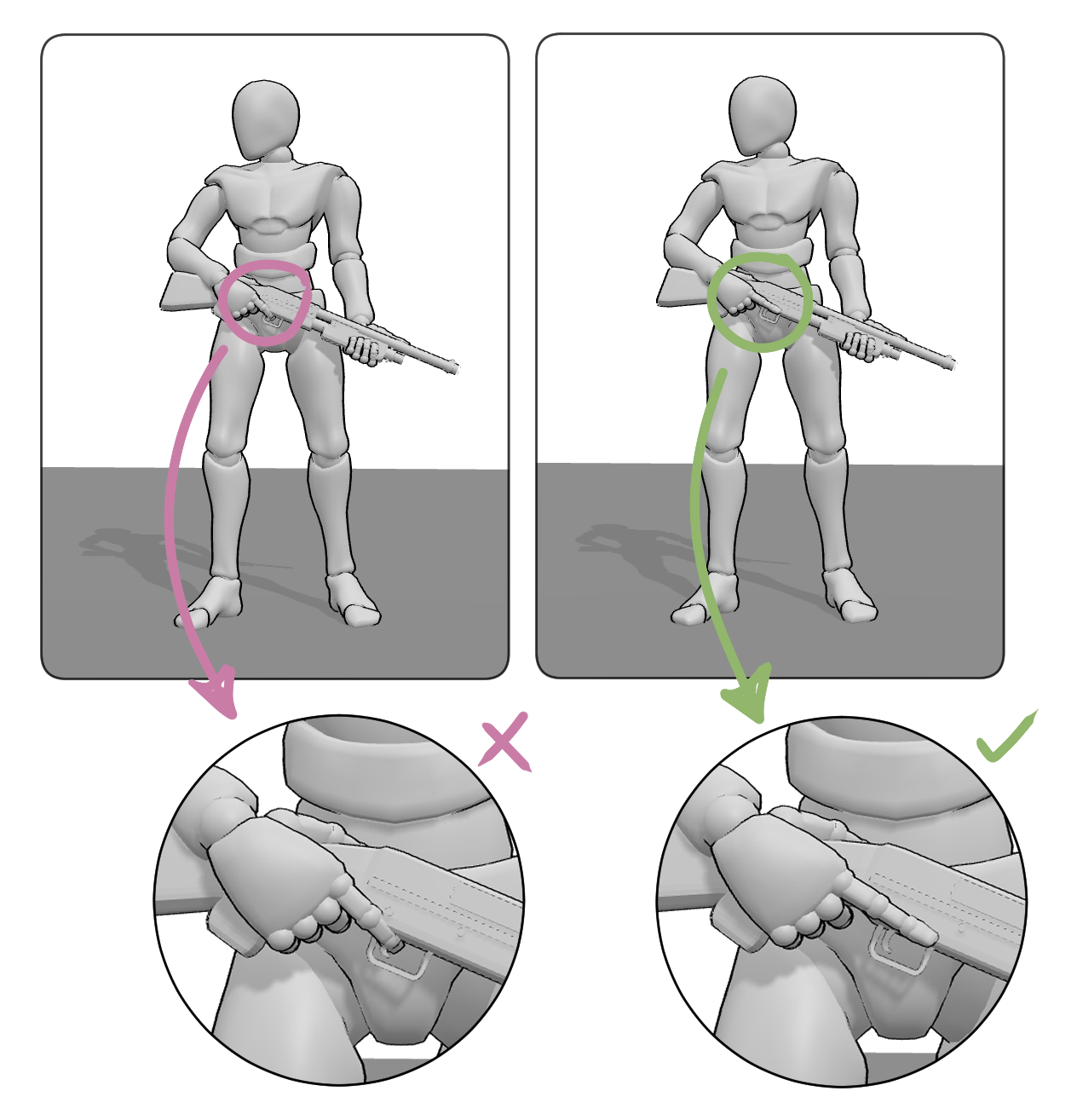
In neutral or alert poses - like armed guards or bodyguards standing watch - the trigger finger usually rests along the frame, not inside the trigger guard.
This is something films get wrong all the time. Characters constantly point weapons with their finger already on the trigger, and visually it feels careless and unrealistic.
In drawings, the same mistake instantly breaks believability.
A finger on the trigger signals action.
A finger outside signals control.
Pistol grip - control and compression
With a pistol, the grip is compact and intentional.
Visually, this means:
- The palm compresses around the handle
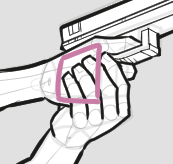
- The thumb and index finger establish direction
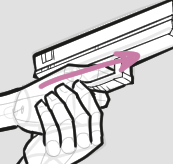
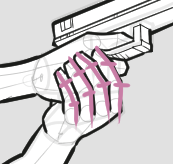
- Fingers are tightly wrapped, not evenly spaced
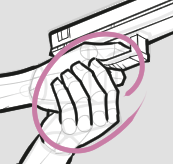
- The knuckles form subtle rhythm, not a straight line
A common mistake is drawing a “soft” hand.
Soft hands kill tension - and without tension, the character loses authority.
When the grip is right, the pose already works halfway.
AK / rifle grip - weight changes everything
Long weapons follow a different logic.
Here:
- One hand guides, the other supports
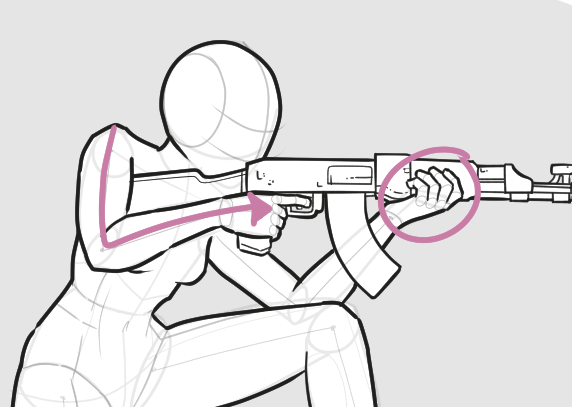
- The weapon’s weight pulls down the shoulders
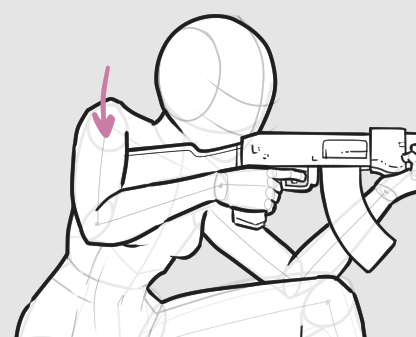
- Elbows push outward to stabilize
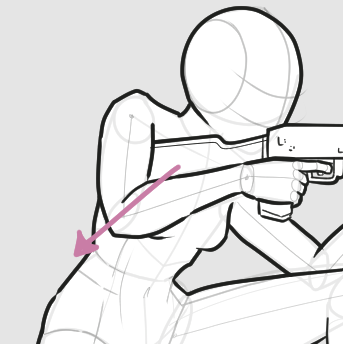
- The torso subtly counters the mass
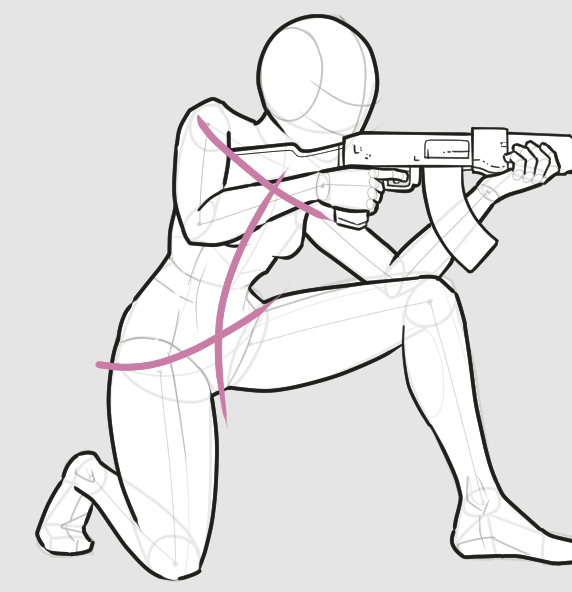
If the body doesn’t react to the weapon’s weight, the drawing feels fake - even if the hands are technically correct.
Weight must travel through the arms into the torso.
Full body posture: the weapon is never neutral
A weapon is not a passive prop.
It dictates posture.
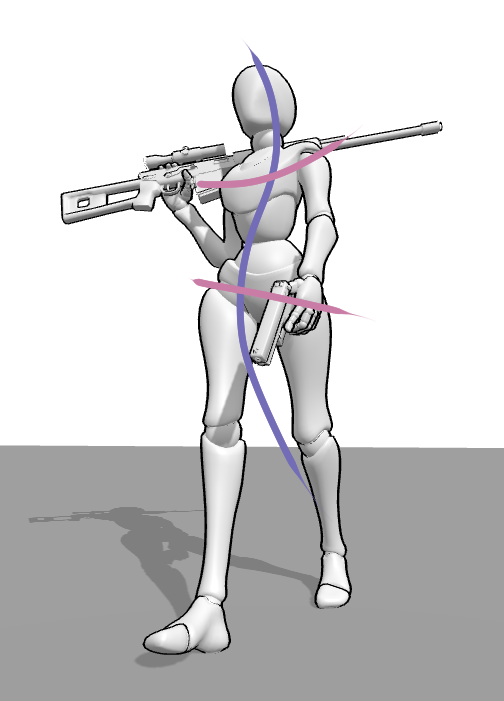
Always ask:
- Where is the center of gravity?
- Which leg carries more weight?
- Are the shoulders uneven? (They usually are.)
- Does the head follow the weapon’s direction?
Strong gun holding poses often form a gentle spiral through the body:
hand → arm → shoulder → torso → hips → legs
This flow creates tension and stability at the same time.
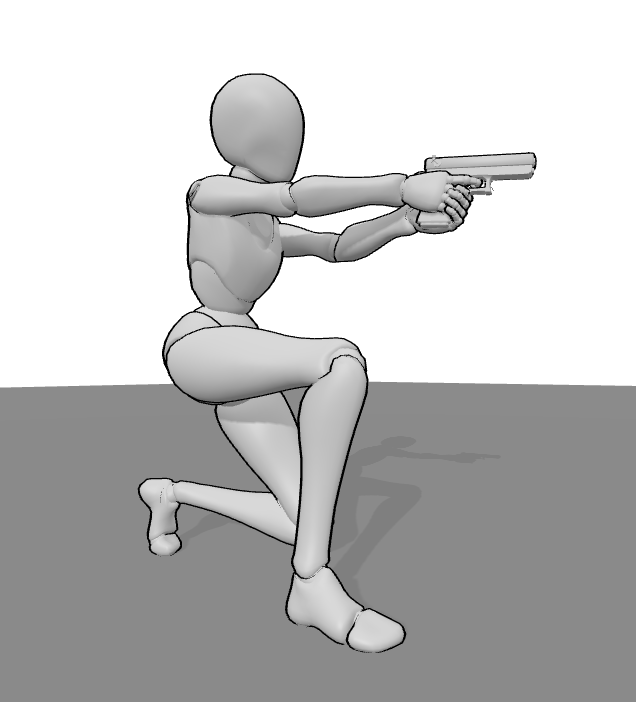
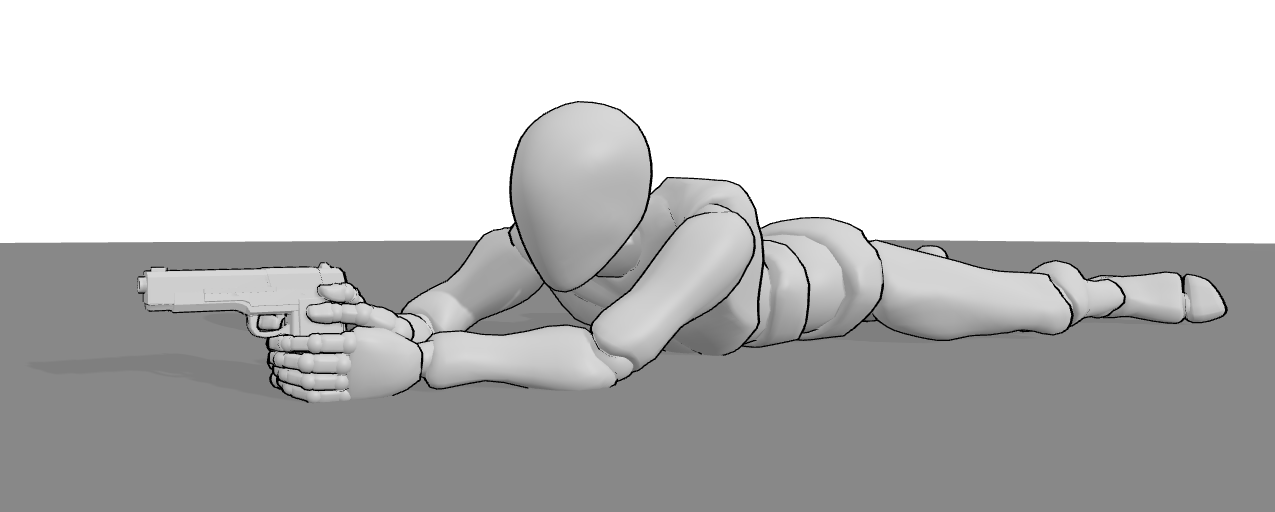
Stance changes everything: standing, crouching, prone
Body position radically changes how a weapon is held.
In standing poses, balance is vertical.
In crouching poses, tension shifts into the hips and thighs.
In prone positions, the weapon becomes an extension of the ground.
A crouching character gripping a rifle will:
- pull elbows closer
- lower the shoulders
- shorten the line of action
A prone pose, on the other hand, flattens the body logic entirely - hands become precise and restrained.
Holding a weapon is not the same as aiming
One of the most overlooked distinctions in gun holding poses is intent.
Holding a weapon is passive.
Aiming is active.
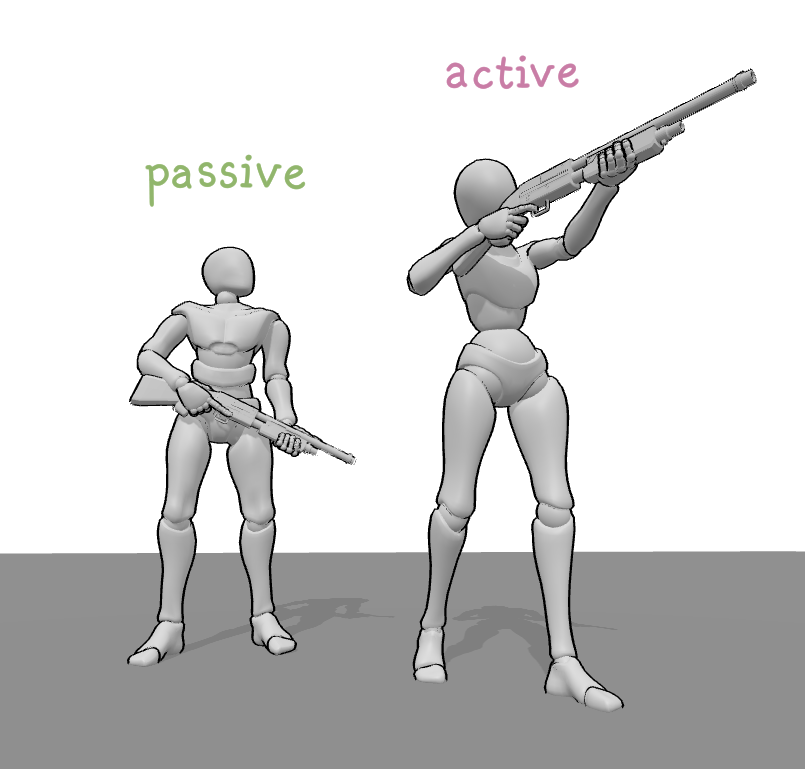
When a character is only holding a gun:
- grip pressure is uneven
- posture is relaxed but alert
- the weapon doesn’t fully dominate the pose
When aiming:
- the body aligns behind the weapon
- tension increases everywhere
- even the neck and jaw participate
Mixing these two states is a common source of visual confusion.
Transitional moments: loading, adjusting, preparing
Some of the most interesting gun holding poses happen between actions.
Loading a weapon.
Adjusting grip.
Pulling the charging handle.
These moments break symmetry and create natural, believable tension.
Hands separate. Wrists twist. Elbows flare.
From a drawing perspective, these transitional poses feel alive - because they’re not frozen into “iconic” shapes.
Why reference variety matters
Drawing only one type of gun limits your visual vocabulary.
Different weapons create different body logic:
- Pistols emphasize wrist control
- Rifles emphasize shoulder alignment
- Heavy weapons exaggerate stance width and balance
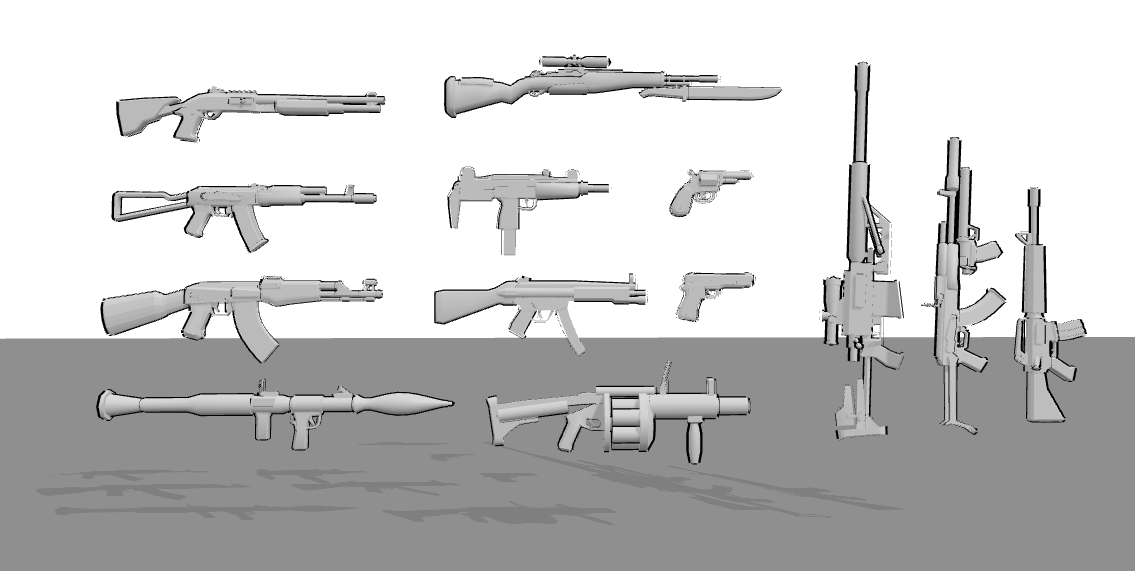
That’s why I rely on pose libraries that don’t just repeat the same silhouette.
In PoseMyArt, the large weapon library allows you to study:
- multiple gun types
- varied hand grips
- front, side and dynamic angles
This makes it much easier to understand why a pose works, not just copy how it looks.
Different situations, different body logic
Over time, I stopped looking for “the perfect gun pose” and started collecting situations instead.
Aiming changes posture.
Running breaks symmetry.
Stylization alters grip logic without removing it.
That’s why I often jump between different drawing reference collections - like focused gun aiming poses, more exaggerated anime gun poses, or looser holding gun poses - depending on what kind of character energy I’m working with.
Even subtle shifts, such as comparing static gun poses with something more dynamic like running with gun poses, can completely change how believable a drawing feels.
Hands + props = storytelling
A weapon alone already says something - but props multiply the message.
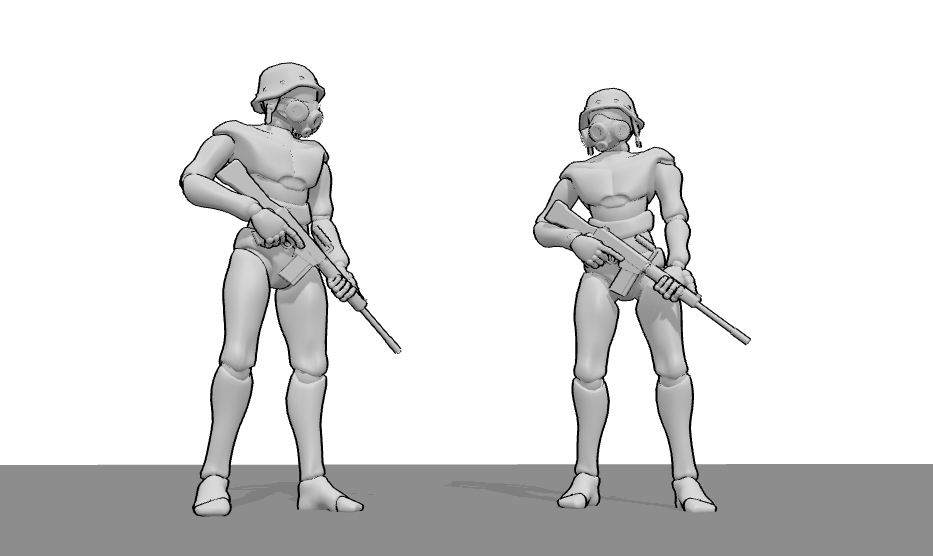
Adding elements like:
- gas masks
- helmets
- bullets
- bullet packs
- tactical accessories
instantly pushes the character into a narrative space.
The grip tightens. The posture hardens. The mood shifts.
These small details help you design characters that feel lived-in, not staged.
Stop guessing. Start observing.
The biggest improvement in drawing gun holding poses doesn’t come from anatomy books.
It comes from observation.
Study how hands actually close around objects.
Notice how weight travels through the body.
Look for asymmetry - it’s everywhere.
Use pose references not as crutches, but as teachers.
Final thoughts
If your gun holding poses feel stiff or overdesigned, the solution isn’t to zoom in on the fingers first.
Start bigger.
Build the pose from the entire body: establish the line of action, find the balance, decide where the weight lives. Let the weapon influence the spine, the shoulders, the hips. At this stage, the hands can stay simple - almost symbolic.
Only once the full-body logic is solid do the hands deserve your full attention.
That’s when grip details stop feeling forced and start feeling inevitable.
Not because you obsessed over fingers - but because the whole pose already knows what the hands must do.