Master Sword Fighting Poses for Dynamic Action Scenes
Most sword fights in drawings have one thing in common: both characters look like they’re waiting for someone to yell, “Action!”
Their swords are raised. Their feet are planted. They stare at each other dramatically… and absolutely nothing feels like it’s about to happen.
The strange thing is that this usually isn’t an anatomy problem - It’s a storytelling problem.
A convincing sword pose isn’t just about holding a weapon correctly. It should make the viewer feel what happened a second ago and what is about to happen next. Is the character charging forward? Recovering from a missed swing? Bracing for impact? Trying to keep their balance?
Those tiny clues are what make an action scene feel alive.
When I’m sketching fight scenes, I rarely start by thinking about the sword itself. I start by asking what the character is trying to accomplish. The weapon simply follows that intention.
Stop Drawing the Moment of Contact
When people think about sword fights, they usually imagine the moment the blades collide.
Ironically, that’s often the least interesting part of the entire movement.
The poses that feel the most dynamic usually happen just before or just after the strike. Right before an attack, the body coils like a spring. The hips rotate, the shoulders twist, and the weight shifts onto one leg, building tension before the release. Right after the swing, momentum pulls the character forward, making the follow-through just as important as the attack itself.
That’s why I rarely sketch the “hit.” I look for the moments surrounding it instead. They tell a much clearer story and naturally create stronger silhouettes.
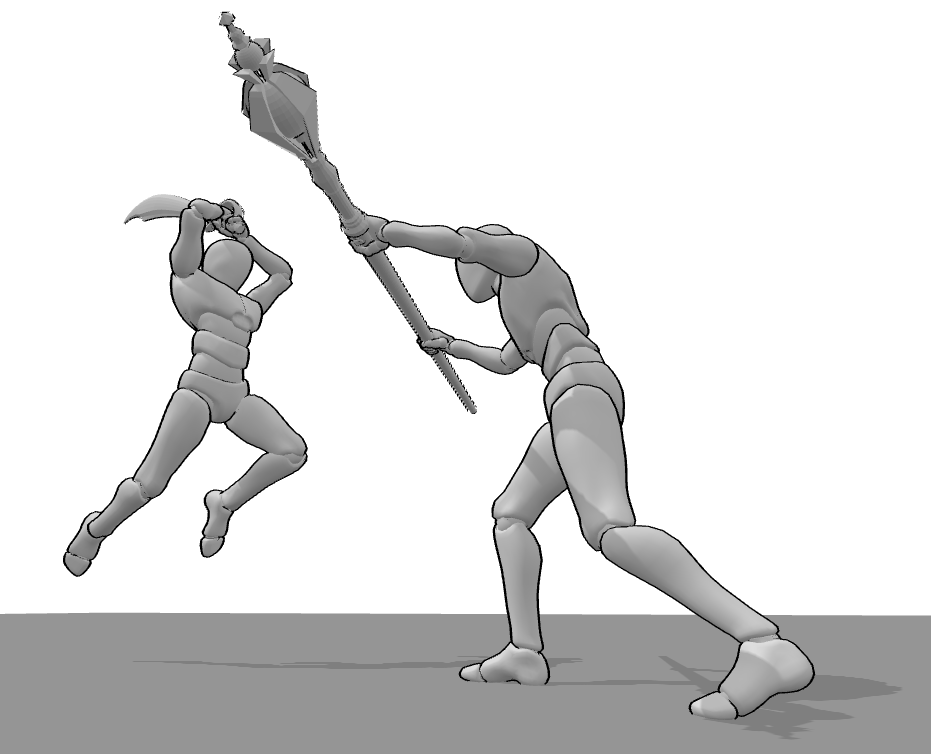
If you’re looking for ideas, browsing different Sword Attack Poses or Sword Swinging Poses is a great way to study how the body’s balance changes throughout the entire motion instead of freezing a single instant.
Your Opponent Is Part of the Pose
When you’re drawing a fight scene, it’s easy to focus all your attention on one character. The problem is that a duel isn’t two separate poses placed next to each other - it’s a conversation.
Every movement should be a reaction to the other person.
If one fighter lunges forward, the other might lean back to avoid the strike. If one sword is raised high, the opponent may lower their center of gravity in anticipation of the attack. Even before the blades meet, the relationship between the two characters should already create tension.
One exercise I like is hiding one of the characters and looking at the other in isolation. Can you guess what the invisible opponent is doing? If the answer is yes, the pose is probably telling the story clearly.
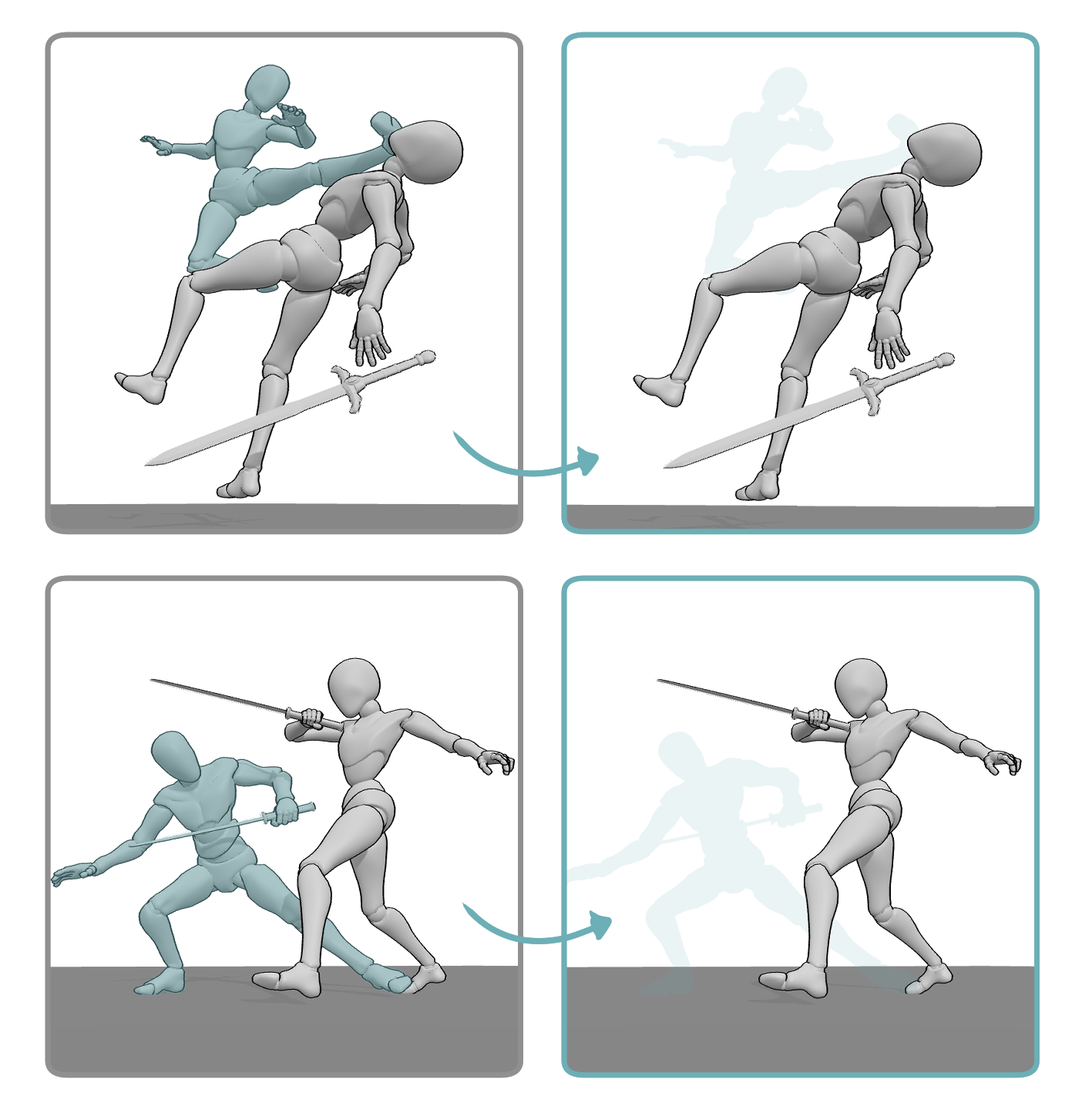
This is where I find the Premade Scenes Library especially useful. Instead of posing one character at a time, I can study complete combat scenes with both fighters already interacting. Sometimes I don’t even use the exact poses - I simply observe the spacing, angles, and body language before creating my own composition.
The Sword Fight Poses collection is a great place to study how two characters work together rather than treating each pose as an isolated action.
The Sword Matters More Than You Think
It’s surprisingly easy to forget that “a sword” isn’t just… a sword.
A slim rapier, a katana, and an oversized fantasy greatsword all encourage completely different body mechanics. If you give every weapon the same stance and the same swing, your characters can start to feel interchangeable.
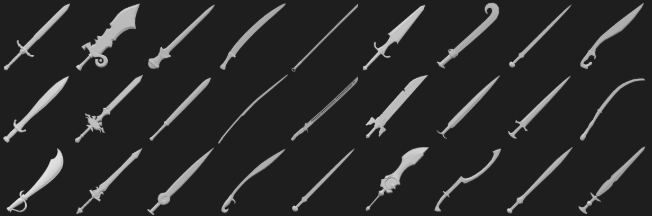
A long, heavy sword naturally pushes the feet farther apart and asks for bigger, more committed movements. A lighter blade allows quicker footwork and tighter motions. Even the way a character holds the hilt changes depending on the weapon’s size and balance.
One thing I really enjoy about the PoseMyArt is that I can swap between different swords in seconds. Sometimes I keep the exact same pose and simply change the weapon to see what stops feeling believable. It’s a surprisingly useful exercise because it quickly reveals when the body isn’t actually supporting the sword it’s supposed to be carrying.
If you’re looking for fresh ideas, the Holding Sword Poses and Dynamic Sword Poses collections are a great source of inspiration. They showcase a wide range of stances, grips, and action poses, making it easier to explore different ways a character can interact with a sword.
Don’t Make Every Swing a Big Swing
When I first started drawing sword fights, I thought every attack had to be huge. Every slash stretched from one side of the page to the other, every character leaned as far forward as possible, and every pose tried to look more dramatic than the last.
The funny thing is, once every attack becomes “epic,” none of them really stand out anymore.
A believable fight needs variety. Mix powerful overhead strikes with short, controlled movements. Follow a wide swing with a quick thrust. Let one character attack aggressively while the other barely moves, relying on timing instead of force.
This kind of contrast keeps a fight interesting. It also makes each pose feel intentional instead of looking like the same attack repeated over and over.
When I’m planning a combat scene, I usually sketch several attacks in a row rather than choosing one immediately. Seeing different options side by side makes it much easier to spot which movement feels the clearest and which poses are starting to look too similar.
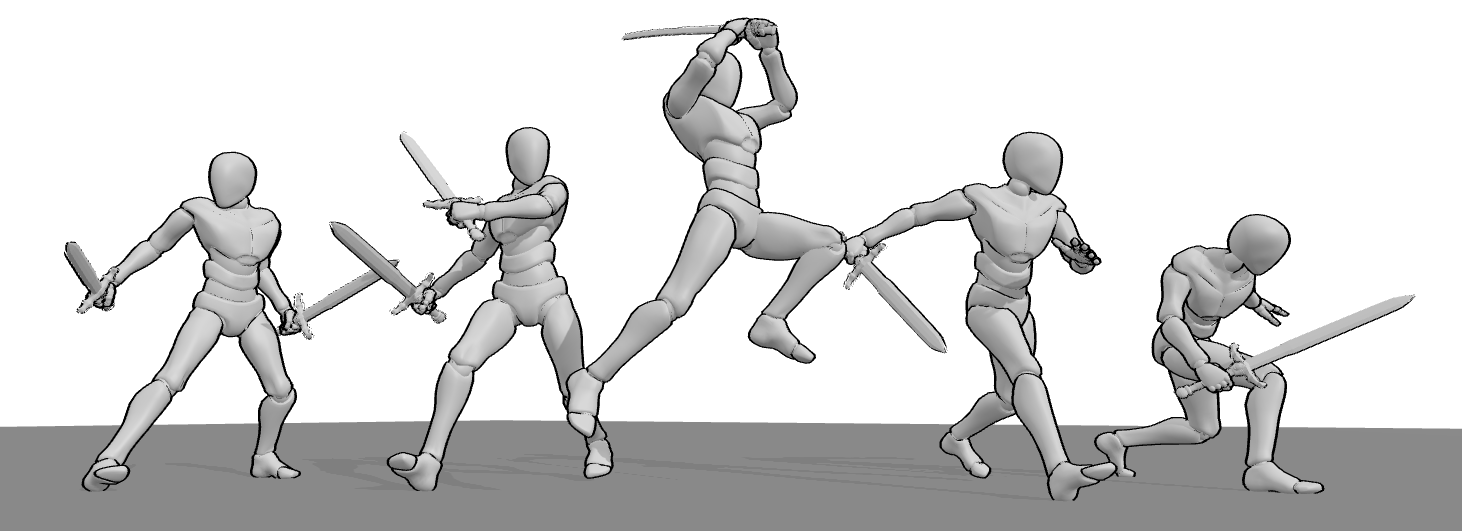
The Sword Attack Poses collection is a great source of inspiration when you’re exploring different attack ideas. Comparing a variety of strikes side by side makes it easier to notice how small changes in body rotation, foot placement, or the direction of the swing can completely change the feeling of the pose.
Leave Room for the Fight
A sword fight isn’t just about the characters - it’s also about the space between them.
One mistake I see quite often is placing both fighters so close together that the scene becomes difficult to read. Arms overlap, swords blend into each other, and before long it’s hard to tell who’s attacking and who’s defending.
Sometimes moving one character half a step back creates a much stronger composition than adding another dramatic pose.
I also like to think about where the next movement will happen. Is one fighter advancing while the other retreats? Has someone been pushed toward the edge of a cliff? Are they circling each other, waiting for an opening? Suddenly, the empty space between them becomes part of the story instead of wasted space.
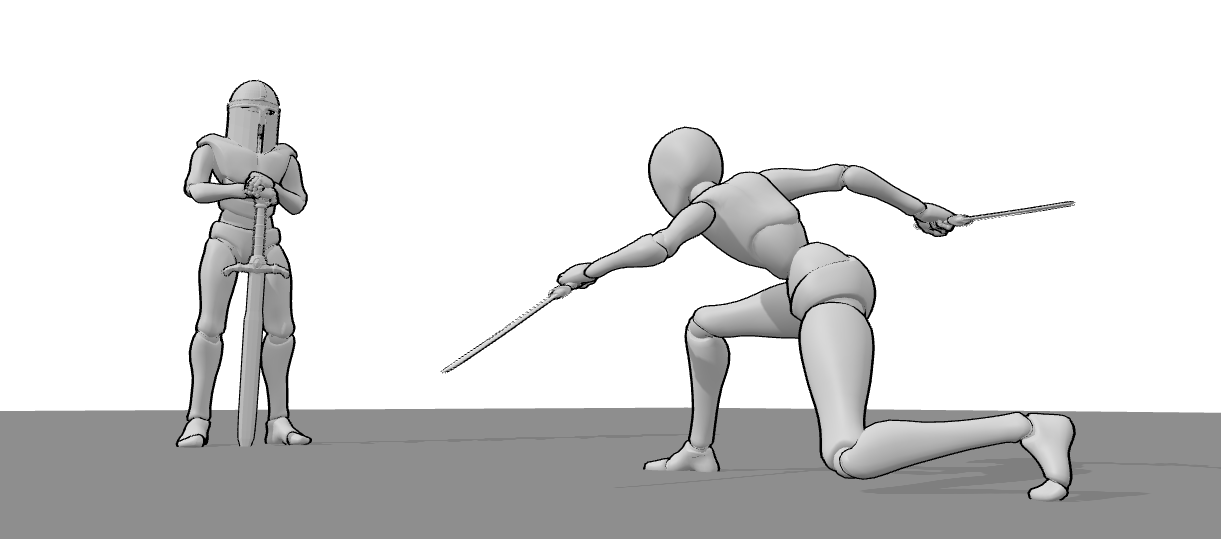
That’s one reason I keep coming back to the PoseMyArt Premade Scenes Library. There are plenty of ready-made sword duels and larger fight scenes where the characters are already interacting naturally. Even when I don’t use the scene directly, it’s incredibly helpful for studying spacing, composition, and how two poses work together to tell a story.
Don’t Forget What Happened One Second Earlier
One thing I like to do before drawing a sword pose is ask myself a simple question:
“What happened one second ago?”
Did the character just block an attack? Miss a strike? Jump backward? Lose their footing?
Those answers often create much more interesting poses than simply deciding, “This character is attacking.”
For example, a missed swing naturally pulls the body off balance. A successful block may leave the sword high above the head, creating an opening for the next attack. Even something as simple as taking one hurried step backward can make a character feel far more alive than a perfectly balanced stance.
Thinking this way also helps avoid one of the most common problems in action scenes: characters who look frozen in place. A good pose should feel like it’s part of a continuous sequence rather than a single isolated moment.
When viewers can imagine what just happened - and what will probably happen next - the illustration immediately becomes more engaging.
Rotate the Camera Before You Change the Pose
Sometimes the pose isn’t the problem.
The camera is.
I’ve had plenty of moments where a sword attack felt awkward, so I started moving the arms, twisting the torso, or changing the legs… only to realize that simply rotating the camera by 30 degrees solved everything.
A strong silhouette can disappear completely if the sword lines up with the character’s body. The same attack can suddenly feel much more dramatic when viewed from a slight angle, revealing the weapon, the shoulders, and the direction of the movement all at once.
This is one of the biggest reasons I like working with 3D references. Before I spend time sketching or refining a pose, I can quickly explore different camera angles and see which one tells the story most clearly. Often, I end up keeping the original pose and changing only the viewpoint.
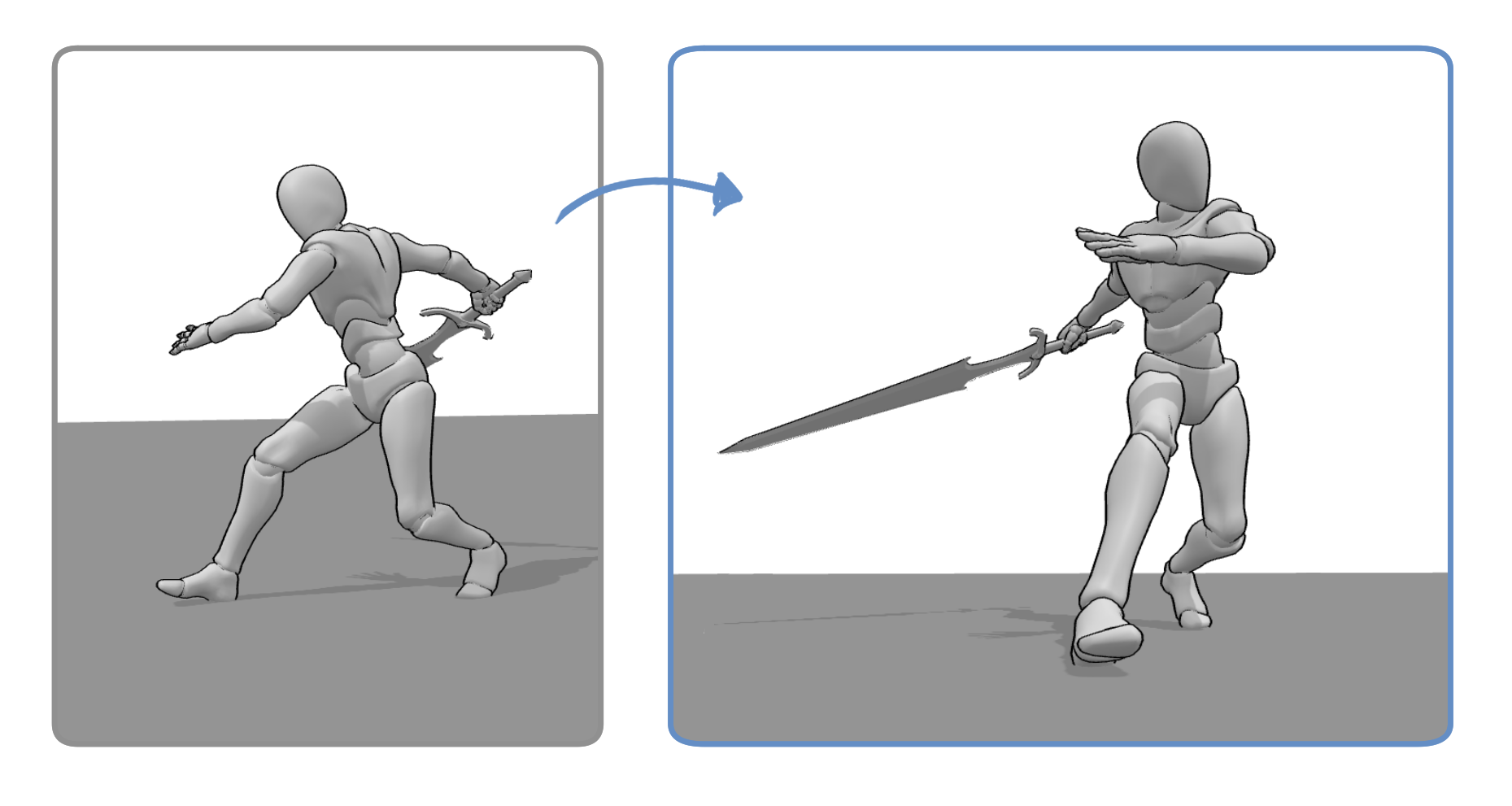
A low-angle view can make a character feel larger than life, while a higher viewpoint often reveals the choreography of the fight more clearly. Neither is objectively better - the best choice depends on the story you’re trying to tell.
Test the Pose Without the Sword
Here’s a little challenge I like to give myself.
Hide the sword.
Would the pose still look like someone in the middle of a fight?
If the answer is no, there’s a good chance the weapon is doing all the work.
A strong sword fighting pose should communicate movement even before you add the blade. The twist of the torso, the placement of the feet, the shift in body weight, and the direction of the head should already suggest what the character is about to do. The sword simply reinforces that story.
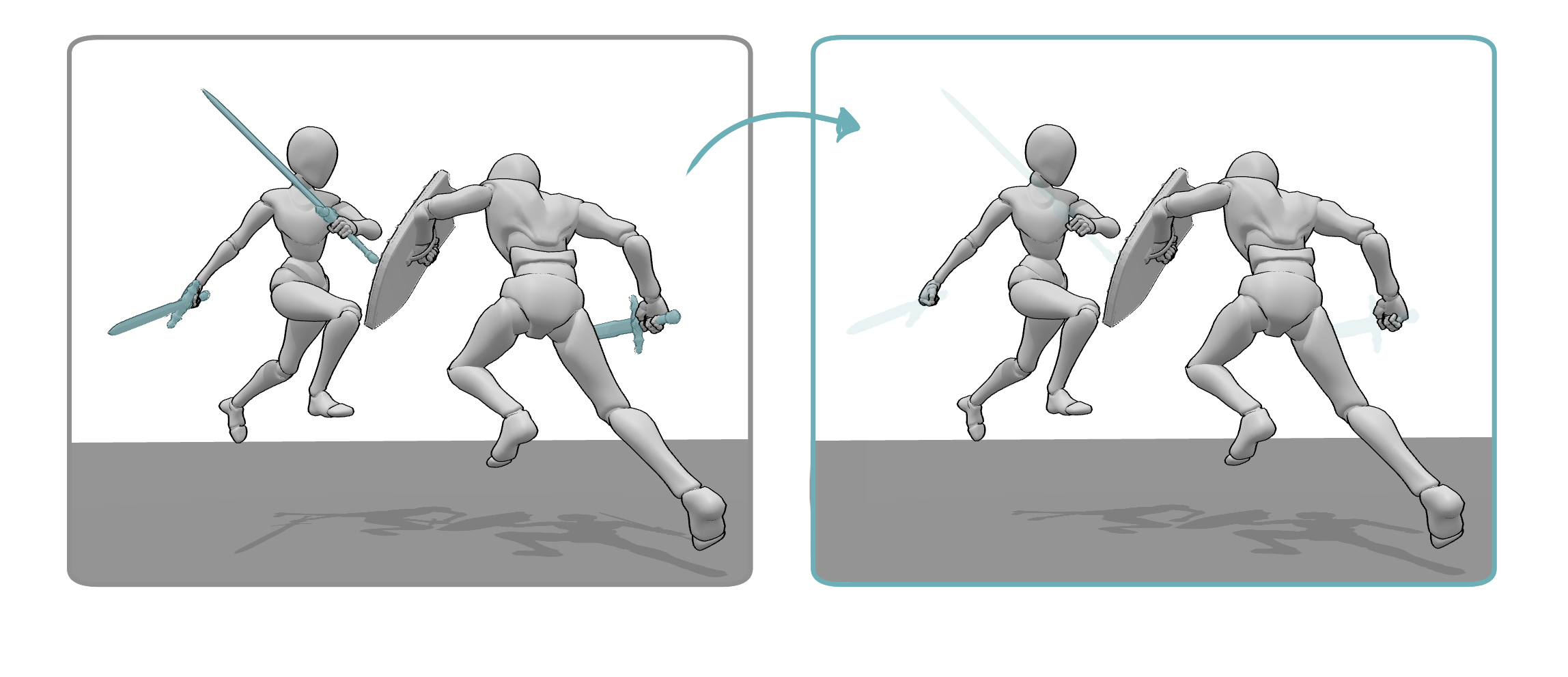
I sometimes remove the weapon entirely while I’m sketching. If the character still looks like they’re attacking, defending, or recovering from a swing, I know the body mechanics are doing their job. If they suddenly look like they’re waiting in line for coffee, it’s usually a sign that I need to push the pose a little further.
Final Thoughts
The next time you sketch a sword fight, try resisting the urge to perfect the details right away.
Instead, spend a few extra minutes exploring different ideas. Rotate the camera. Change the distance between the characters. Try a completely different sword. Turn an attack into a dodge or a block.
You’ll probably discover something more interesting than your first idea.
3D references make experimenting quick, which means you’re more likely to keep exploring instead of settling for the first pose that looks “good enough.”