How to Improve Your Chibi Drawing With Dynamic Poses
If you’ve ever tried drawing a chibi action scene, you’ve probably had this experience: somehow, the character ends up looking like a tiny mannequin wearing an oversized head.
Everything is technically there. Two arms. Two legs. A cute face. Maybe even an impressive sword.
But somehow… it still looks like the character is politely posing for a passport photo instead of charging into battle.
That’s one of the biggest challenges in chibi drawing. Simplifying a character doesn’t automatically make it easier to draw. In many ways, it does the opposite. With fewer anatomical details to rely on, the pose has to do much more of the storytelling.
A slight tilt of the head, a stronger lean, or a clearer line of action can completely change how energetic a chibi character feels.
In this guide, I’ll share a few techniques that have helped me create more dynamic chibi poses and explain why working with 3D references makes experimenting with different ideas much easier.
- Dynamic Poses Matter Even More in Chibi Drawing
- Give Your Chibi Character a Personality Before Drawing the Face
- Let Props Help Tell the Story
- Try These Dynamic Chibi Pose Ideas
- Explore More Ideas Without Starting Over
- Standing Doesn’t Have to Be Boring
- Make Every Action Instantly Readable
- A Simple Workflow for Better Chibi Poses
Dynamic Poses Matter Even More in Chibi Drawing
One of the biggest differences between realistic characters and chibi characters is how much the pose has to communicate.
A realistic figure has anatomy, muscles, clothing folds, and subtle proportions to help sell the action. Chibi characters intentionally simplify most of these details. Their oversized heads and tiny bodies are part of the style, but they also leave much less room for subtle storytelling.
Because of this, the pose carries much more responsibility.
A running chibi shouldn’t simply look like a smaller version of a running person. The movement needs to feel clear at first glance. I often compare several Running Chibi Poses to see which silhouette communicates the action most clearly. The same goes for jumping, celebrating, attacking, or even standing still. If the silhouette isn’t immediately readable, the character can quickly lose its energy.
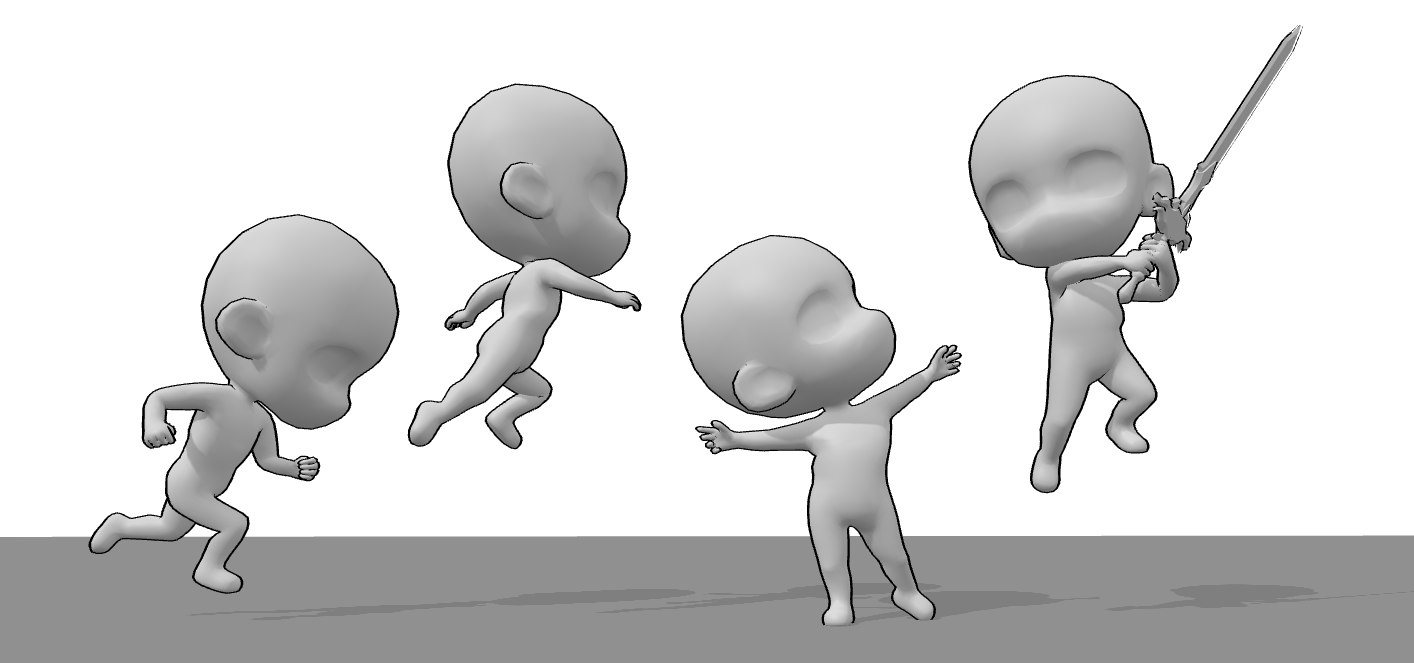
One trick I often use is to exaggerate the gesture more than I would with a realistically proportioned character. A stronger lean, wider arm movement, or more obvious shift of body weight usually makes the pose feel more lively without losing the cute proportions that define chibi art.
The goal isn’t realism - it’s clarity. If someone can instantly understand what the character is doing from a small thumbnail, you’re usually heading in the right direction.
Give Your Chibi Character a Personality Before Drawing the Face
One of my favorite things about chibi characters is that you can often recognize their personality before you’ve even drawn the face.
A confident character might stand with their feet apart and hands on their hips. A shy character may turn their feet inward, hold their hands together, or avoid taking up much space. An excited character naturally leans forward, while a sleepy one seems to collapse into every pose.
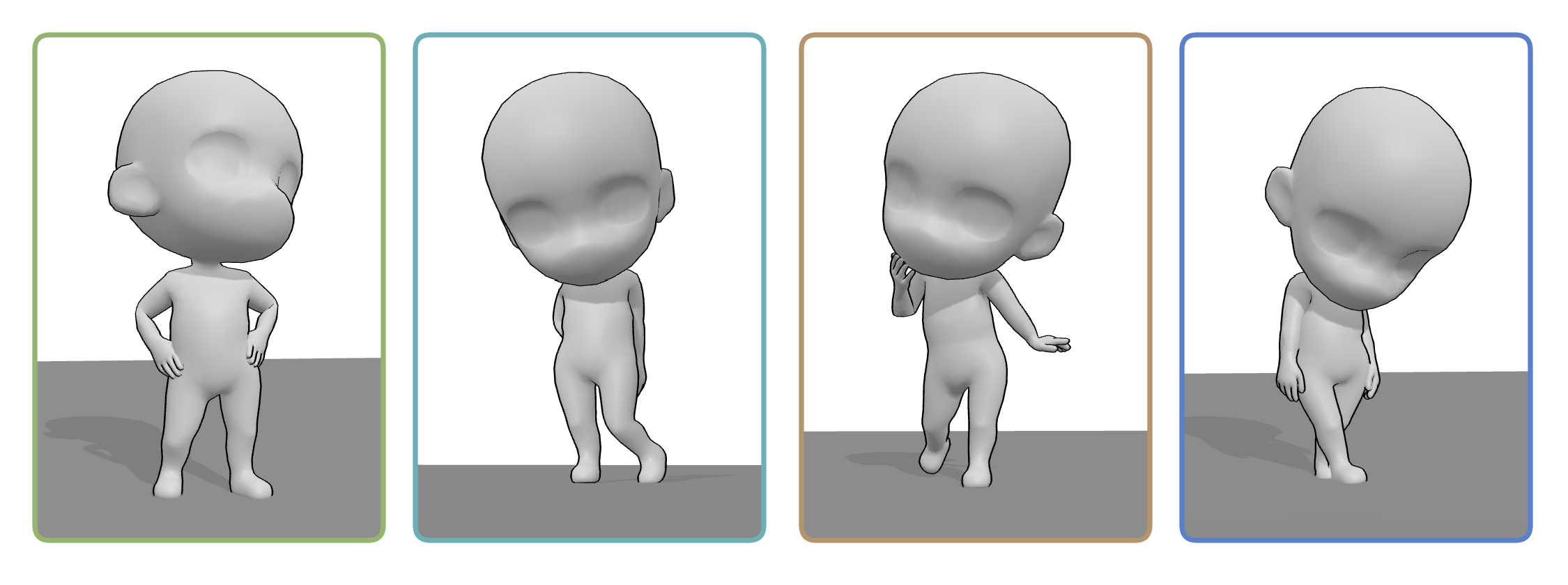
These differences are small, but they’re often more memorable than changing the eyes or the mouth.
If you’re looking for inspiration, browsing different Cute Chibi Poses is a great way to see how subtle posture changes can completely transform a character’s personality.
Let Props Help Tell the Story
A pose becomes much more interesting when the character has something to interact with. Instead of thinking about props as decorations, try treating them as part of the pose itself.
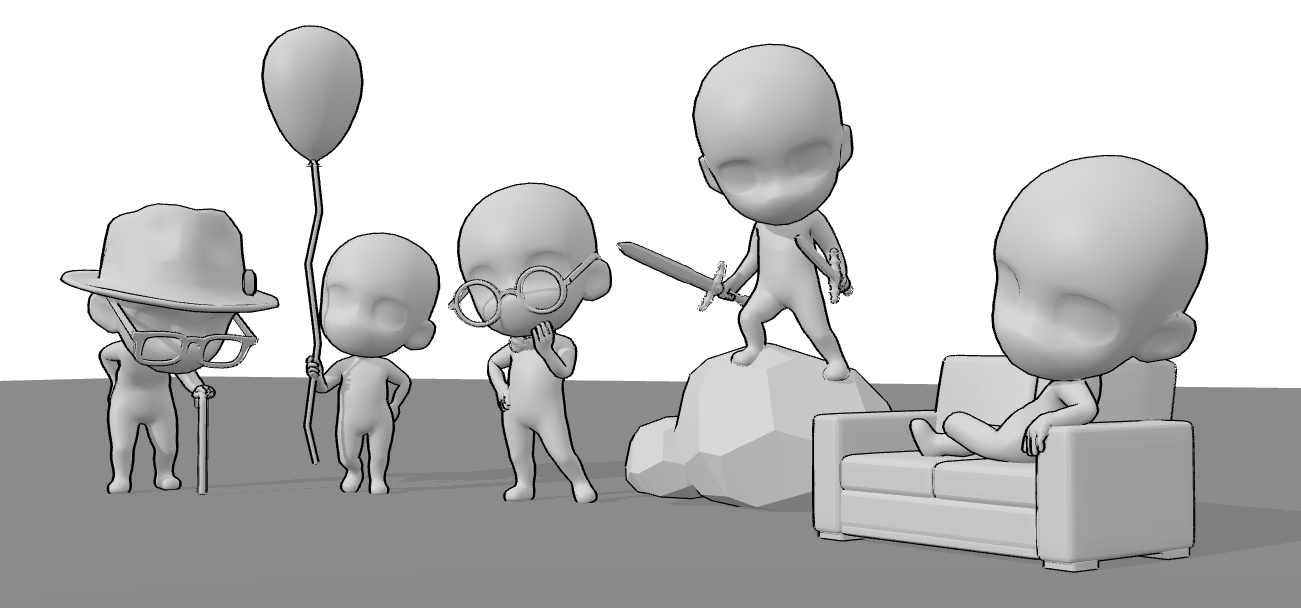
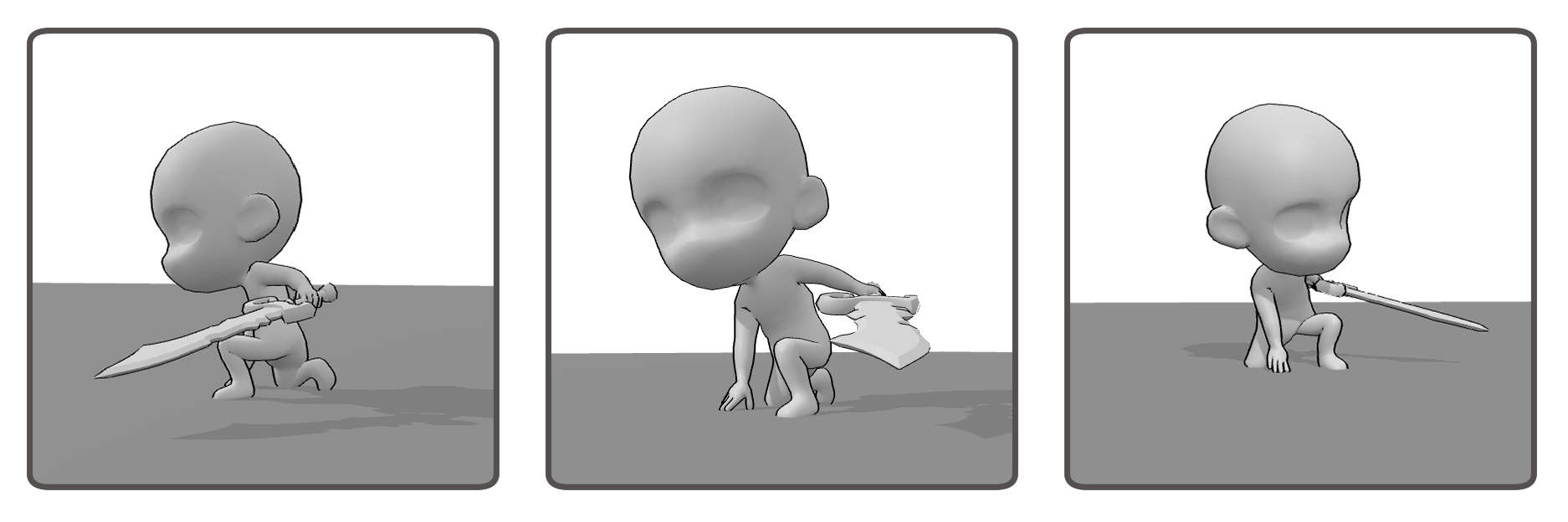
A giant sword naturally changes the way a character stands. Different Chibi Sword Poses are a great reminder that the weapon should influence the entire body, not just the hands. A heavy backpack shifts the body’s balance. A shield forces the arms into a more protective position, while a book held against the chest can instantly make a character feel quiet, curious, or reserved. Even something as simple as sitting on a rock instead of standing on the ground creates a completely different silhouette.
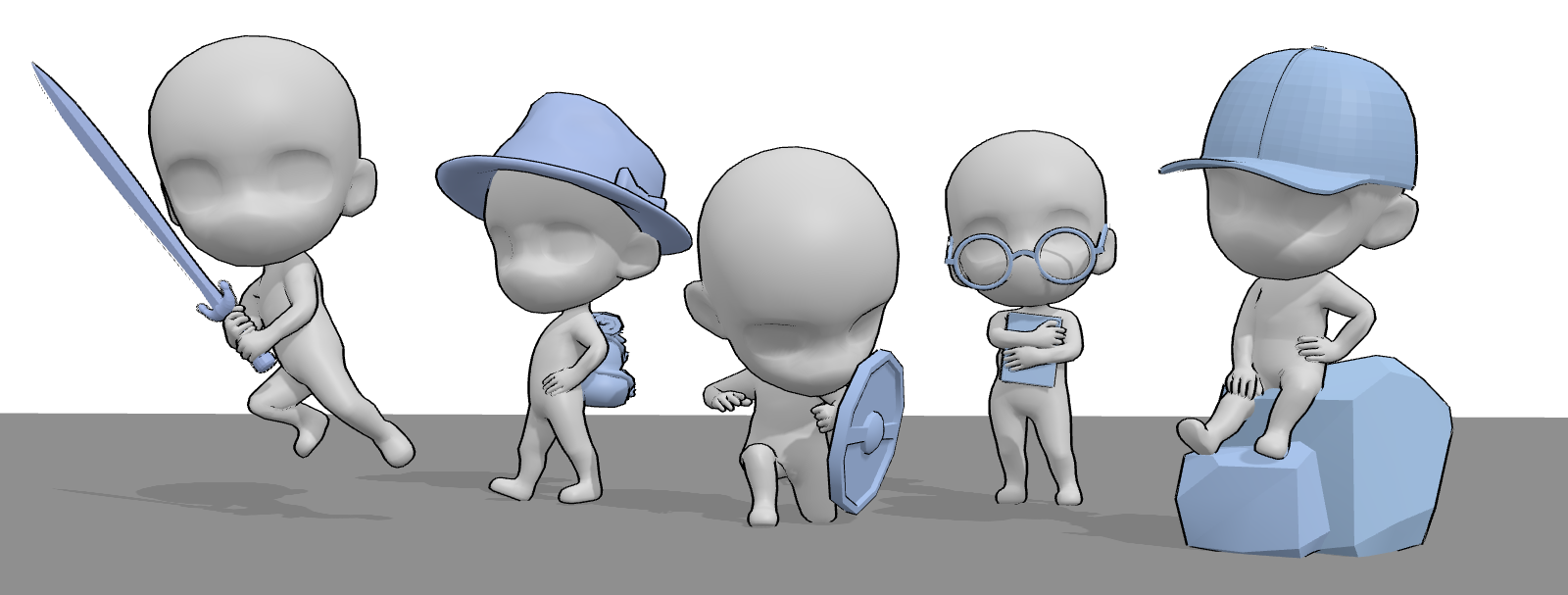
This is one of the reasons I like planning scenes in 3D. Rather than imagining how a prop affects the body, I can immediately see how the hands, shoulders, and overall posture adjust as the character interacts with different objects.
If you’re looking for poses with built-in props, the Chibi References Collection is a great place to start:
Try These Dynamic Chibi Pose Ideas
When a chibi pose feels flat, the solution usually isn’t adding more details - it’s changing the action.
Instead of drawing a character simply walking, ask yourself how you can push the movement a little further. Could the body lean more into the motion? Could one foot leave the ground? Would a stronger head tilt or a wider arm gesture make the action easier to read?
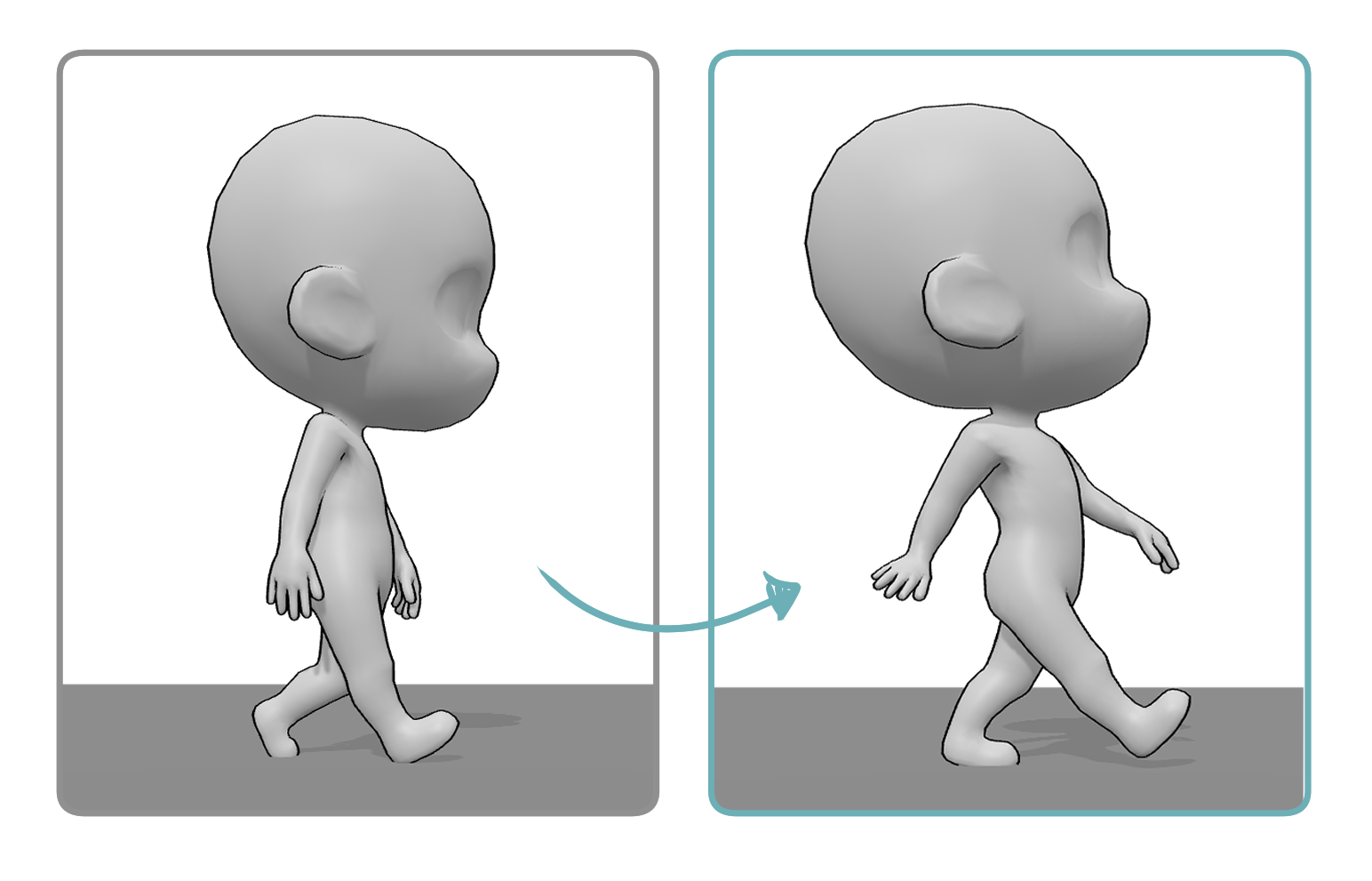
Small exaggerations work especially well in chibi drawing. Because the proportions are already stylized, you can often push the pose much further than you would with a realistic character without making it feel unnatural.
Small changes in movement, balance, and silhouette are often what turn a simple chibi pose into something more expressive:
- Jumping with one leg raised - creates a sense of energy and excitement.
- Leaning forward while running - makes the character feel faster and more dynamic.
- Spinning with arms extended - adds flow and movement to the silhouette.
- Sitting casually with one knee raised - creates a relaxed, playful personality.
- Reaching upward or stretching - gives the character a stronger sense of direction.
Experimenting with these variations is a great way to find poses that feel more unique and expressive - and honestly, it’s one of the most fun parts of drawing chibi characters.
Explore More Ideas Without Starting Over
One of the things I enjoy most about drawing chibi characters is experimenting with different poses. The challenge is that experimenting on paper often means redrawing the entire character every time you want to try a new idea.
Maybe the running pose would look better with the body leaning farther forward. Perhaps the sword should be raised higher, or one foot should land a little farther ahead. Even small adjustments can completely change the feeling of the illustration.
Instead of guessing, I like to explore these variations in PoseMyArt first. I can rotate the model, adjust the pose, and compare several ideas before committing to a sketch. It makes the creative process feel much more flexible because I’m spending less time fixing mistakes and more time testing what actually looks best.
This is especially useful for chibi drawing, where a few degrees of head tilt or a slightly different arm position can completely change the personality of the character.
Try More Than One Camera Angle
Because chibi characters are so compact, even a small camera change can dramatically affect how dynamic the illustration feels. A low-angle view can make a tiny hero appear surprisingly powerful, while a high-angle shot can make the same character look vulnerable or playful. Exploring multiple viewpoints before sketching often leads to more interesting compositions than sticking with the first angle that comes to mind.
Standing Doesn’t Have to Be Boring
It’s easy to think that standing poses are the least interesting part of chibi drawing. After all, the character isn’t running, jumping, or swinging a sword.
But some of the most memorable characters are simply standing.
The difference is that they rarely stand perfectly upright with both feet evenly planted on the ground. A slight shift of body weight, a tilted head, relaxed shoulders, or hands resting on the hips can make a pose feel natural and full of personality.
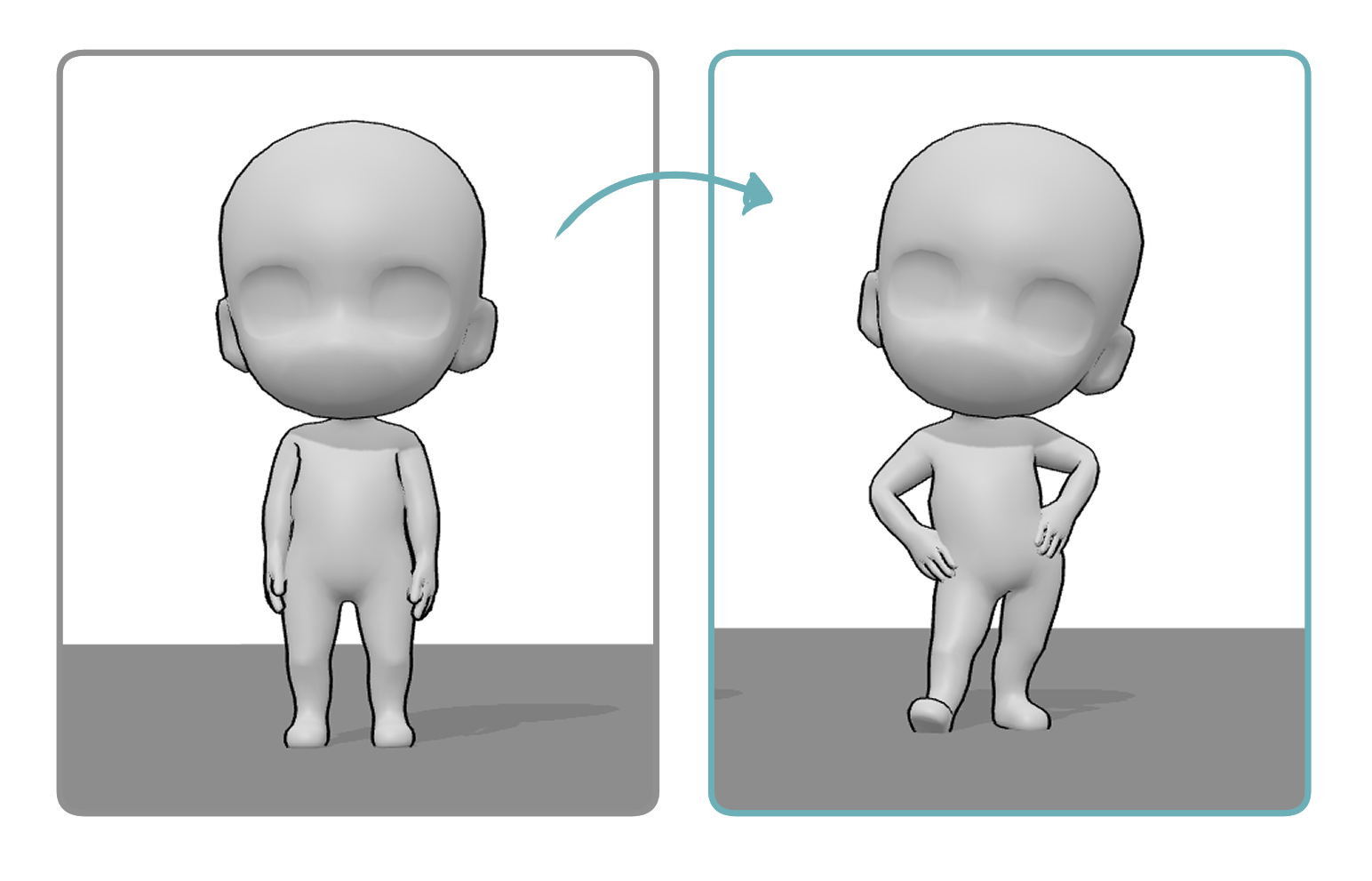
Because chibi proportions are so simple, these small asymmetrical changes become surprisingly noticeable. Even a subtle adjustment can turn a stiff pose into one that feels confident, playful, shy, or curious.
I often browse different standing poses before sketching a new character. They’re a great reminder that a pose doesn’t need dramatic movement to feel expressive - it just needs a clear sense of balance and intention.
Make Every Action Instantly Readable
Action scenes happen fast. Whether your chibi character is swinging a sword, casting a spell, or charging toward an opponent, the viewer should understand what’s happening immediately.
One mistake I see quite often is trying to make an action pose more dramatic by adding too much extra movement everywhere. The arms twist, the legs cross, the cape flies in every direction - and suddenly the pose becomes difficult to read.
In most cases, a cleaner silhouette is far more effective than a more complicated one.
Before adding details, try looking at the character as a solid black shape. Can you still tell what they’re doing? If the answer is yes, the pose will usually remain clear even at a small size, which is especially important for chibi illustrations, stickers, icons, and game assets.
This is one reason I like testing action poses in PoseMyArt first. Rotating the camera often reveals that a sword arm is hidden behind the body or that both legs overlap too much. A small adjustment can make the entire action much easier to read.
A Simple Workflow for Better Chibi Poses
Whenever I start a new chibi illustration, I try to resist the temptation to jump straight into drawing the face or costume. Instead, I spend a few minutes finding a pose that already feels fun and expressive on its own.
My process is usually very simple. I begin with the overall action - running, standing, attacking, or jumping - then adjust the body until the silhouette reads clearly. Only after I’m happy with the pose do I start thinking about the character’s design, clothing, and facial expression.
Working this way saves a surprising amount of time. If the pose feels awkward at the beginning, adding details rarely fixes it. But when the pose already communicates energy and personality, the rest of the drawing tends to come together much more naturally.
Using PoseMyArt makes this process even faster because I can experiment with different ideas in minutes instead of redrawing the entire character every time I want to test a new pose.
Final Thoughts
Chibi drawing isn’t about squeezing realistic anatomy into a smaller body. It’s about creating poses that feel clear, expressive, and full of personality.
Whether you’re drawing a character standing quietly, running into battle, or holding a sword, the pose should tell the story before you add facial expressions or fine details.
That’s why I enjoy working with PoseMyArt - Being able to experiment with different poses, camera angles, and compositions helps me spend less time guessing and more time drawing. Instead of settling for the first idea, I can quickly explore different possibilities until the character feels lively and expressive.
Sometimes, a small adjustment to the pose is all it takes to bring a chibi character to life.