3D Perspective Drawing: Why Guessing Angles Always Fails
Perspective drawing isn’t difficult because the rules are complicated. It’s difficult because our brain constantly tries to “correct” what we see.
When a character is viewed from an unusual angle, we instinctively draw what we know the body looks like instead of what it actually looks like from that viewpoint. That’s why drawings often lose their sense of depth even when the anatomy is technically correct.
I used to run into this problem all the time while sketching action scenes. The pose looked fine in my head, but once I rotated the camera mentally, the proportions started falling apart.
Eventually I realized something important:
Perspective isn’t about rotating the character in your imagination. It’s about changing where you’re looking from.
Once I started thinking this way - and using PoseMyArt to freely move the camera around a pose - drawing difficult angles became much more predictable.
- Why Perspective Feels So Difficult
- Every Camera Position Creates a New Drawing
- Why Guessing Angles Usually Looks Wrong
- Move the Camera Before Moving the Character
- Experiment Without Redrawing Everything
- Foreshortening Stops Being Scary
- The Same Scene Can Tell a Completely Different Story
- Why 3D Space Helps You Discover Better Angles
- Better Perspective Creates Better Storytelling
- Practice Observation, Not Memory
Why Perspective Feels So Difficult
Our brain is surprisingly bad at visualizing objects in 3D.
We remember what a hand, head, or torso looks like from familiar viewpoints. But rotate that same form 60 degrees, place the camera below the character, and suddenly our mental library becomes much less reliable.
This is why artists often struggle with:
- dramatic foreshortening
- low-angle shots
- bird’s-eye views
- action scenes
- characters leaning toward the camera
- overlapping limbs
It’s not because drawing is difficult.
It’s because you’re trying to invent information your brain has never actually studied.
Every Camera Position Creates a New Drawing
The moment the camera moves, you’re effectively creating an entirely new drawing.
One leg can completely disappear behind the other.
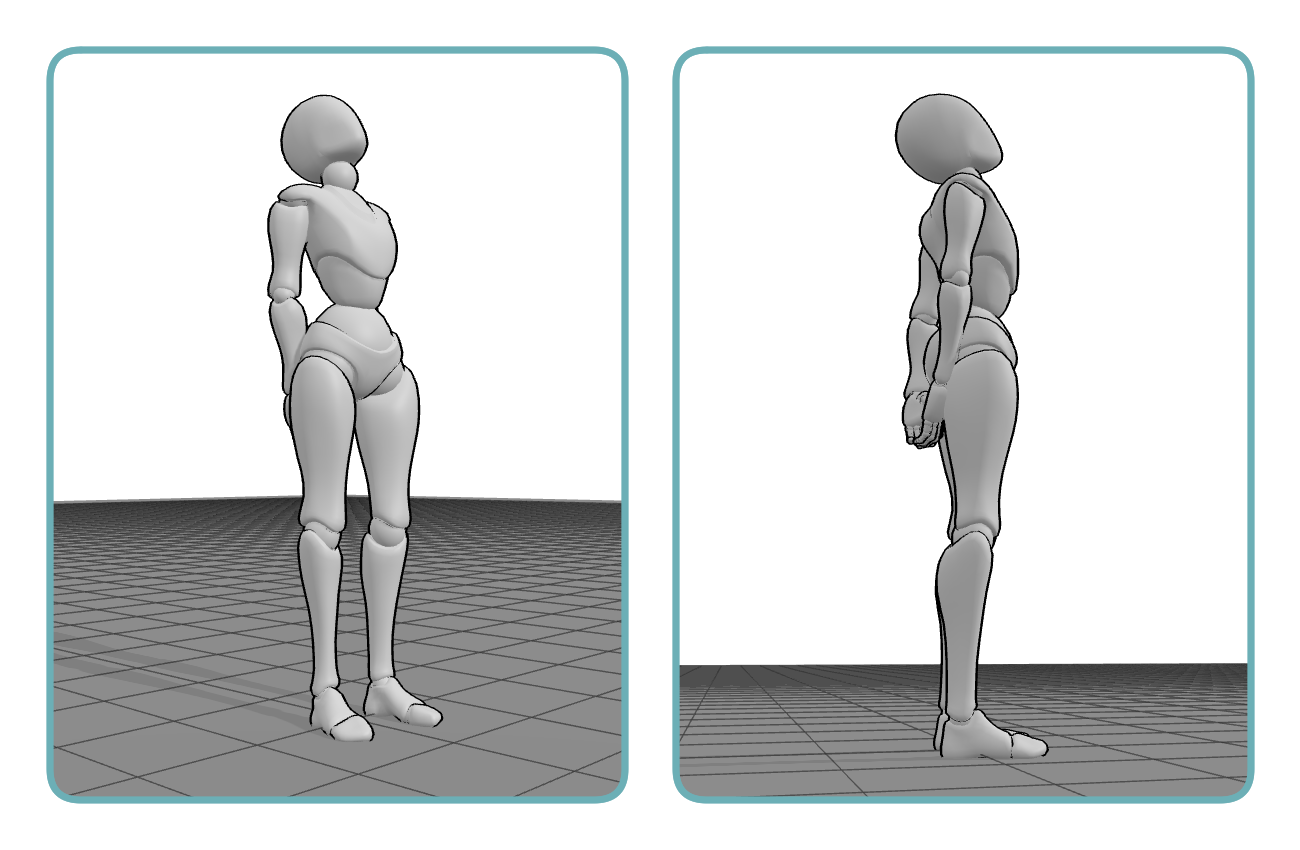
The head may overlap the shoulders in ways you’ve never noticed before.
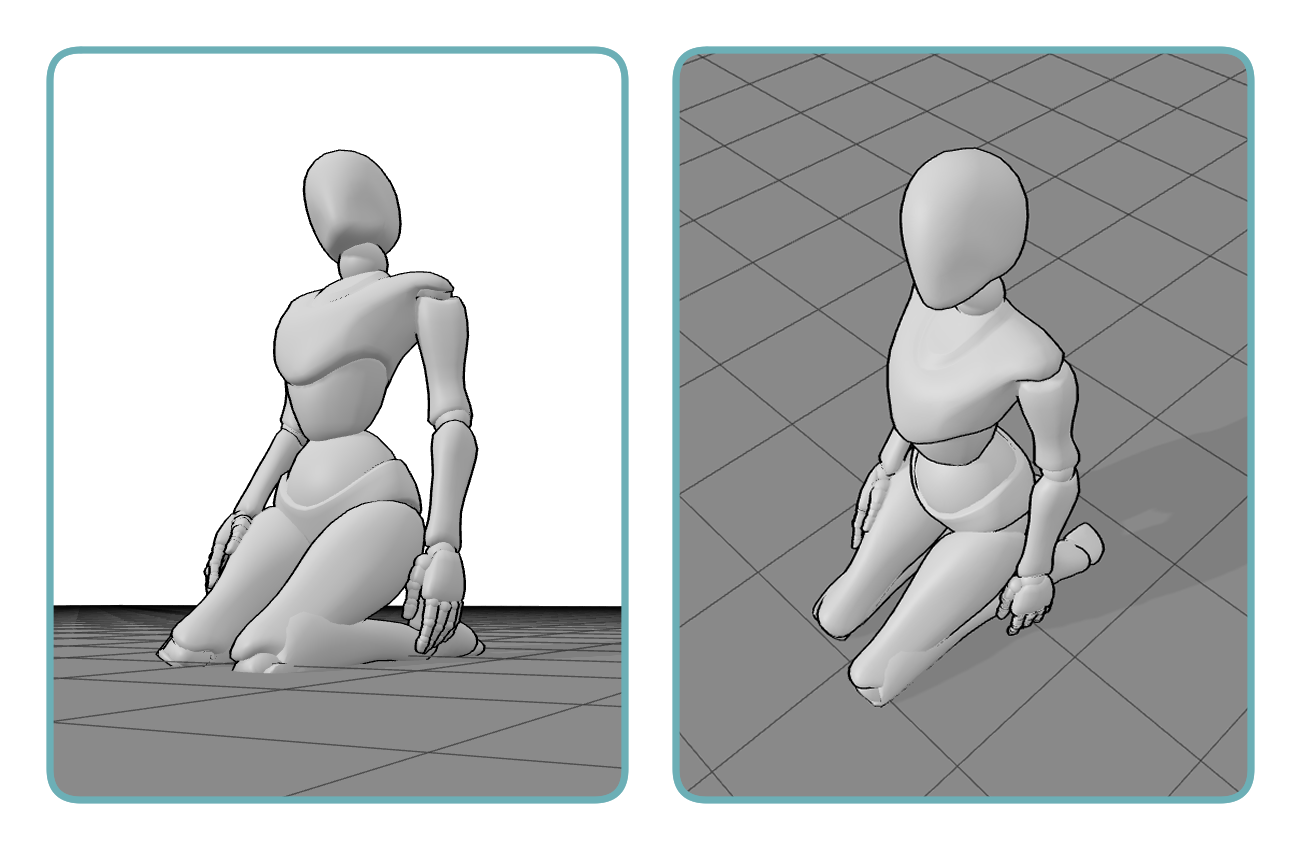
A raised arm may suddenly hide the torso.
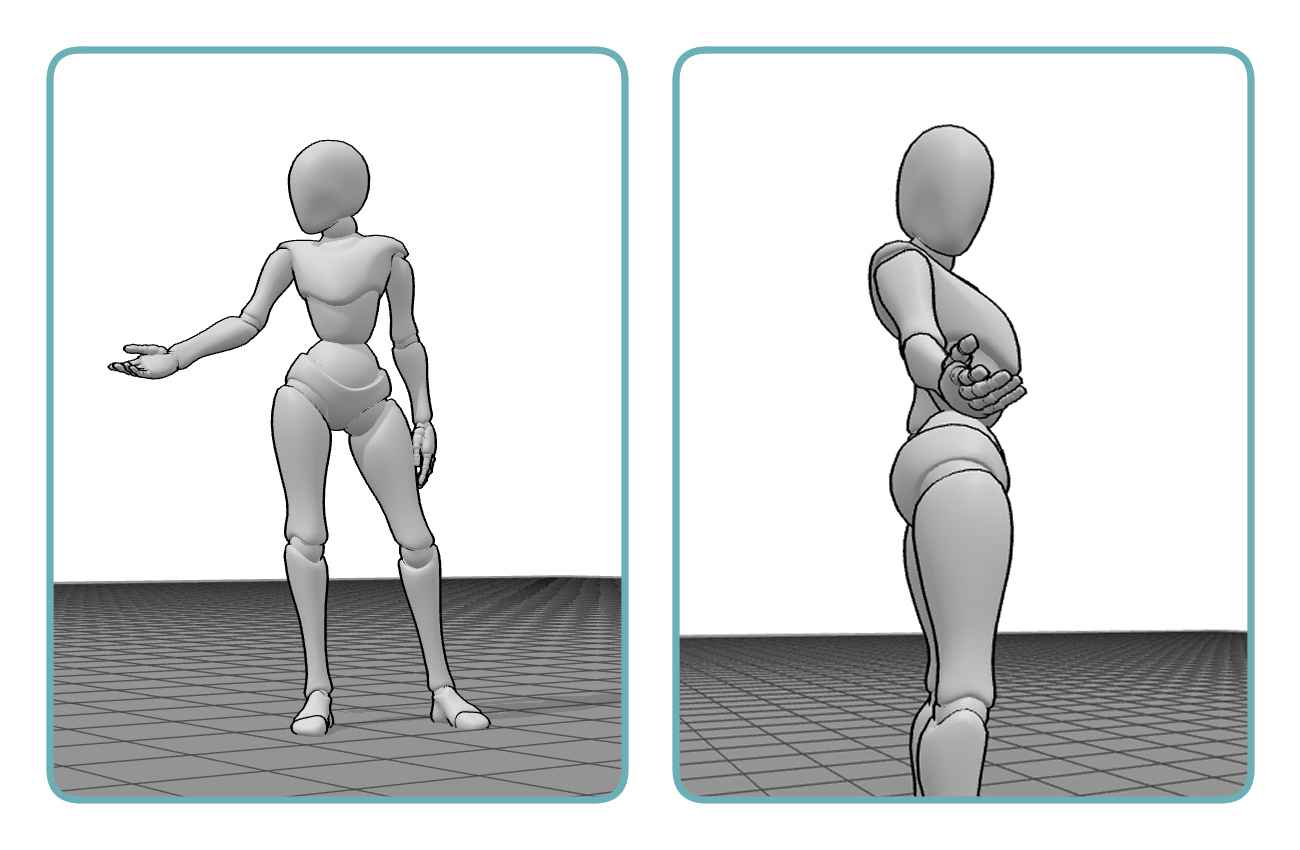
Even a small camera movement changes the silhouette, the visible anatomy, and the balance of the composition.
Why Guessing Angles Usually Looks Wrong
You’ve probably experienced this: the anatomy is technically correct, the proportions seem fine, but the drawing still feels… off.
Usually, the problem isn’t anatomy - it’s perspective consistency.
Maybe the torso follows one perspective direction while the hips rotate differently. Perhaps the feet are viewed from above while the head is drawn almost straight on. These small perspective mistakes can quickly accumulate, creating a feeling that something is wrong even when the viewer can’t immediately explain why.
The human eye is extremely sensitive to depth and spatial relationships. When different parts of the body don’t follow the same perspective logic, the entire pose starts to feel unnatural.
Move the Camera Before Moving the Character
One mistake I made for years was changing the pose whenever a drawing felt awkward.
I’d adjust the arms.
Rotate the torso.
Reposition the legs.
But often the pose wasn’t the problem at all.
The viewpoint was.
This is one of the biggest advantages of working with PoseMyArt. Instead of rebuilding the entire pose, I can leave the character exactly as it is and simply explore different viewpoints. Sometimes lowering the camera by a few centimeters instantly makes the pose feel stronger. Other times, stepping back creates a clearer silhouette, or rotating around the character reveals a much more dynamic composition.
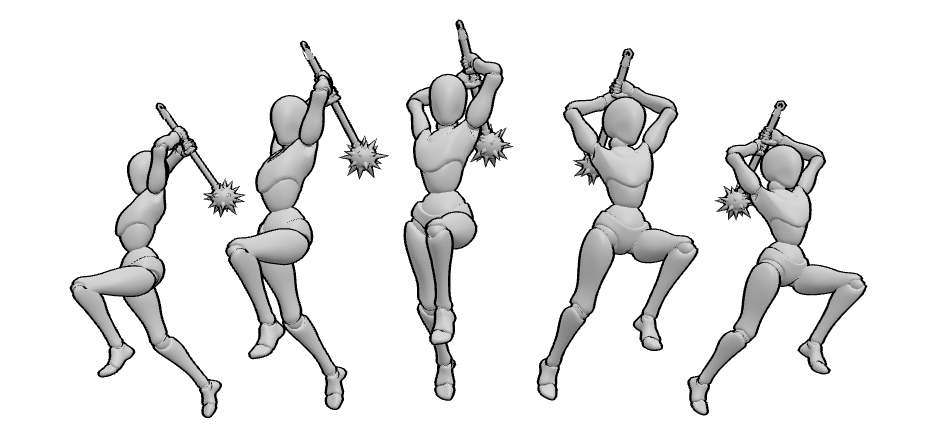
It’s a simple habit that has completely changed how I plan illustrations.
Before editing the pose, I always ask:
“Have I tried a better camera angle first?”
Very often, that’s all the drawing needed.
Experiment Without Redrawing Everything
One of my favorite parts of using PoseMyArt is experimentation.
Sometimes a pose feels flat.
Instead of rebuilding the entire figure, I simply move the camera. A five-degree rotation can completely transform the image.
The pose suddenly feels:
- more dynamic
- more cinematic
- more dramatic
- easier to read
Traditional references can’t give you this flexibility because they’re limited to a single photograph.
With a rotatable 3D reference, you can explore dozens of compositions in minutes.
Foreshortening Stops Being Scary
Foreshortening is often treated as an advanced drawing skill.
But most of the fear comes from uncertainty.
Artists aren’t afraid of drawing cylinders, they’re afraid of not knowing how much those cylinders should shorten.
A 3D reference solves this immediately.
Instead of estimating how long the forearm should appear, you can observe exactly how perspective compresses it.
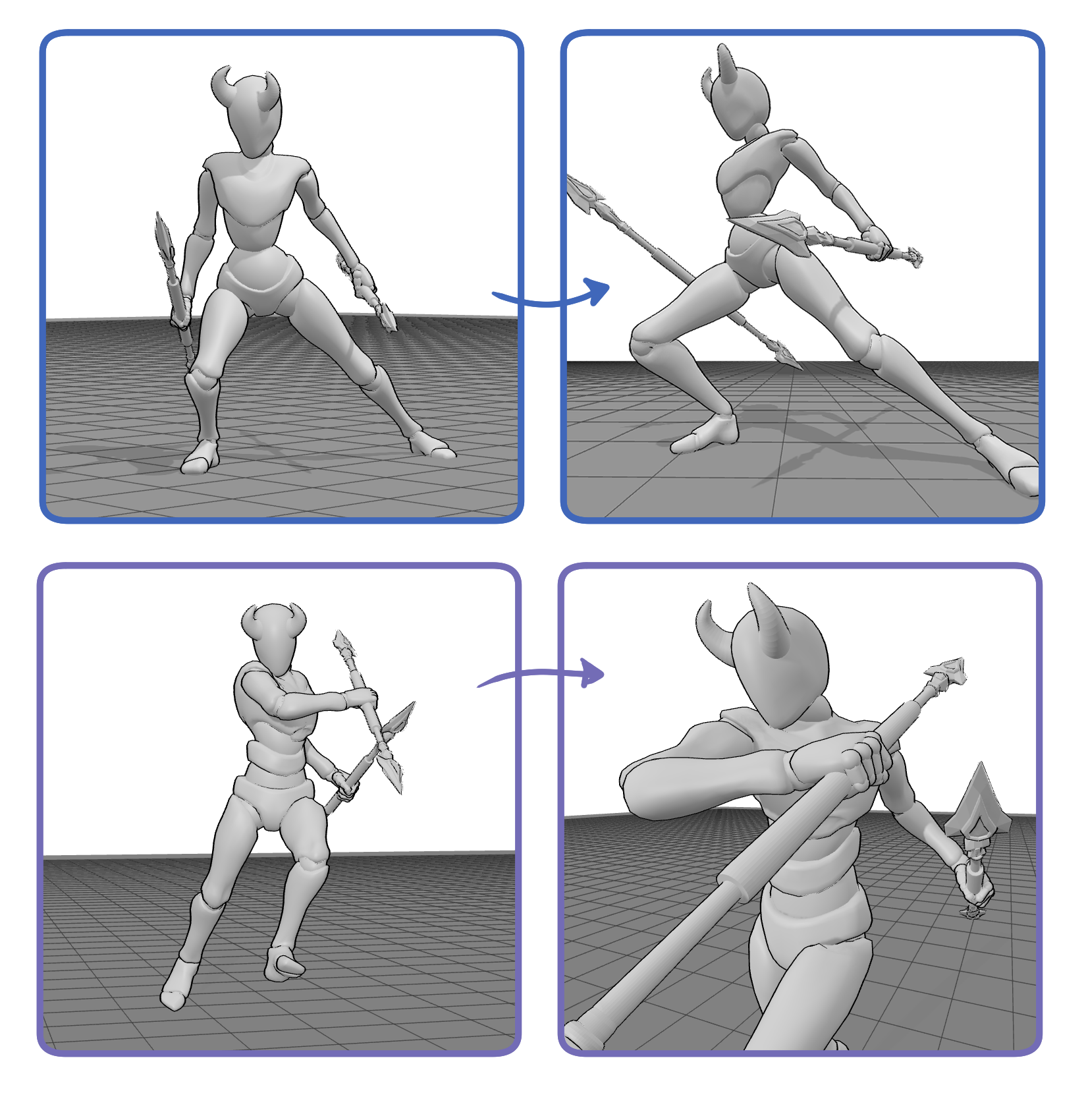
Over time, your eye naturally becomes better at recognizing these distortions without relying on references as heavily.
The Same Scene Can Tell a Completely Different Story
Perspective doesn’t only change how accurately you draw a scene. It changes what the viewer understands.
Imagine a simple scene: a character sitting on a sofa with a mysterious object nearby.
At first, you choose a standard eye-level view.
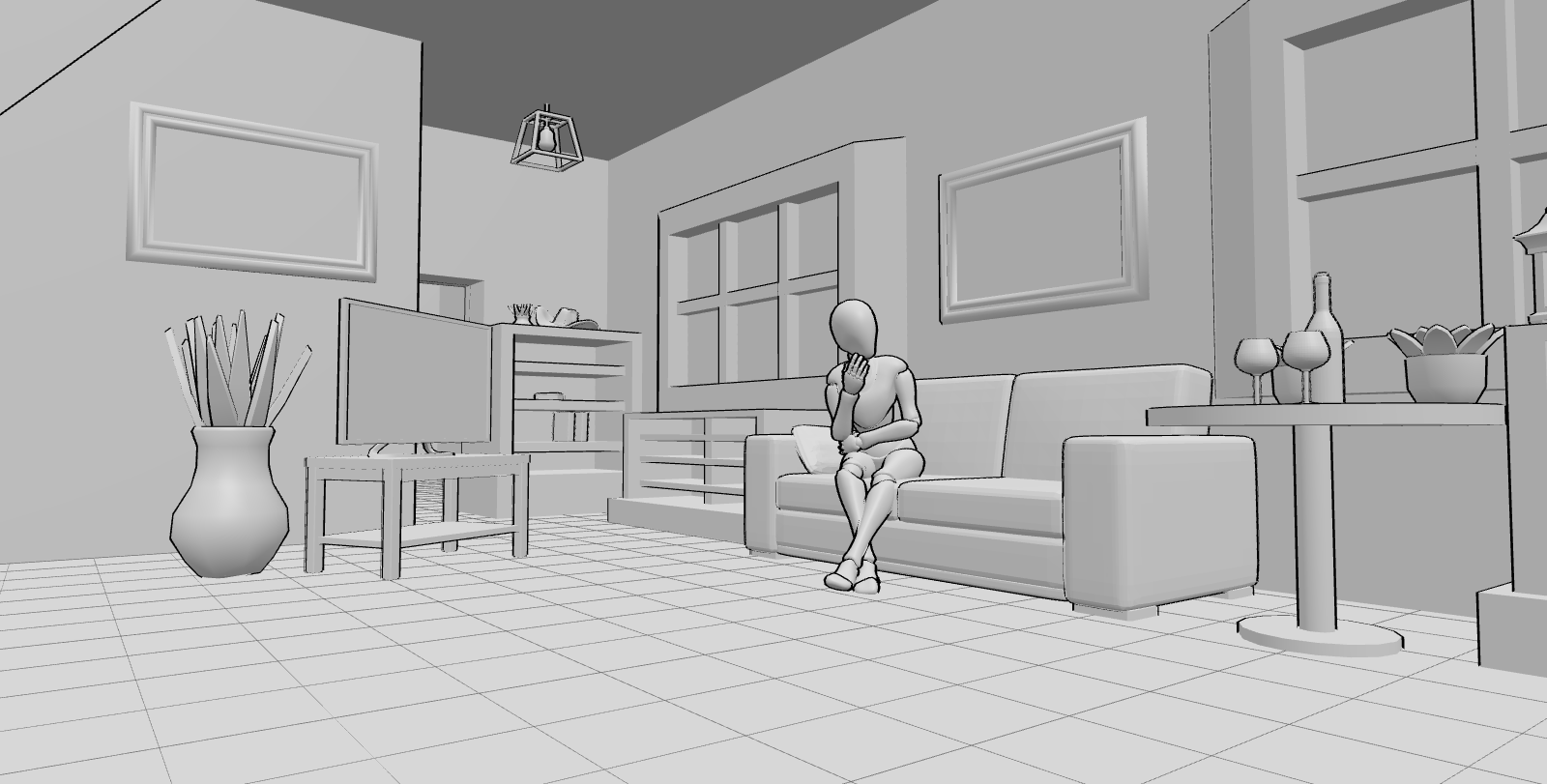
The scene feels ordinary. We can see both the character and the objects, but their relationship isn’t entirely clear. The story feels ambiguous.
But now move the camera closer to the objects:
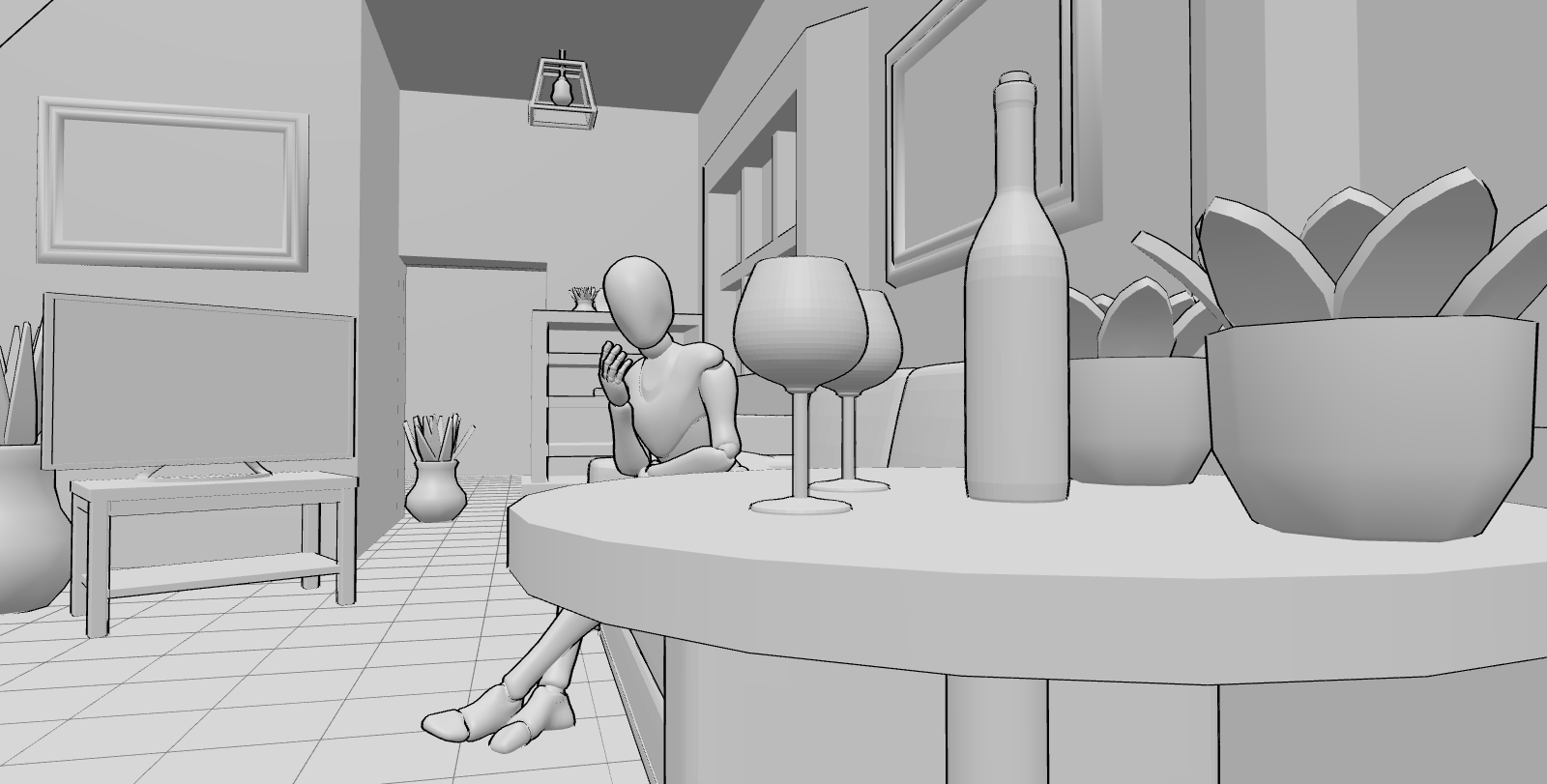
Suddenly, the object dominates the foreground and partially hides the character behind it.
The exact same scene now creates a completely different feeling. The viewer may wonder:
“What is that object?”
“Why is the character hidden behind it?”
“Did the character just notice something?”
Nothing about the pose changed. The character didn’t move. The object didn’t move. Only the camera position changed. But the entire story changed.
Why 3D Space Helps You Discover Better Angles
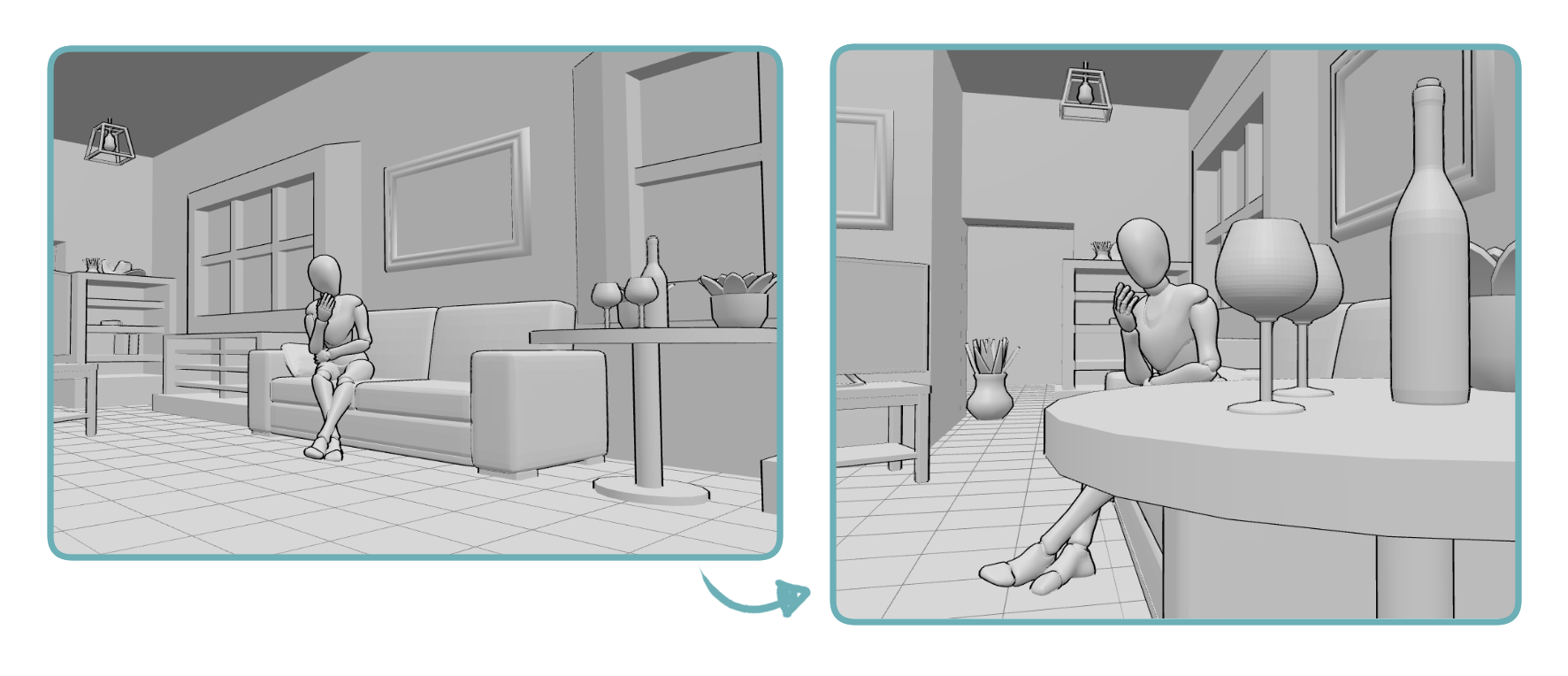
A complex scene with multiple objects and background is extremely difficult to draw from imagination because your brain has to calculate too many things at once:
- where every object exists in space
- how far each element is from the camera
- what overlaps what
- how perspective changes size
- what disappears behind other forms
Rotating the camera in your head and keeping every object in the correct position is challenging, even for experienced artists. This becomes even harder when multiple elements are involved: character, furniture, props, background objects and lighting.
A 3D scene allows you to explore these relationships instantly.
Instead of asking:
“What would this angle look like?”
you can simply move the camera and observe.
Better Perspective Creates Better Storytelling
Perspective isn’t just about technical accuracy.
It also affects emotion.
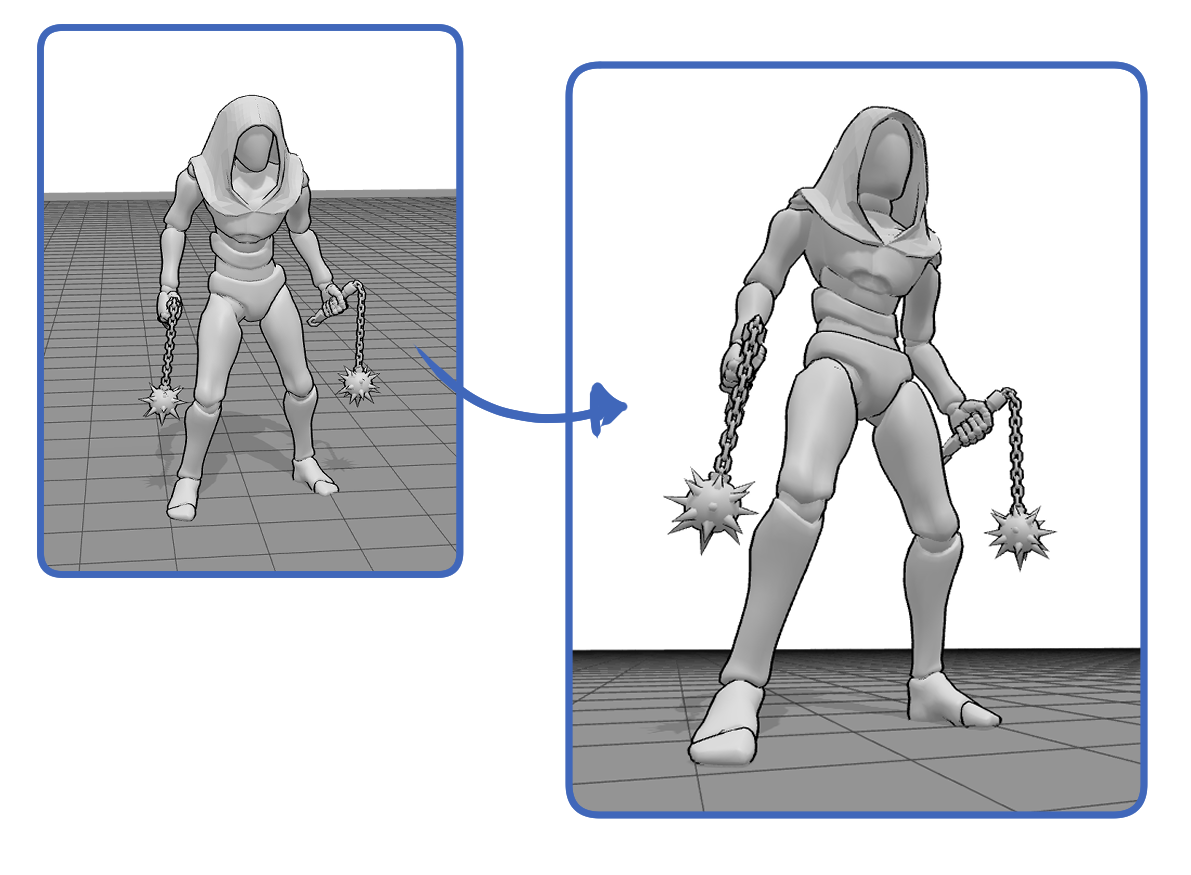
A low camera angle can make a character feel powerful.
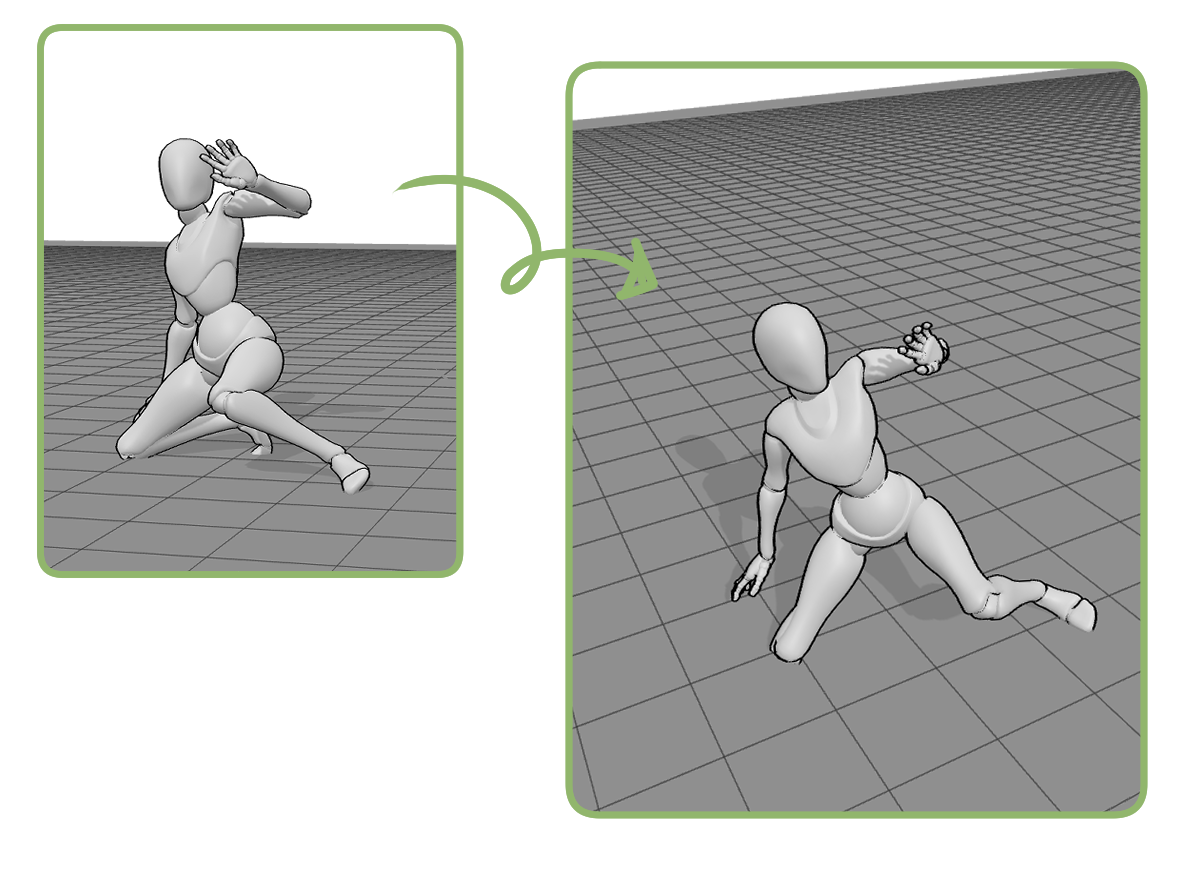
A high angle can make them appear vulnerable.
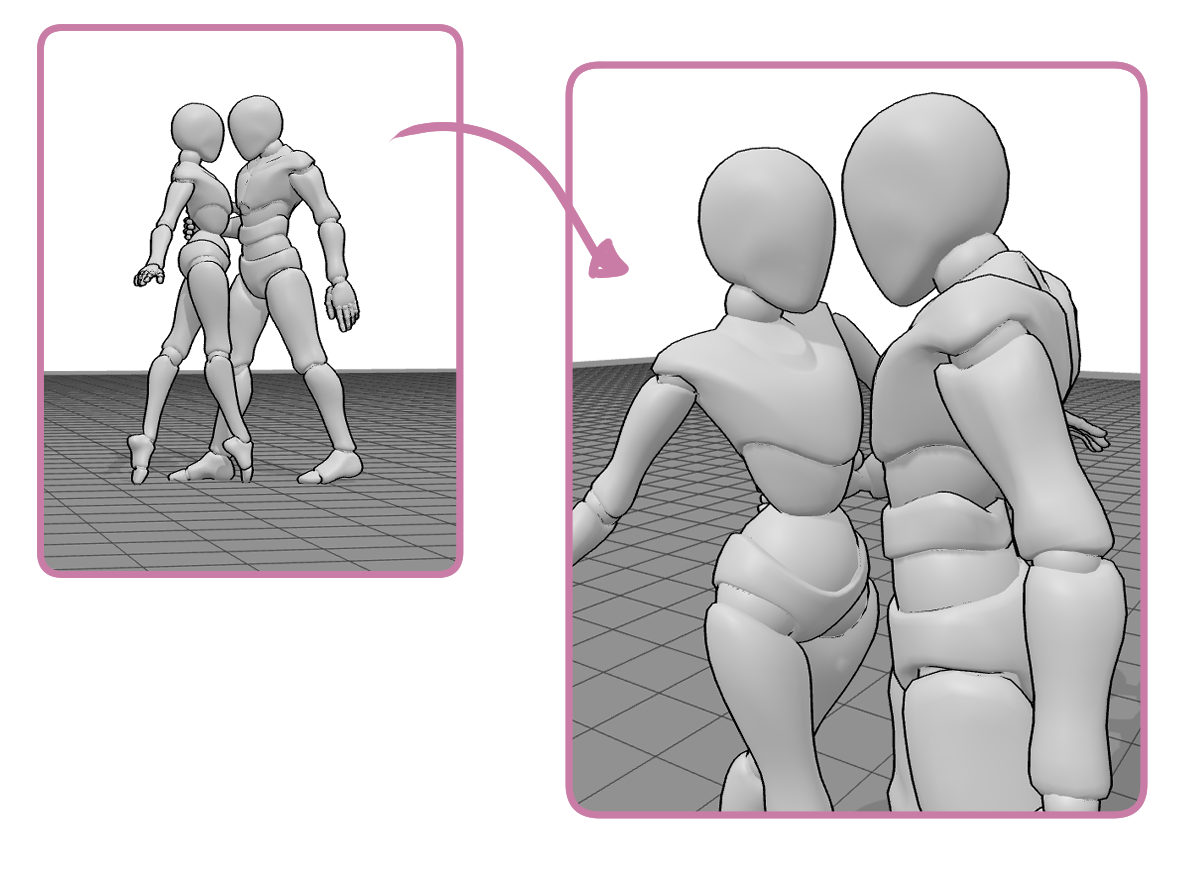
A close perspective creates intensity.
A distant one creates isolation.
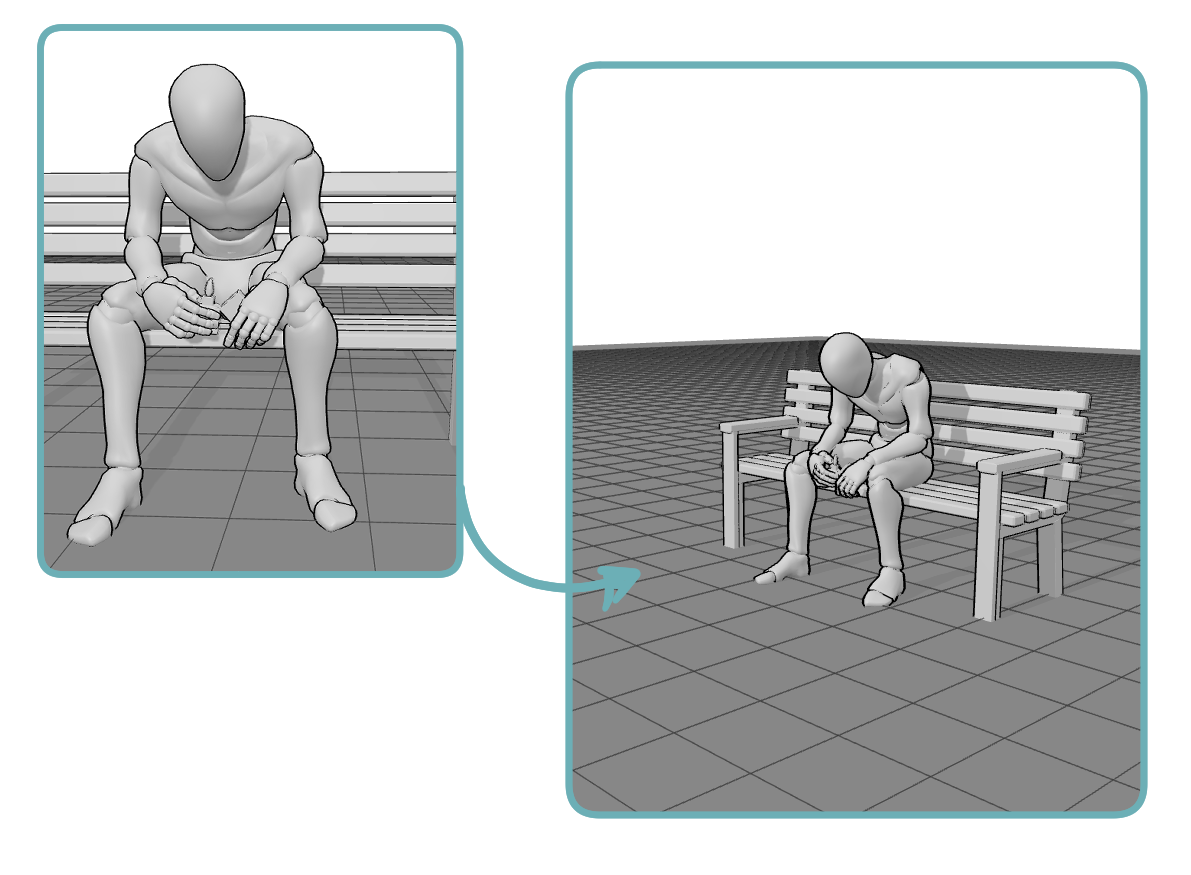
Because PoseMyArt lets you freely move the camera, you’re not just solving anatomy problems -you’re making storytelling decisions.
Sometimes the strongest illustration isn’t created by changing the pose.
It’s created by changing where the viewer is standing.
Practice Observation, Not Memory
Many artists believe they should memorize every angle.
I don’t think that’s realistic.
Professional artists constantly use references. The important skill isn’t remembering every pose, it’s learning how to observe.
Every time you rotate a 3D model, you train your brain to understand how forms behave in space.
Eventually, you’ll notice that your imagination improves as a result - not because you stopped using references, but because you’ve studied hundreds of real perspectives.
Final Thoughts
Perspective becomes frustrating when we expect ourselves to invent complex angles from memory.
Drawing doesn’t have to work that way.
Using a 3D reference lets you study how the body actually changes as the camera moves, making perspective easier to understand and much more consistent.
For me, PoseMyArt has become one of the fastest ways to explore different viewpoints, improve foreshortening, and build more convincing drawings. Instead of wondering whether an angle works, I can rotate the model, examine it from every direction, and choose the composition that tells the story best.