Why Your Characters Feel Emotionless: A Guide to Drawing Emotions
Have you ever finished a character drawing that looked anatomically correct but somehow felt… empty?
The proportions are accurate, the perspective works, and the rendering looks polished. Yet the character doesn’t seem to express much emotion. In my experience, this often happens because many artists naturally focus most of their attention on the face. We spend time adjusting the eyebrows, the eyes, and the mouth, hoping they’ll communicate exactly what the character is feeling. Facial expressions are certainly important, but they’re only one part of the story.
Long before a viewer notices the expression, they’ve already taken in the character’s posture, the direction of the body, the position of the shoulders, and even the way the weight is distributed. These subtle details shape our first impression almost instantly. The same smile can feel warm, awkward, nervous, or even threatening depending on the pose that surrounds it.
That’s why, when I’m planning an illustration, I rarely think about the face first. I start by asking a different question: “What is this character’s body saying?” Once the body language feels convincing, the facial expression becomes much easier to design because it supports an emotion that’s already present instead of trying to create it on its own.
Emotion Starts With the Body
One of the biggest misconceptions about drawing emotions is that they’re created primarily through facial expressions. In reality, our bodies communicate constantly - We recognize confidence from the way someone stands, exhaustion from the way they sit, or hesitation from the way they shift their weight long before we study the details of their face. As artists, we can use this visual language to make our characters feel more expressive.
Imagine the exact same character in two completely different situations. In one scene, the character stands tall with an open posture, relaxed shoulders, and a confident stance. In another, the same character is sitting with a collapsed posture, a lowered head, and arms held close to the body. The face could remain almost identical, yet the emotional message changes completely.
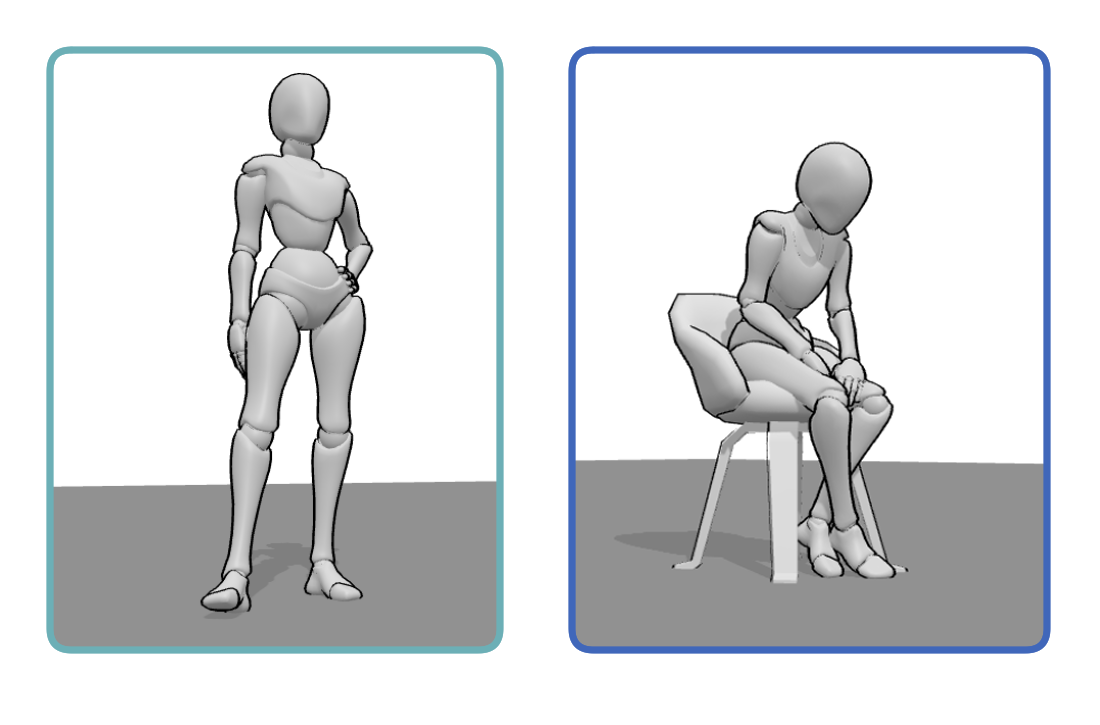
This is one reason I enjoy working with 3D references. Instead of imagining how every subtle adjustment affects the pose, I can experiment with different body positions, view them from multiple angles, and immediately see how the emotion changes before I even begin sketching.
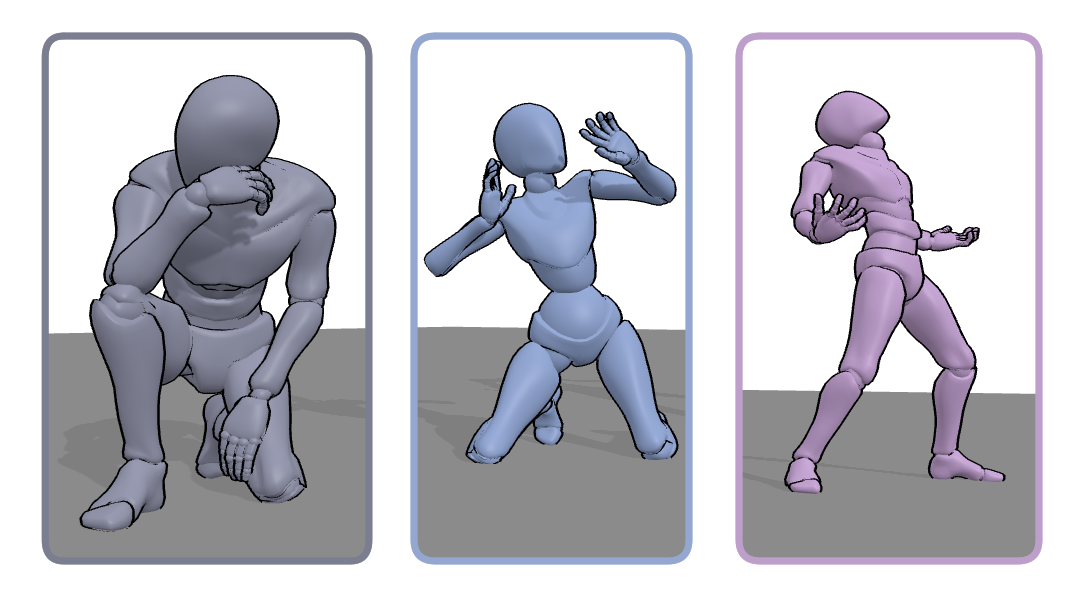
If you’re looking for practice, comparing Sad Poses, Fear Poses and Angry Poses is a great exercise. Notice how changing the posture alone can completely transform the emotional impact of a character - even before adding a facial expression.
Perspective Changes How We Feel a Scene
A character’s pose doesn’t exist separately from the viewer’s perspective. The camera angle can completely change how we interpret the same body language.
A confident character viewed from a low angle can feel powerful and dominant because the viewer is literally looking up at them. The same pose from a high angle may suddenly feel less intimidating, making the character appear smaller or more vulnerable.
This is especially important when drawing emotional scenes. Sometimes showing the entire environment communicates more than a close-up ever could. A character sitting alone in a large empty space creates a completely different feeling than the same character shown from a close distance.
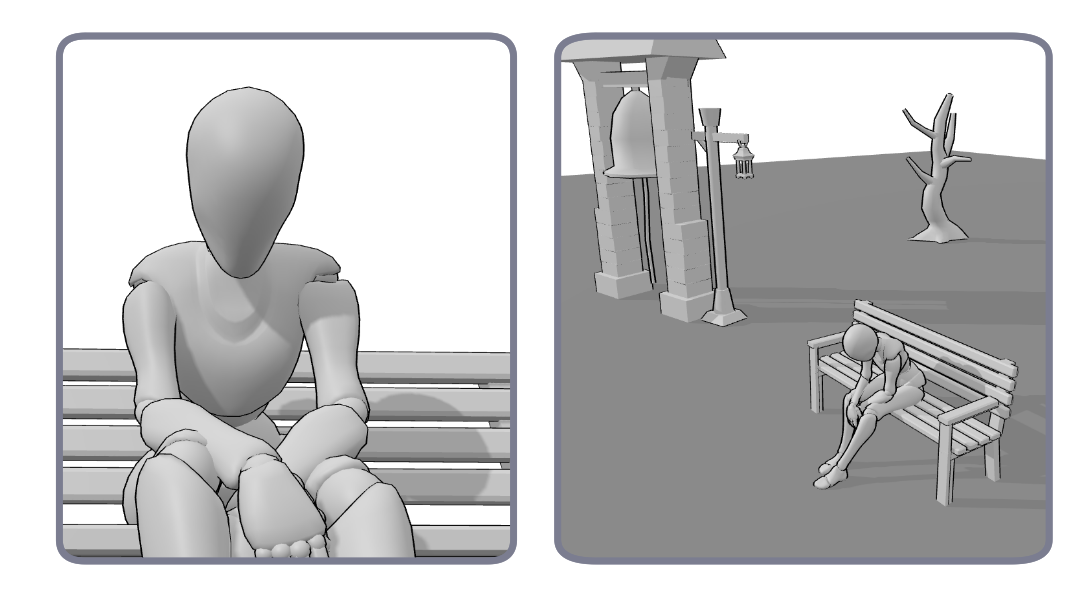
For example, imagine a person experiencing grief. A close-up of their face might show sadness, but a wide shot can tell a much larger story. A small figure sitting alone on a bench, surrounded by empty space, immediately communicates isolation and loss - even if the face is barely visible.
The emotion doesn’t come from one single detail. It comes from the relationship between the character, their pose, the environment, and the camera.
Body Language Between Characters
Emotions become even more interesting when more than one character is involved. A pose doesn’t only communicate a person’s inner feelings - it also reveals their relationship with the people around them.
Two characters standing in the same scene can tell completely different stories depending on their distance, direction, and body language. A person leaning slightly toward someone else, keeping an open posture, or naturally matching their movements can create a feeling of trust, curiosity, or attraction.
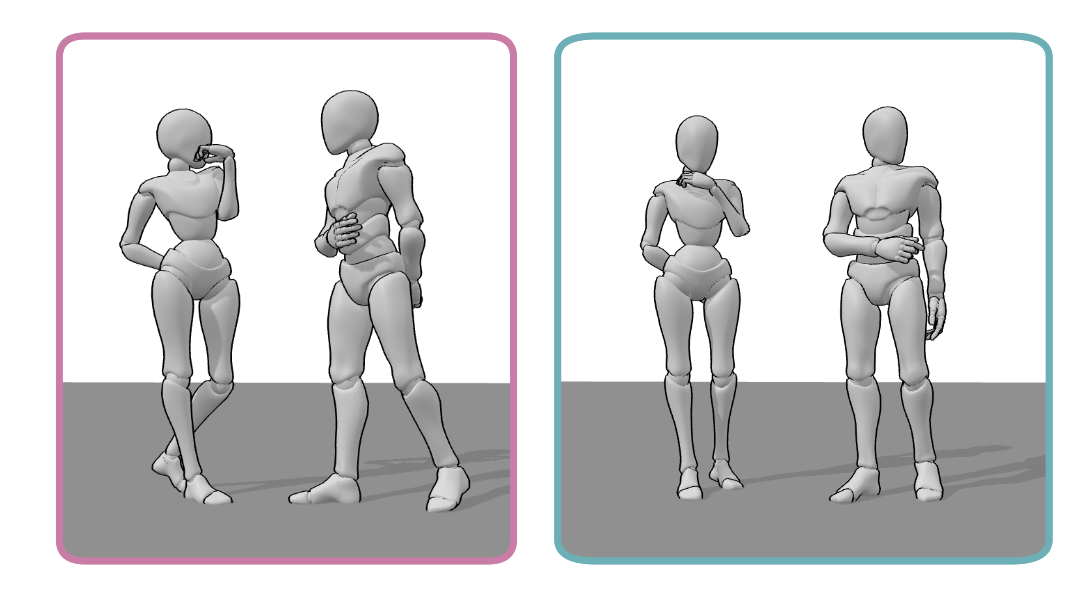
On the other hand, even a small amount of distance can completely change the atmosphere. Two characters facing away from each other, avoiding eye contact, or keeping their bodies closed can suggest tension, disagreement, or emotional distance without a single word being spoken.
This is one of the reasons why relationship scenes can be challenging to draw. You are not only designing two individual poses - you are designing the invisible connection between them.
Studying Flirting Poses and Hug Poses is a simple way to understand how small changes in distance, body orientation, and posture can completely change the relationship between two characters.
Emotions Through Pose, Space, and Composition
One of the most powerful things about body language is that it can communicate emotion even when the face is completely hidden.
In some scenes, showing the character’s expression actually makes the image less powerful. A wider composition can give the viewer more information by showing the relationship between the character and their surroundings.
A person sitting alone on a bench beside a grave does not need a visible tear or a dramatic facial expression to communicate grief. The lowered head, closed posture, and empty space around the character already tell us something about what they are feeling.
The same applies to many other emotions. A victorious character standing on a mountain with their arms raised can feel powerful even when they appear as a small silhouette. A tired person sitting on a staircase with their body collapsed forward can communicate exhaustion without showing their face. A character standing alone before a much larger opponent can communicate determination or fear even when viewed entirely from behind.
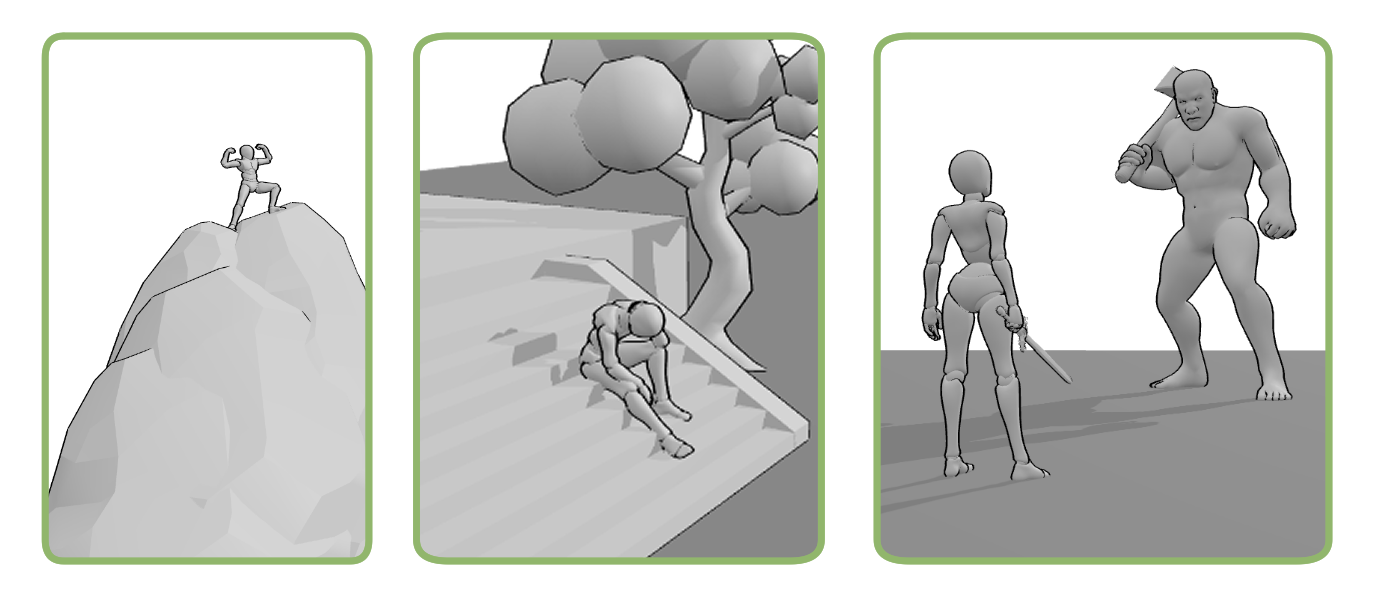
These types of scenes are often difficult to imagine because there are many elements working together at the same time: the character’s pose, the environment, the camera angle, and the overall composition. Changing only one of these elements can completely change the emotional impact of the image.
Compare Sad Poses with Victory Poses and pay attention to the silhouette, body language, and use of space. The emotion changes dramatically, even before facial expressions become visible.
Planning Emotional Scenes: A Step-by-Step Process
When creating an emotional illustration, it is easy to focus too much on the character’s expression and forget about the bigger picture. A strong emotional scene is rarely created by one single detail. The pose, the composition, the environment, and the camera angle all work together to guide the viewer’s reaction.
A useful way to approach this process is to first define the emotion you want to communicate. Is the character feeling lonely, confident, afraid, relieved, or overwhelmed? Understanding the main emotion helps every other decision become more intentional.
The next step is designing the body language. Instead of only changing the facial expression, think about how the emotion affects the entire body. A confident character might naturally take up more space with an open posture, while someone feeling defeated might appear smaller, with a closed shape and limited movement. The pose should already suggest something before any facial details are added.
After that, consider the relationship between the character and the environment. A person sitting alone in a large empty room creates a very different feeling from the same person surrounded by others. Props and surroundings are not just decoration - they help explain the situation and strengthen the emotion behind the scene.
The camera angle is another important part of the process. A close perspective can make a moment feel personal and intense, while a wider view can emphasize loneliness, vulnerability, or the connection between the character and the world around them. Sometimes the strongest change comes not from adjusting the pose, but from finding a better viewpoint.
Finally, refine the smaller details that support the emotion: the position of the hands, the direction of the gaze, the silhouette, and the interaction with the environment. These details help transform a simple pose into a scene that feels believable and meaningful.
Building Emotional Scenes in 3D Space
Planning an emotional illustration often means making dozens of creative decisions at once. It’s not just about the pose -you also need to think about the camera angle, the distance between characters, the environment, and how these elements work together to support the story.
While it’s possible to imagine simple scenes, more complex compositions quickly become difficult to visualize. Add a second character, furniture, or a detailed environment, and it becomes much harder to predict how everything will overlap from different viewpoints.
This is one of the reasons I like working with PoseMyArt. Instead of solving these problems in my head, I can build the scene, move the camera freely, adjust the characters, and experiment with different compositions before I start drawing.
Being able to explore a scene in 3D often leads to ideas I wouldn’t have considered otherwise. A slight camera rotation, a different distance between two characters, or a small adjustment to the environment can completely change how the final illustration feels.
Practice Seeing, Not Just Drawing
Improving at drawing emotions doesn’t mean memorizing hundreds of poses or learning a specific formula for every feeling. The most important skill is learning how to observe.
Every person expresses emotions differently. A character who is nervous might avoid eye contact, move constantly, or make themselves smaller. Another might hide the same feeling behind a confident posture. There is no single “fear pose” or “sad pose” that works for every situation.
The goal is not to copy a reference exactly. It is to understand why a pose feels a certain way and how different elements create that impression.
When you study a 3D character from different angles, you start noticing details that are easy to miss. You see how the spine curves, how the weight shifts, how the silhouette changes, and how small adjustments affect the entire mood of the scene.
Over time, this improves your imagination as well. You become better at creating your own poses because your visual library is built from observation rather than guesses.
Final Thoughts
Drawing emotions is not only about creating the right facial expression. The strongest emotional moments come from the combination of body language, composition, camera angle, and the relationship between the character and the environment.
A pose should communicate something before the viewer even notices the details. By studying how the body changes with different emotions and viewpoints, you can create characters that feel more natural and believable.
For me, 3D references have become a valuable part of this process because they make it easier to explore ideas, test different perspectives, and find the composition that best supports the story I want to tell.
The goal is not just to draw a character that looks emotional, but to create a scene where the viewer can feel what that character is experiencing.