How to Improve Drawing from Memory - Training Visual Memory with 3D References
One of the strangest contradictions in drawing is this: You can analyze a pose perfectly while looking at it, yet the moment the reference disappears, everything starts to unravel. The pose stiffens. Proportions drift. What felt obvious seconds ago suddenly becomes uncertain.
This doesn’t happen because your memory is weak. It happens because most drawing practice trains recognition, not reconstruction. We get good at seeing what’s in front of us, but not at understanding how that image is built in three-dimensional space.
Drawing from memory exposes this gap immediately - and that’s why it feels so uncomfortable. It forces you to rely on internal structure instead of external support. The good news is that this skill isn’t mysterious or innate. It’s something you can train deliberately, once you know what to focus on.
And this is where 3D references stop being “just another reference” and start becoming a learning tool.
- Why Drawing from Memory Is So Hard - And Why That’s Totally Normal
- The Core Shift: From Copying to Reconstructing
- How 3D References Train Visual Memory Differently
- Use 3D Models Actively (Not Passively)
- Why Memory Improves Faster with Movement
- What to Focus On (and What to Ignore)
- A Practical Memory-Drawing Exercise You Can Try Today
- Common Memory-Drawing Mistakes (and What They Actually Mean)
Why Drawing from Memory Is So Hard - And Why That’s Totally Normal
Most artists try to memorize appearances.
But the brain doesn’t store images like screenshots.
When you draw from memory and struggle, it’s usually because:
- You memorized surface details instead of structure
- You copied shapes instead of understanding form
- You relied on a single static angle
Memory fails when it has nothing solid to rebuild from.
Drawing from memory works best when your brain understands:
- How forms sit in space
- How volumes rotate
- How parts relate to each other
That’s structural knowledge - not photographic recall.
The Core Shift: From Copying to Reconstructing
Here’s the key mindset change that unlocked everything for me:
Drawing from memory is not about recalling images. It’s about reconstructing forms.
If you understand the ribcage as a tilted barrel, the pelvis as a block, and the spine as a flowing connector - you don’t need to remember the pose perfectly. You can rebuild it. This is why pure photo reference has limits. A single image gives you what it looks like, not why it works.
How 3D References Train Visual Memory Differently
This is where tools like PoseMyArt become powerful - not as a crutch, but as a training ground.
3D references help because they allow you to:
- Rotate the pose freely
- Study the same form from multiple angles
- Strip away distractions and focus on structure
Instead of memorizing one image, your brain learns a spatial model.
That’s a huge difference.
Use 3D Models Actively (Not Passively)
Just looking at a 3D model isn’t enough.
Here’s how I actually use them to train memory:
1. Rotate Before You Draw
Before touching the pencil, I rotate the model:
- Front view
- 3/4 view
- Side view
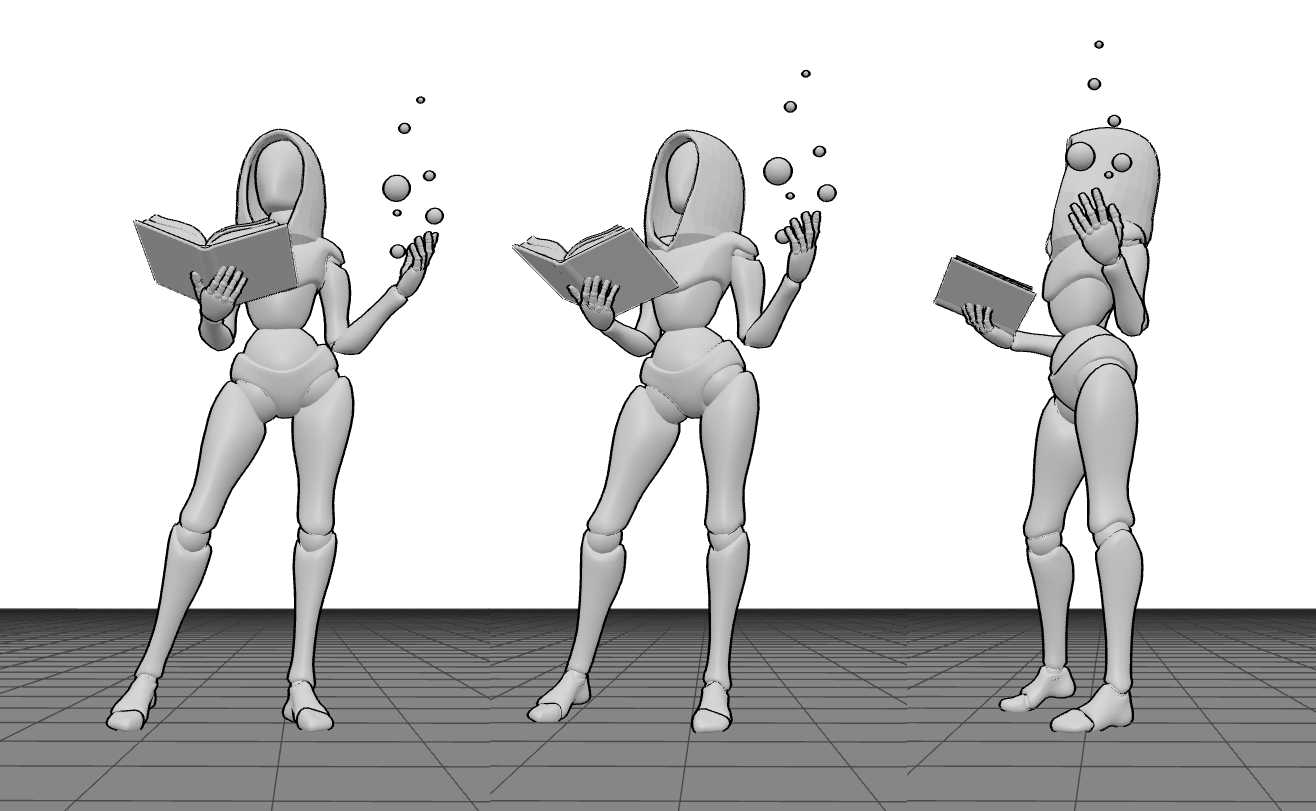 This forces my brain to understand volume, not silhouette.
2. Draw, Hide, Rebuild
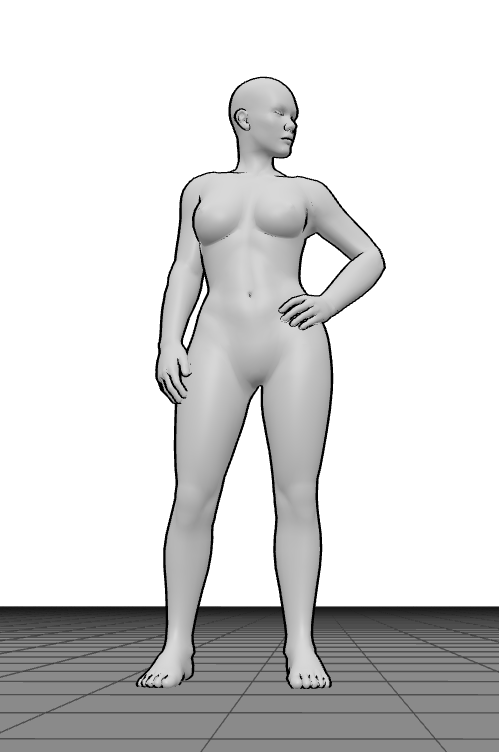 One of the most effective exercises:
- Observe the 3D pose for 30–60 seconds
- Hide it
- Draw the pose from memory
- Bring the model back and compare
Don’t correct immediately. First, notice what drifted. That gap is where learning happens.
Variation: isolate one body part
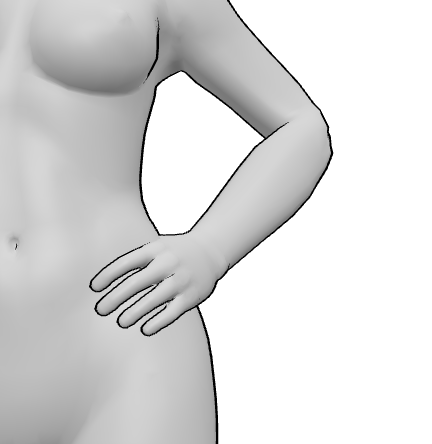 Instead of redrawing the entire figure, try focusing on just one area:
- Only the hand and wrist
- Only the legs and pelvis
- Just the torso and spine
- One arm, from shoulder to fingertips
This removes pressure and sharpens observation. You’ll start noticing proportion drift, angle mistakes, and missing overlaps much faster when your attention isn’t split across the whole body.
3. Switch to Skeleton Mode
Skeleton views are gold for memory training.
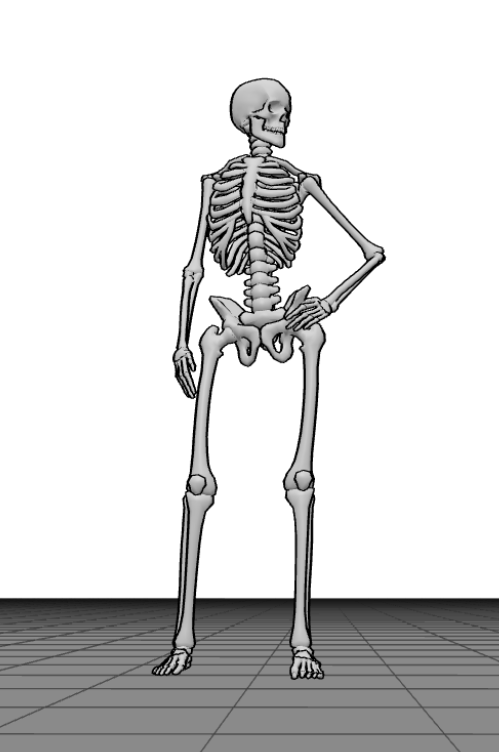
They reveal:
- True proportions
- Joint placement
- Spine rhythm
- Shoulder and hip tilt
When you understand the skeleton, the surface anatomy becomes logical instead of mysterious.
Why Memory Improves Faster with Movement
Static poses are useful - but memory grows faster with dynamic poses.
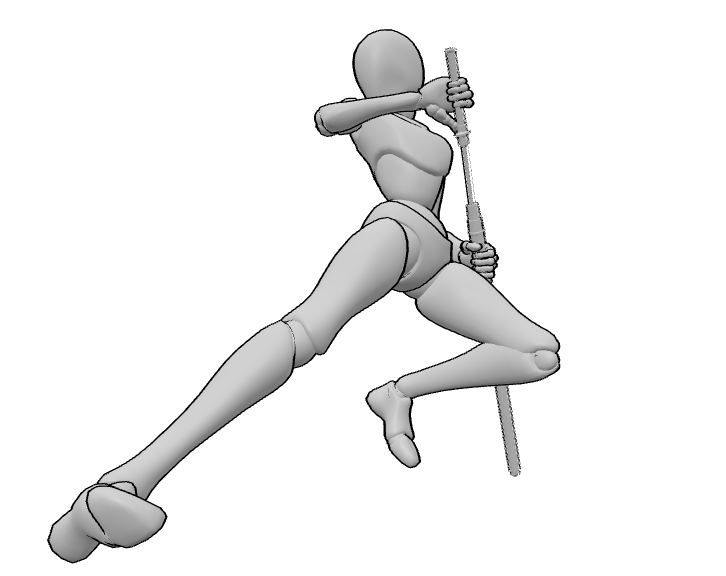 Movement forces you to notice:
- Weight shifts
- Balance
- Counter-tilts
- Flow lines
Your brain remembers motion logic better than static images. That’s why gesture drawing with rotating 3D poses is incredibly effective.
What to Focus On (and What to Ignore)
When training visual memory, prioritize:
- Overall pose rhythm
- Major masses (ribcage, pelvis, head)
- Direction of limbs
- Balance and center of gravity
Ignore:
- Small details
- Muscles at first
- Textures and rendering
Memory collapses under detail. Structure holds.
A Practical Memory-Drawing Exercise You Can Try Today
Open a single standing or walking pose in PoseMyArt.
Choose something simple: relaxed contrapposto, weight on one leg, arms hanging naturally. Avoid extreme action poses for this exercise.
Step 1 – Observe (2–3 minutes) Rotate the 3D model slowly. Don’t draw yet. Pay attention to:
- The line of the spine
- Which leg carries the weight
- The tilt of the shoulders and hips
- The rhythm of the limbs
Mentally trace the main flow of the body - this is what you’ll be reconstructing later.
Step 2 – Draw with Reference (5 minutes) Now draw the pose while the model is visible. Keep it loose. No details. Focus on:
- Overall proportions
- The gesture line
- Simple limb masses
Step 3 – Hide the Reference and Redraw (5 minutes)
Close the 3D view.
Redraw the same pose from memory.
This is where the real training happens. The goal is not accuracy - it’s awareness.
Afterward, bring the reference back and compare:
- Did the legs grow longer?
- Did the torso collapse or stiffen?
- Did the hands turn into vague shapes?
Those mistakes are not failures. They are precise indicators of what your brain hasn’t fully internalized yet.
Common Memory-Drawing Mistakes (and What They Actually Mean)
Many of these memory-drawing errors are closely tied to proportion awareness.
If you’d like to explore this further, you can dive deeper into body proportions and facial proportions, where these issues are broken down in more detail and explained through practical examples.
When drawing from memory, artists tend to repeat the same errors - and each one points to a specific gap in understanding.
-
Legs getting too long
→ You’re remembering the pose’s gesture, but not its proportion. -
Arms shrinking or stiffening
→ You’re avoiding complex forms instead of simplifying them. -
Hands turning into “blobs” or claws
→ You didn’t register finger direction and overlap during observation. -
Torso becoming a straight tube
→ The spine’s curve wasn’t consciously noted.
Instead of correcting these immediately, circle them.
These are your personal study targets. Next time you observe a 3D pose, look specifically for those elements before drawing.
Final Thoughts
Improving drawing from memory isn’t about forcing your brain to remember images.
It’s about teaching it how bodies exist in space.
3D references accelerate that process because they reveal structure, rotation, and logic - the exact things memory depends on.
Once you stop asking “How do I remember this pose?” and start asking “How is this pose built?” memory stops being a weakness and becomes a skill you can train.
And that’s a very different - and much more empowering - place to draw from.