8 Tips to Make Your Character Poses Look More Natural
Most stiff character drawings aren’t caused by bad anatomy - they’re caused by unclear posing. You can render beautifully, understand muscles, and still end up with a character that feels static or unnatural. I’ve run into this many times. What helped me the most wasn’t more detail - it was learning how to read and refine poses properly.
Here are the eight things I focus on to make my character poses look more natural:
- 1. I Choose a Strong Base Pose
- 2. I Slightly Adjust the Pose When Needed
- 3. I Change the Camera Angle
- 4. I Check the Weight and Balance Before Drawing
- 5. I Focus on Gesture, Not Just Accuracy
- 6. Simplify the Pose Into Basic Shapes First
- 7. Observe Natural Compression and Stretch
- 8. Pay Attention to Natural Rest Positions
1. I Choose a Strong Base Pose
Instead of building every pose from scratch, I often start with ready-made pose references from PoseMyArt. A strong base already contains natural balance and believable structure, which saves a lot of correction later.
When selecting a pose, I look for:
- Clear weight distribution
- A readable silhouette
- Natural shoulder and hip alignment
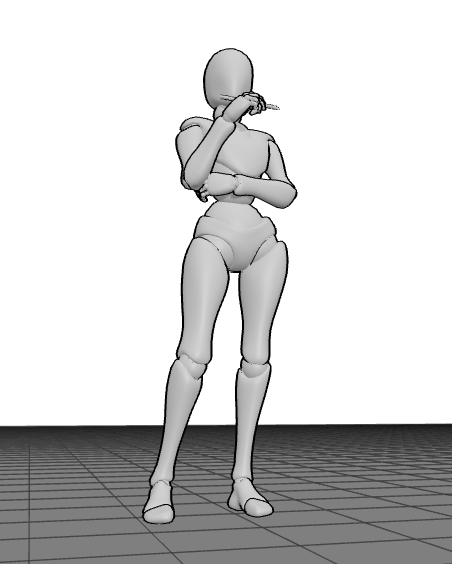
Starting from a solid pose gives me a stable foundation before I even begin drawing.
2. I Slightly Adjust the Pose When Needed
Even when I use a ready-made pose, I rarely copy it 100% unchanged.
Usually I:
- Tilt the head a bit more
- Adjust the arm angle
- Shift the hips slightly
- Relax or bend the hands
These small changes help the pose fit my character better and avoid the “copied reference” feeling.
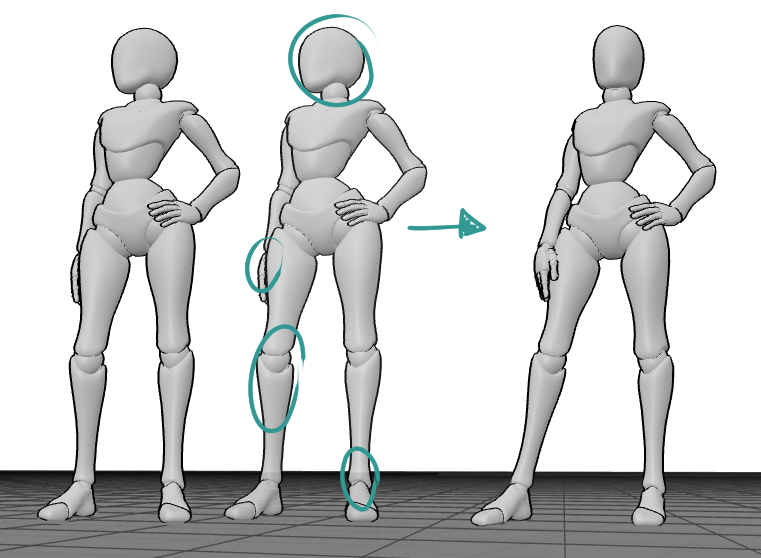 PoseMyArt makes this easy because I can make small, precise adjustments to the limbs and body angles without having to start the pose from scratch.
3. I Change the Camera Angle
In my opinion, changing the camera angle can work like magic.
Even if I keep the pose almost the same, changing the camera angle can completely transform the drawing.
Sometimes I:
- Lower the camera for a more dramatic look
- Rotate slightly for depth
- Zoom in to crop the composition
- Move to a side angle to emphasize weight
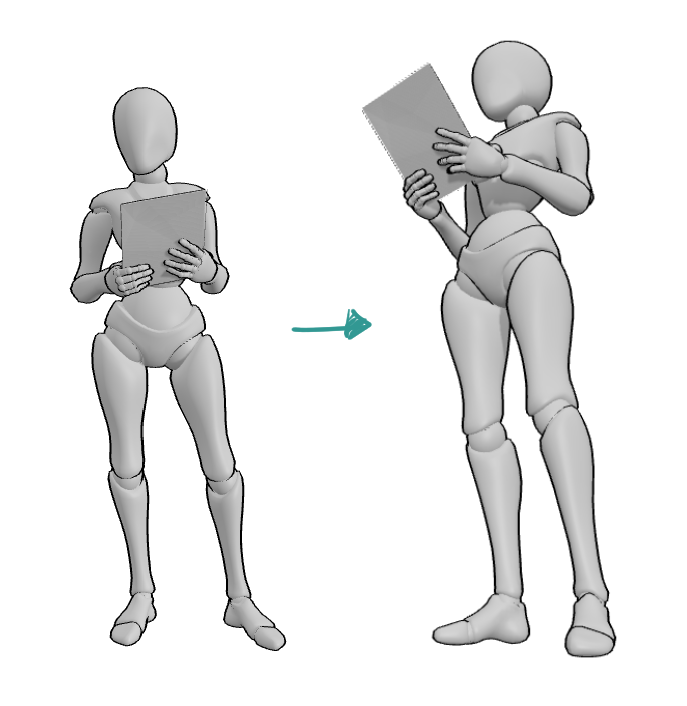 Exploring camera angles helps me avoid flat, front-facing compositions and adds more dimension to my work.
Discover tips for camera angles, foreshortening, and field of view in this guide.
4. I Check the Weight and Balance Before Drawing
Before I start rendering, I always ask: does this feel physically believable?
Because the pose is in 3D, I can rotate it and quickly check:
- Is the character actually balanced?
- Does the center of gravity make sense?
- Are both feet planted realistically?
This step prevents a lot of mistakes that would otherwise only become obvious halfway through the drawing.
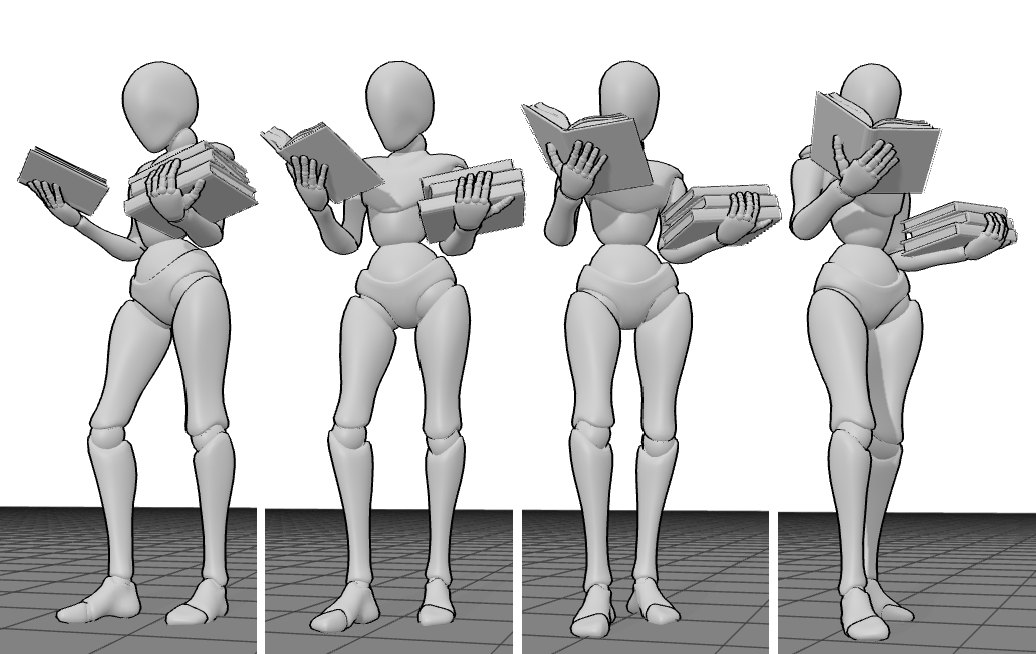
5. I Focus on Gesture, Not Just Accuracy
When drawing with reference, I don’t aim to copy every detail mechanically.
Instead, I look for:
- The flow of the spine
- The rhythm between shoulders and hips
- The overall gesture
Sometimes I exaggerate the movement slightly in my drawing to make it feel more dynamic than the reference.
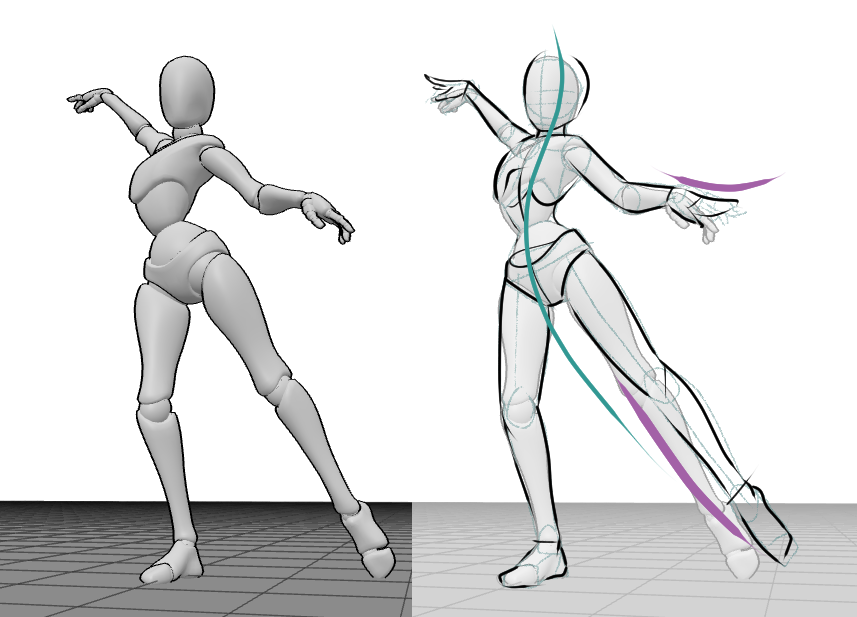 PoseMyArt gives structure - but the energy still comes from how we interpret it.
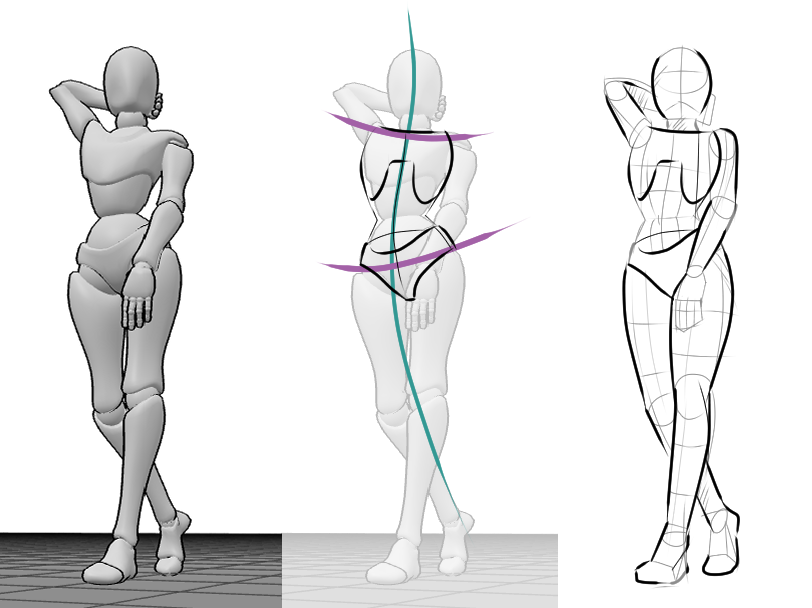
6. Simplify the Pose Into Basic Shapes First
Before I focus on anatomy, I reduce the body into simple forms: ribcage, pelvis, cylinders for limbs.
This helps me:
- Understand the tilt of the torso
- See how the pelvis and ribcage relate
- Avoid copying the surface without understanding structure
When I use PoseMyArt, I often look at the model and mentally break it down into these simplified volumes before drawing. The 3D reference makes it easier to understand how those forms rotate in space.
7. Observe Natural Compression and Stretch
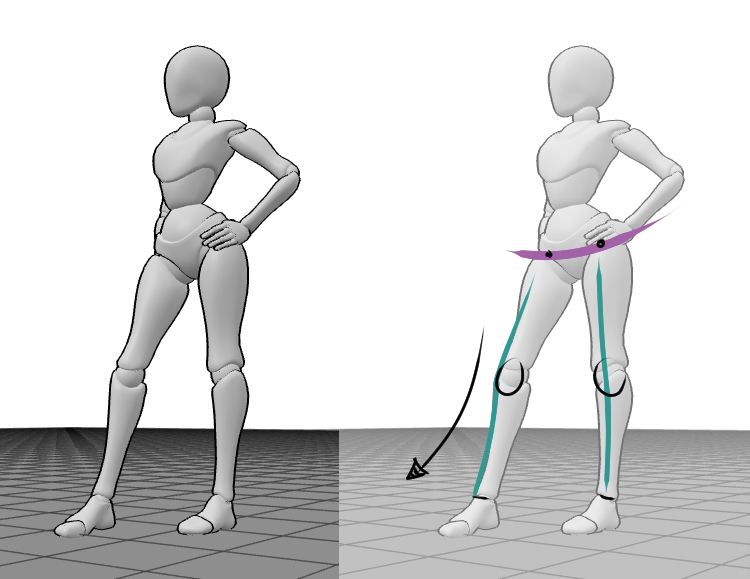
In real bodies, one side compresses while the other stretches.
For example:
- If the character leans to one side, that side compresses
- The opposite side elongates
- Bent limbs create visible tension on one side and relaxation on the other
When drawing from a reference pose, I pay attention to where the body compresses and where it stretches. Sometimes I even exaggerate this slightly in my drawing to enhance realism.
This prevents the body from looking evenly stiff on both sides.
8. Pay Attention to Natural Rest Positions
One thing that often makes poses look unnatural is forcing every part of the body into action.
In reality:
- Fingers are rarely fully straight
- Knees aren’t always locked
- Shoulders aren’t pulled back symmetrically
Pay attention to how relaxed the fingers and shoulders feel. Even subtle softness in the hands or a slight release of shoulder tension can make the entire character appear more natural and at ease.
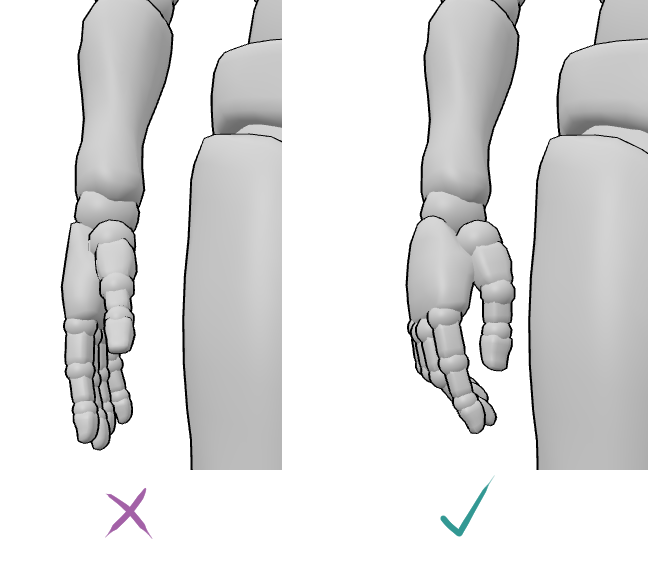
Natural poses often come from allowing parts of the body to rest.
Final Thoughts
Natural poses come down to:
- Clear weight
- Subtle asymmetry
- Strong gesture
- Depth through camera angle
- Small refinements
Using ready-made poses in PoseMyArt has helped me focus less on fixing structural mistakes - and more on expression, design and storytelling.
And in the end, that’s what makes a character feel alive.