Why Your Anime Faces Look “Off” - And How to Fix Them in 3D Space
For a long time, I kept hitting the same wall with anime faces - they worked from the front, then quietly broke the moment I turned the head. No matter how many tutorials I followed, the moment I rotated the head, everything subtly fell apart.
The breakthrough came when I stopped treating anime faces as flat symbols and started thinking of them as 3D forms in space.
In this article, I’ll show you exactly where anime faces go wrong, why most tutorials don’t fix it, and how learning to see faces in 3D will immediately improve your drawings from every angle.
The problem most artists don’t realize
If your anime faces look almost right but still feel off, the issue is rarely talent or effort.
It’s usually this: you’re drawing a 3D object as if it were flat.
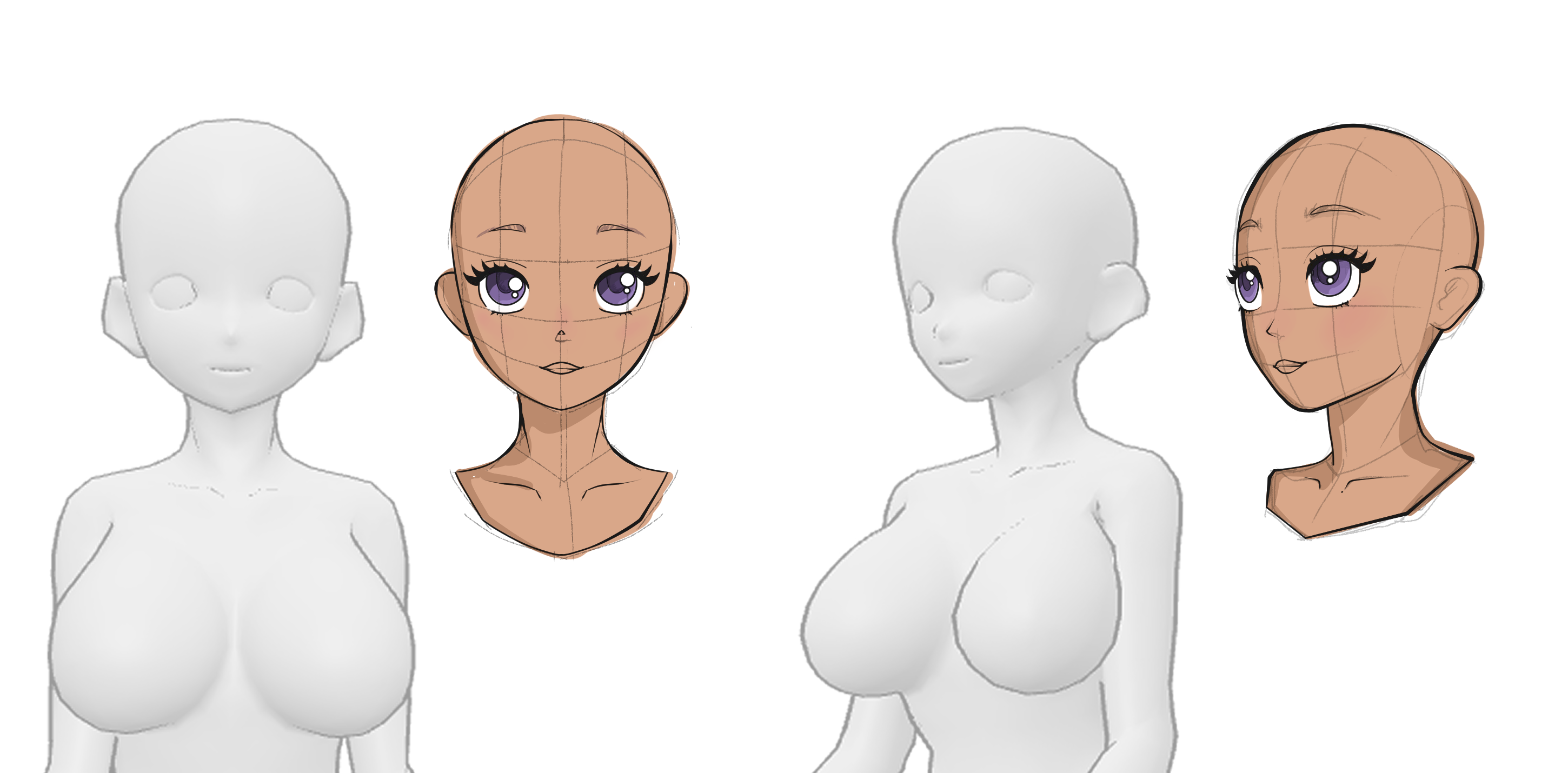 In PoseMyArt, you can see your model from any angle.
Anime faces are simplified, yes - but they still sit on a skull, turn in space, and obey perspective. When that 3D structure isn’t clear in your head, small errors pile up:
- eyes drift apart or slide around
- the jaw changes shape between drawings
- the nose jumps position in 3/4 view
- faces look fine from the front, broken everywhere else
That “something’s wrong but I can’t tell what” feeling?
That’s a spatial problem.
Why copying tutorials doesn’t fully solve it
Most anime face tutorials:
- show one angle
- rely on symbols instead of structure
- don’t explain how features rotate in space
So you memorize steps… but the moment you rotate the head, you’re guessing again.
You’re not failing the tutorial.
The tutorial is failing to teach 3D understanding.
Anime faces still live on a head, not a sheet of paper
Even the most stylized anime face follows:
- a head axis
- a center line that curves with rotation
- planes that turn toward or away from the camera
If you don’t see those planes, proportions fall apart fast.
This is where thinking in 3D space changes everything.
How PoseMyArt helps fix this (without killing your style)
With PoseMyArt, you can:
Rotate a 3D head freely in space
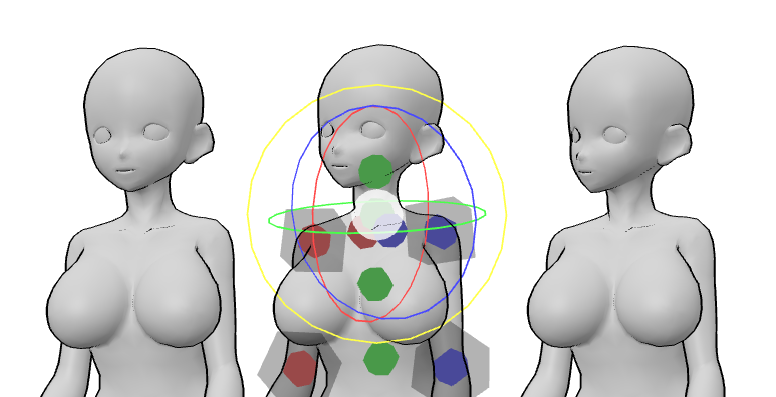
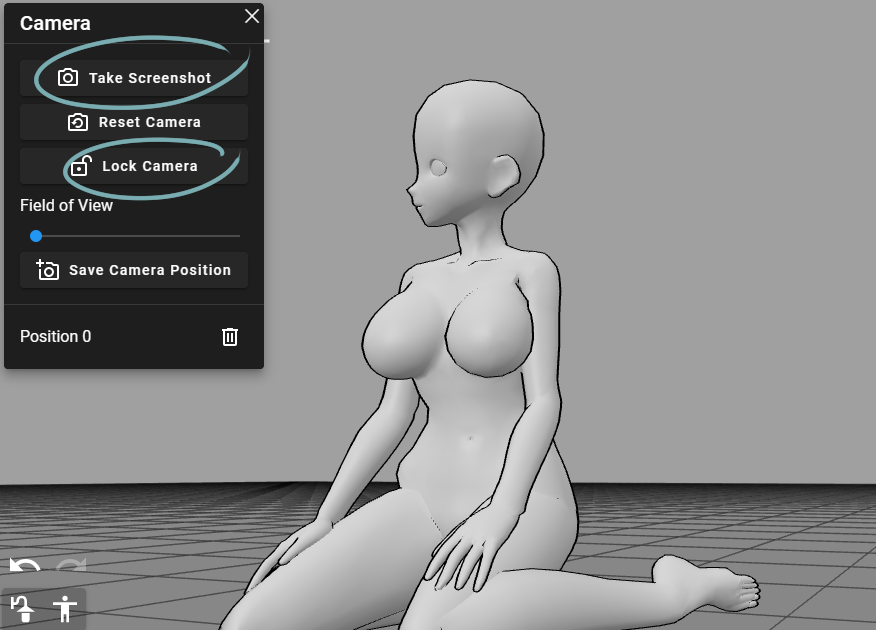
Lock in the angle or take screenshot before drawing
Clearly see how the eye line curves
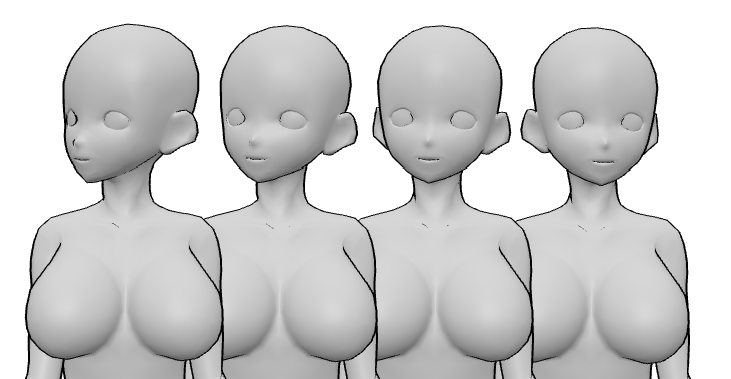
Understand how the jaw, cheek, and chin shift
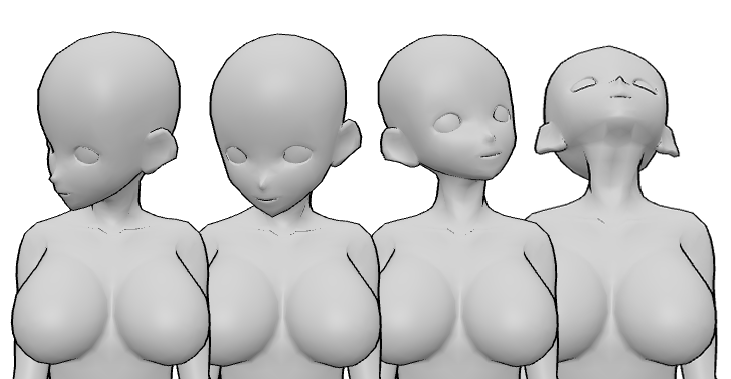
You’re no longer inventing angles from imagination alone.
You’re observing structure, then stylizing it.
Important point:
You’re not tracing. You’re learning how things turn.
Once you internalize that, your anime faces suddenly:
- feel solid
- stay consistent
- work from any angle
How to practice effectively
- Choose a 3D model in PoseMyArt (If you’re not sure where to start, this guide on choosing the right 3D model will help.)
- Rotate it slightly - not extreme at first
- Draw the head using simple lines
- Focus on:
- center line curvature
- eye placement on a curved surface
- jaw shape
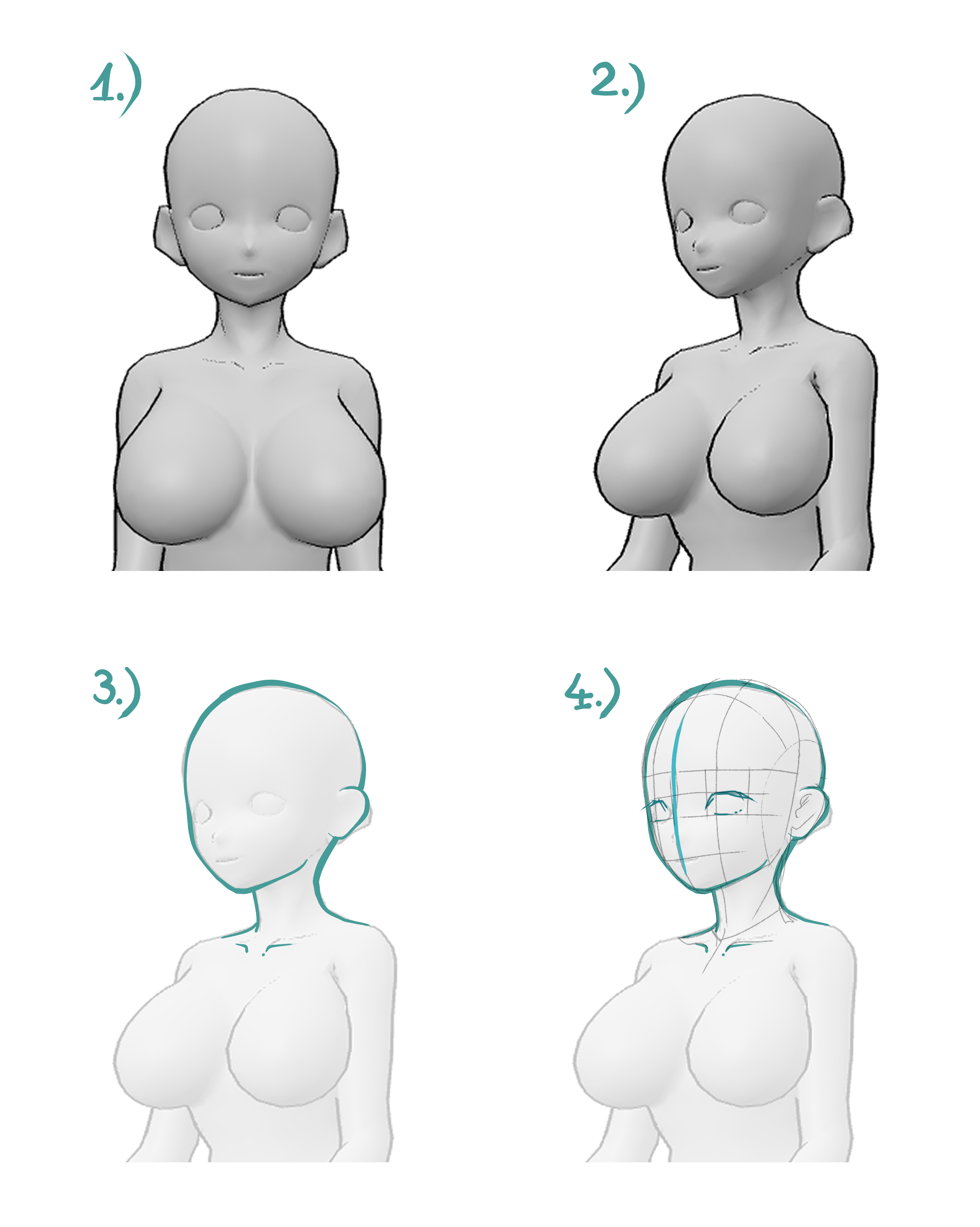 Do this repeatedly and your “off” feeling disappears - because you finally know why things go wrong.
Final Thoughts
Once you start thinking in 3D space, everything changes. You stop guessing where features should go. You understand why proportions shift, why lines curve, and why some drawings feel solid while others don’t. That understanding carries over into every sketch, even when you’re drawing purely from imagination.
PoseMyArt isn’t about replacing your style or doing the work for you. It’s about giving you a clear spatial foundation so your anime faces stay consistent, believable, and expressive from any angle.